Meta replaces custom video protocol with open MoQ standard for Instagram Live
Meta has deployed Media over QUIC (MoQ) for Instagram Live ingest on iOS and Android, replacing its proprietary RUSH protocol to unify live streaming infrastructure.
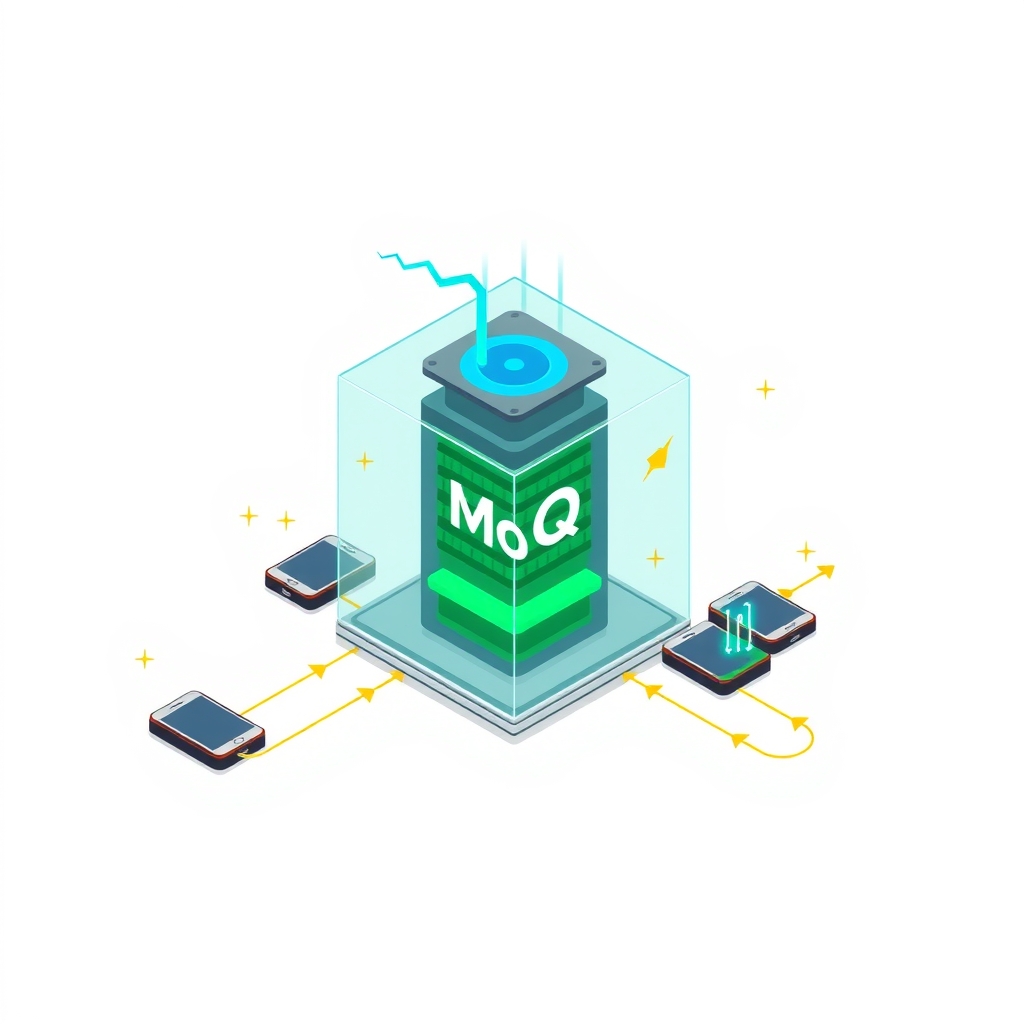
Meta has begun deploying Media over QUIC (MoQ), an emerging open protocol for real-time video streaming, across Instagram Live ingest on iOS and Android. This shift replaces the company’s decade-old proprietary protocol, RUSH, marking a significant move toward standardized, low-latency media transport at massive scale. The deployment was detailed in a recent engineering update and presented at DEMOQED 2026.
What happened
For nearly ten years, Meta relied on Reliable Ultra-low-latency Streaming over HTTP (RUSH), an in-house QUIC-based protocol designed to replace RTMP for live video ingestion. While RUSH proved that QUIC could handle live media at scale, it remained a proprietary solution operated primarily by Meta. As live video, real-time AI, and generative creation tools increasingly overlap within the same applications, maintaining separate protocol stacks for ingestion, playback, and real-time communication became inefficient. Each stack required distinct serving infrastructure, monitoring, and operational expertise.
To address this fragmentation, Meta chose to adopt MoQ, an emerging IETF standard developed collaboratively with industry partners including Google, Akamai, Cisco, and Cloudflare. Instagram Live was selected as the initial deployment target because it represents the company’s largest-scale live video workload. Successfully migrating such a high-volume service demonstrates that MoQ can meet demanding ingest requirements while providing a common foundation for future interactive experiences. The goal was not immediate performance improvement, but rather achieving metric parity with RUSH to establish a clean baseline for future architectural changes.
The rollout involved changing the foundation under every broadcast on the service without causing regressions for creators or viewers. Meta engineers had to ensure broadcaster apps could learn the new protocol, backend pipelines could process the new framing, and the rollout remained reversible in seconds. A non-trivial portion of networks still cannot carry the new transport reliably, adding another layer of complexity to the migration.
How it works
MoQ is built on top of QUIC, a transport layer that allows independent streams to make progress without the head-of-line blocking typical of TCP. This architecture supports faster connection setup and connection migration, which is critical for mobile users moving between networks. The core abstraction in MoQ is a "Track," an addressable stream of media objects that publishers push and subscribers receive through a network of relays. These relays cache and forward objects based on framing and delivery metadata without parsing the actual media payload.
Unlike traditional HTTP streaming where caching and fan-out are often bolted on, MoQ integrates these capabilities directly into the protocol design. Relays act as built-in caching endpoints, allowing media streams to scale efficiently through CDN infrastructure. The protocol also supports tunable latency per use case, meaning two subscribers to the same track can operate at different latencies simultaneously. For example, an interactive participant might experience ~100 ms latency, while an archival service operates with several seconds of delay, all based on tunable per-subscription delivery properties.
To manage the transition, Meta implemented a translation layer at the edge rather than rewriting the entire backend. MoQ ingest connections terminate on dedicated edge endpoints where a translator converts MoQ frames into the RUSH format that the existing backend already understands. This approach allowed Meta to swap the client transport without altering downstream systems. Once MoQ becomes the sole ingest path, the backend will consume MoQ natively, and the translation shim will be removed.
Key details
- Protocol basis: MoQ is an emerging IETF standard built on QUIC, enabling low-latency, scalable media delivery for live streaming and real-time communication.
- Deployment scope: The protocol is now live for Instagram Live ingest on both iOS and Android devices, representing one of the largest known application usages of MoQ by volume.
- Client integration: Meta used moxygen, its open-source MoQ library, to integrate publisher, subscriber, and relay roles into its apps, working alongside its QUIC stack, mvfst.
- Network resilience: When QUIC is blocked by firewalls or carrier networks, MoQ can fall back to TCP through standardized mappings like WebTransport over HTTP/2 or the emerging QMUX mapping.
- Observability challenges: Because QUIC encryption hides framing from middleboxes and packet captures, Meta built MoQ-aware tracing into the edge to monitor object-level events without decrypting traffic.
- Future roadmap: Meta plans to extend MoQ to live playback and real-time interactive AI, using native constructs like subgroups to carry audio, video, and metadata on independent streams.
Why it matters
For engineers building real-time media applications, Meta’s adoption of MoQ signals a shift away from fragmented, proprietary protocol stacks toward a unified, standards-based approach. Maintaining separate systems for ingestion (RTMP/RUSH), playback (HLS/DASH), and real-time communication (WebRTC) creates significant operational overhead. A single transport that handles ingest, delivery, and playback reduces the number of custom transports teams must maintain, allowing them to focus on product features rather than infrastructure compatibility.
The move also highlights the growing importance of low-latency, bidirectional transports for emerging use cases like conversational AI. As AI agents begin to interact with users in real time, the ability to carry signaling and media together on a single, resilient connection becomes essential. MoQ’s support for partial reliability allows players to skip stale video after packet loss instead of accumulating delay, a feature that will be critical for responsive AI interactions. By contributing to and adopting an open standard, Meta is helping to create an ecosystem where interoperability and shared innovation can accelerate development across the industry.
What you can do
- Evaluate MoQ for new projects: If you are building a new live streaming or real-time communication service, consider using MoQ to avoid locking into proprietary protocols that may become obsolete.
- Explore open-source libraries: Review Meta’s moxygen library and other open-source MoQ implementations to understand how the protocol handles publishing, subscribing, and relaying.
- Test QUIC fallback mechanisms: Ensure your infrastructure can handle QUIC blockage by implementing standardized TCP fallbacks like WebTransport over HTTP/2 or QMUX.
- Improve observability: Invest in application-level tracing for encrypted QUIC traffic, as traditional packet capture tools will not provide visibility into media framing and object delivery.
- Monitor IETF developments: Keep track of the MoQ Transport IETF draft as it evolves, since active standards may introduce breaking changes or new features that impact your implementation.
- Plan for unified architectures: Consider how a single transport could simplify your current stack by combining ingestion, delivery, and playback into one coherent system.