Google Duplex evolves into a unified Gemini agent for live phone calls
Google has integrated its decade-old Duplex voice technology into the Gemini app, enabling AI to handle complex, unscripted phone tasks using a unified foundation model architecture.

Google has officially integrated its Google Duplex voice technology into the Tasks feature of the Gemini app, marking a significant evolution in how AI agents handle real-world coordination. Announced on November 20, 2026, by leaders from Google Research and Google Maps, this update allows the personal AI assistant to make live phone calls to businesses on behalf of users. The move transitions Duplex from a behind-the-scenes infrastructure component to a direct user-facing capability powered by the latest Gemini foundation models.
What happened
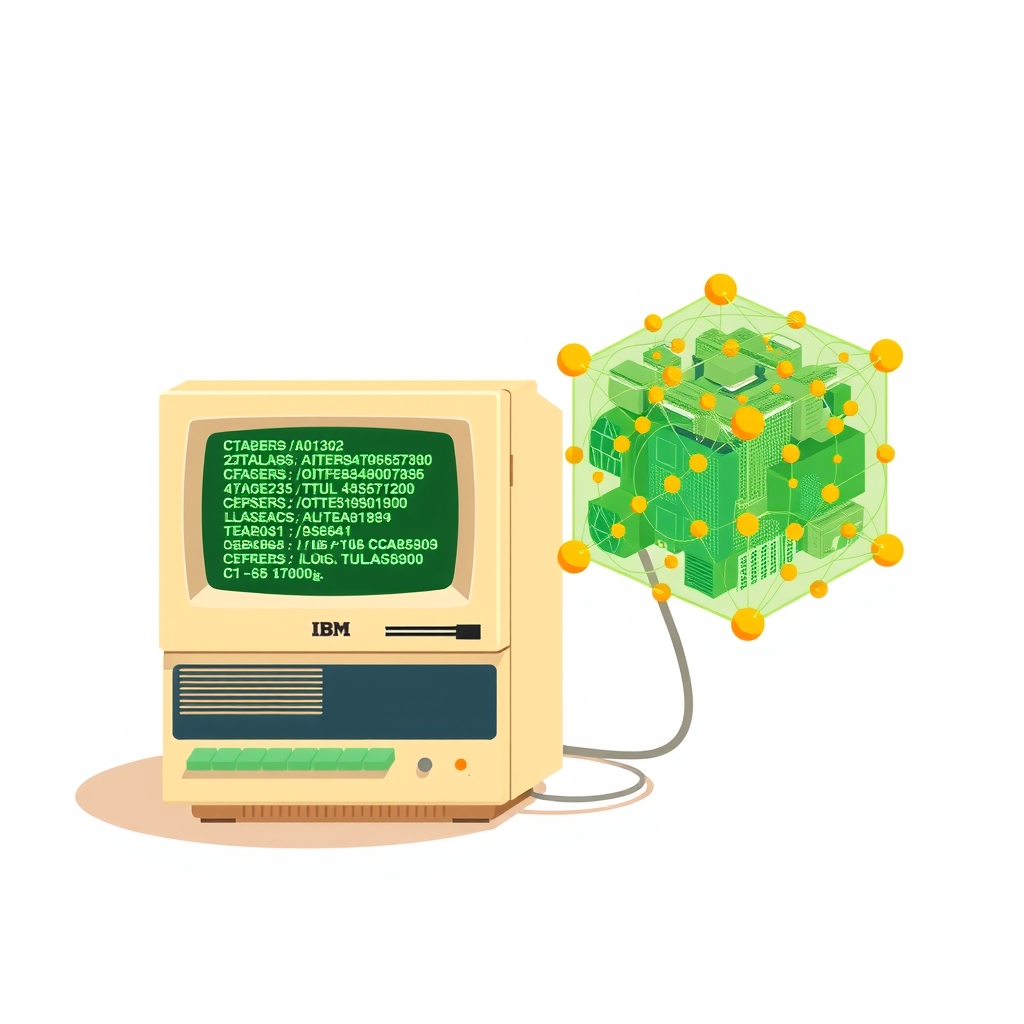
The integration represents the culmination of a ten-year architectural journey that began with the initial launch of Google Duplex in 2018. Originally designed to handle narrow, specific tasks like restaurant reservations, the technology has since operated silently across various Google products. During the pandemic, it played a critical role in verifying merchant information as business hours fluctuated rapidly, contributing data that has appeared in Search and Maps over one trillion times. Over the years, the underlying models were also adapted for on-device features in Pixel phones, such as Call Screen and Hold for Me, which help users manage unknown callers and wait times.
In 2025 and 2026, the scope expanded further as foundation models enabled broader agentic calling within Google Search and Ask Maps. These systems could check product availability, service quotes, and opening hours for diverse categories ranging from auto repair to pet grooming. The latest launch in the Gemini app removes the remaining constraints on task types, allowing the AI to handle open-ended requests through natural voice conversations. This shift enables the agent to coordinate complex chores that lack digital APIs, such as booking appointments or negotiating scheduling conflicts directly over the phone.
How it works
The technical backbone of this system has evolved through three distinct generations. The earliest version relied on pre-transformer recurrent neural networks trained on anonymized, task-specific conversations. These closed-domain models required extensive manual training for each vertical, such as distinguishing the logic of a dinner reservation from checking holiday hours. As open-domain foundation models emerged, Google introduced hybrid stacks around 2022, pairing generative models like LaMDA with deterministic state tracking. This approach improved flexibility but still required strict policy guardrails to maintain reliability and speed.
The current architecture is built entirely on Gemini, unifying multimodal understanding, planning, and dialogue generation into a single stack. Instead of relying on fixed verticals, the system now accepts free-text task descriptions, allowing it to generalize to new business categories and nuanced requests without building separate dialogue models. For example, it can handle multi-constraint scenarios like scheduling car maintenance around calendar conflicts or asking for specific seating arrangements. This unified approach leverages the reasoning capabilities of frontier models to navigate unscripted human interactions.
Live telephony presents unique challenges that web-based pre-training does not address, particularly regarding latency and acoustic noise. The system employs custom acoustic and conversation cadence models to handle compressed phone lines and background noises like kitchen clatter or street traffic. These models ensure sub-second latency, allowing the AI to interpret polite indirect refusals, manage pauses naturally, and avoid talking over the human recipient. Pragmatic grounding is also enhanced by historical context, helping the agent predict whether a task is feasible before the call begins based on past interactions with specific vendors.
Key details
- The system uses Gemini 4 models, including Gemini 4 Hydrogen and Gemini 4 Neon, to power comprehensive workflows.
- Every automated call begins with a clear disclosure that an AI agent from Google is speaking.
- Businesses can opt out of receiving these calls via their Google Business Profile settings or by verbally requesting to stop during a call.
- No software installation or staff training is required for merchants, as the AI interacts through standard phone lines.
- Information gathered during calls, such as happy hour specials or parking tips, is used to update Google Maps listings.
- The agent can process transactions securely using the Agent Payments Protocol and coordinate via email and RCS.
Why it matters
For software engineers and technical founders, this evolution highlights the shift from rigid, rule-based automation to flexible, agentic systems capable of handling unstructured environments. The ability to navigate live voice conversations requires solving hard problems in low-latency streaming inference and pragmatic reasoning that go beyond standard text-based LLM applications. It demonstrates that successful AI agents must integrate deep contextual understanding with robust real-time performance to interact respectfully and effectively with humans.
This development also underscores the importance of designing for both ends of a transaction. By ensuring businesses retain control and require no setup, Google has created a scalable model for AI interaction that does not disrupt existing workflows. For developers building similar tools, the emphasis on clear disclosure, opt-out mechanisms, and zero-adaptation for the counterparty offers a blueprint for ethical and practical deployment of autonomous agents in sensitive communication channels.
What you can do
- Study the transition from hybrid stacks to unified foundation models to understand how to reduce engineering overhead in agentic systems.
- Implement clear disclosure protocols in any AI voice interface to maintain trust and comply with emerging norms.
- Design fallback mechanisms that allow human counterparts to easily opt out or redirect automated interactions.
- Focus on low-latency acoustic modeling if your application involves real-time voice processing in noisy environments.
- Leverage historical interaction data to improve pragmatic grounding and predict task feasibility before execution.
- Explore how free-text prompting can replace rigid domain-specific models to increase system generalizability.