ClawDOS runs an AI coding agent on vintage IBM PC hardware
A new project enables Claude to write, compile, and run code directly on an 8088-based IBM PC, bridging modern AI APIs with 1980s hardware constraints.
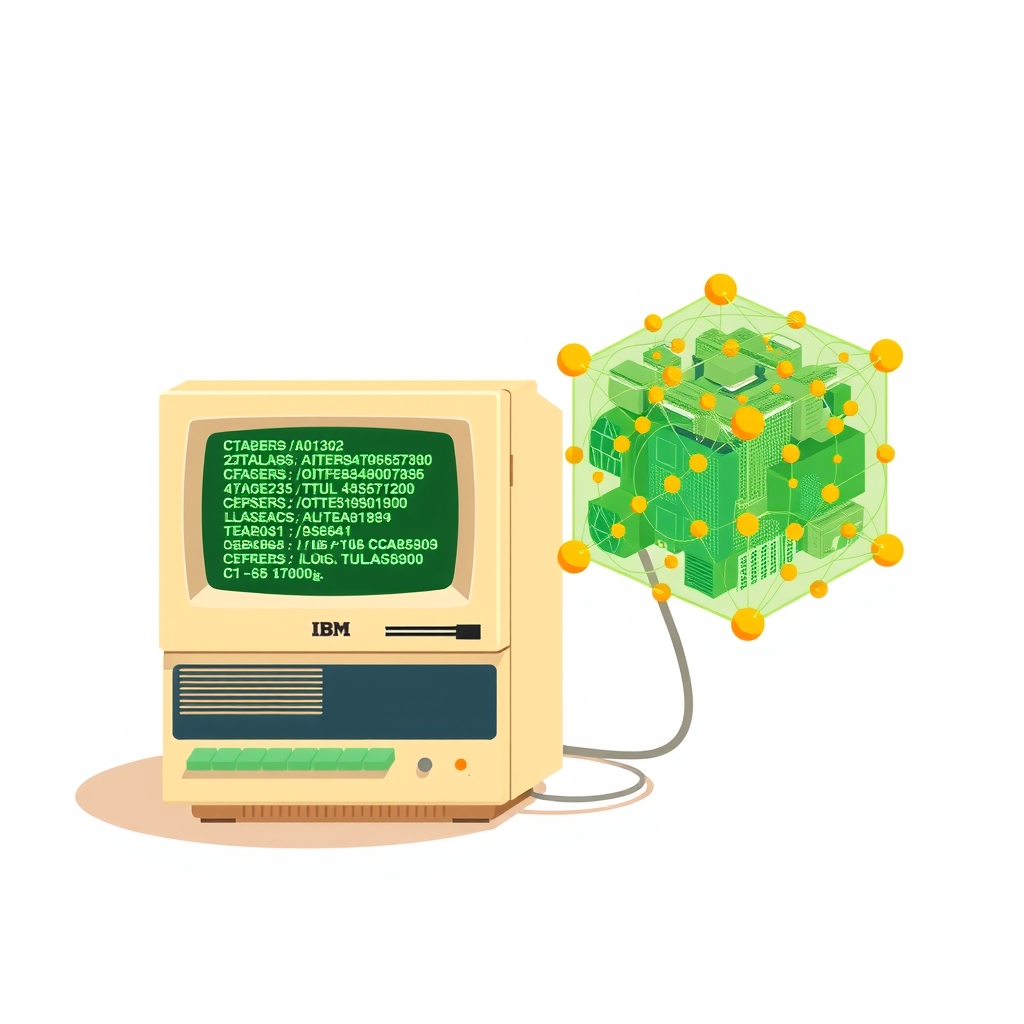
A developer has created ClawDOS, a system that allows a modern AI coding agent to operate directly on vintage IBM PC hardware. Released in late 2026, this project bridges the gap between contemporary large language models and 1980s computing architecture by running a native DOS harness that communicates with the Claude API. The system enables the AI to write source code, compile it using period-accurate tools like Turbo C, and execute the resulting programs on the original machine.
What happened
The creator, motivated by nostalgia for their first computer, an IBM PC 5160, sought to combine old and new technology by building an AI agent constrained by vintage hardware limits. The project, named ClawDOS, is almost entirely written by the Claude AI model itself, with the exception of the documentation text. The goal was to test how far an AI could push its capabilities when restricted to the processing power and memory of an 8088 processor running at 4.77 MHz.
The system operates by installing a harness program on the DOS machine, which handles local file operations and tool execution while offloading complex reasoning and TLS encryption to a modern bridge PC. This setup allows the AI to interact with the physical hardware, reading and writing files, compiling code, and even capturing screenshots of the CGA display. The project demonstrates that an AI can not only generate code for legacy systems but also iteratively debug and improve it by observing the output on the actual target device.
How it works
ClawDOS relies on a 176 KB executable called HARNESS.EXE that runs natively on the DOS operating system. This program implements the Claude Messages API, allowing it to send requests and parse streamed replies directly. Because the 8088 processor cannot handle modern TLS encryption efficiently, the harness delegates secure network communication to a separate bridge PC. The local harness manages all other tasks, including maintaining conversation state on the disk and executing specific tools requested by the AI.
The AI interacts with the hardware through eighteen defined tools, such as reading and writing files, running DOS commands, and accessing memory ports. When asked to compile code, the harness saves its state, frees up memory for the compiler, and then resumes the conversation with the compilation output. A notable feature is the ability to capture screenshots; a timer-interrupt hook copies video memory from the CGA card, encodes it as a PNG on the 8088, and sends it to the AI for visual feedback. This closed-loop process allows the agent to see what its code produces and make adjustments accordingly.
Key details
- The harness runs on an IBM PC 5160 with an 8088 processor at 4.77 MHz, often emulated in 86Box for testing.
- HARNESS.EXE is a 176 KB DOS program that handles API communication, tool execution, and local state management.
- The system supports eighteen tools, including file editing, program execution, memory access, and PC speaker control.
- Screenshots are captured via a timer-interrupt hook that copies CGA video memory and encodes it as a 16 KB PNG file.
- Conversations are stored as files on the disk, allowing sessions to persist across power cycles and be resumed later.
- Safe mode is enabled by default, requiring user confirmation for any action that modifies files, memory, or I/O ports.
Why it matters
For software engineers and AI researchers, ClawDOS demonstrates the potential for AI agents to operate in highly constrained environments. It shows that even with limited local processing power, an AI can perform complex development tasks by leveraging external intelligence for reasoning and heavy lifting. This approach could inspire new methods for deploying AI assistants on edge devices or legacy systems where modern infrastructure is unavailable or impractical.
The project also highlights the importance of feedback loops in AI-driven development. By enabling the agent to see the screen output and adjust its code based on visual results, ClawDOS moves beyond simple text generation to true interactive debugging. This capability is crucial for building robust AI tools that can handle real-world variability and hardware-specific quirks, offering a glimpse into how future agents might interact with physical systems.
What you can do
- Explore the ClawDOS repository to understand how the harness implements the Claude Messages API on DOS.
- Study the tool definitions to see how file operations and program execution are mapped to AI actions.
- Experiment with the screenshot encoding logic to learn how image data is processed on an 8088 processor.
- Review the conversation persistence mechanism to see how chat history is managed locally on disk.
- Consider how similar bridge architectures could enable AI interactions with other legacy or embedded systems.
- Test the safe mode features to understand how user consent is integrated into automated AI workflows.