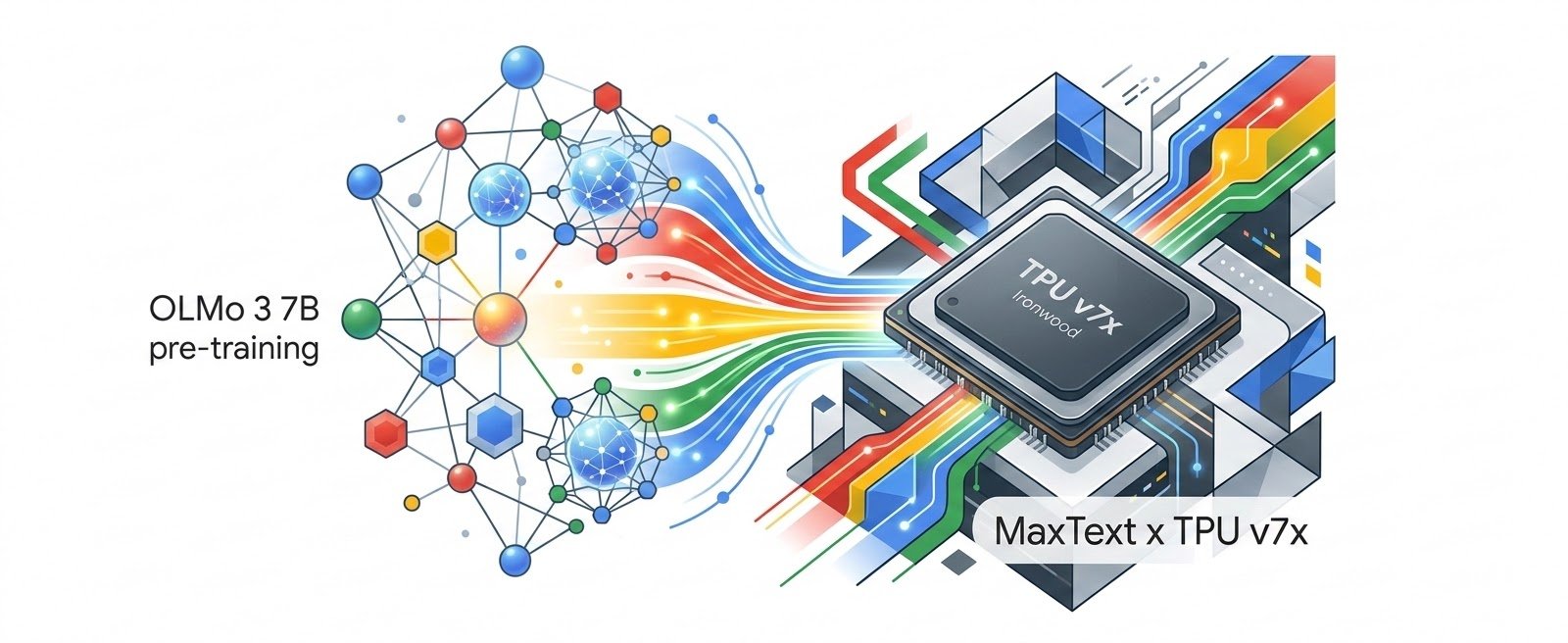
Reproducing OLMo 3 7B on TPUs reveals hidden data loader bugs
A Google case study reproduces AI2's OLMo 3 model on TPUs, matching performance metrics while uncovering critical data sharding errors that masked memorization as improvement.
Daily coverage of AI, developer tools and infrastructure. Each story explains what happened and why it matters, with a link to the original source.
A Google case study reproduces AI2's OLMo 3 model on TPUs, matching performance metrics while uncovering critical data sharding errors that masked memorization as improvement.
Google Developers Blog details autofinetune, an agent-driven system that automates hyperparameter tuning for SFT and RL post-training on Cloud TPUs.
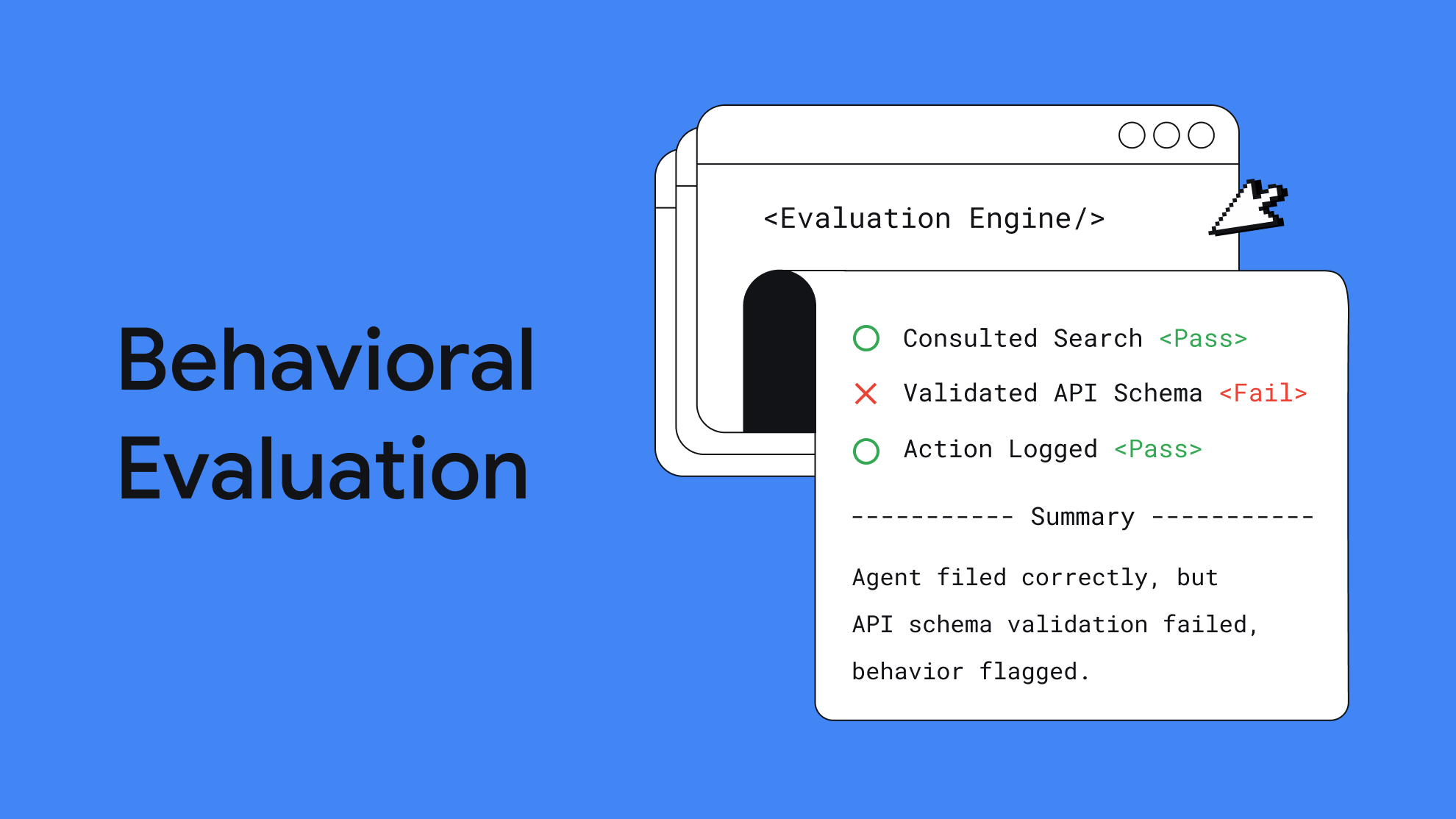
Google Developers Blog outlines how behavioral evaluations provide actionable feedback for AI agent development, moving beyond opaque end-to-end benchmark scores.
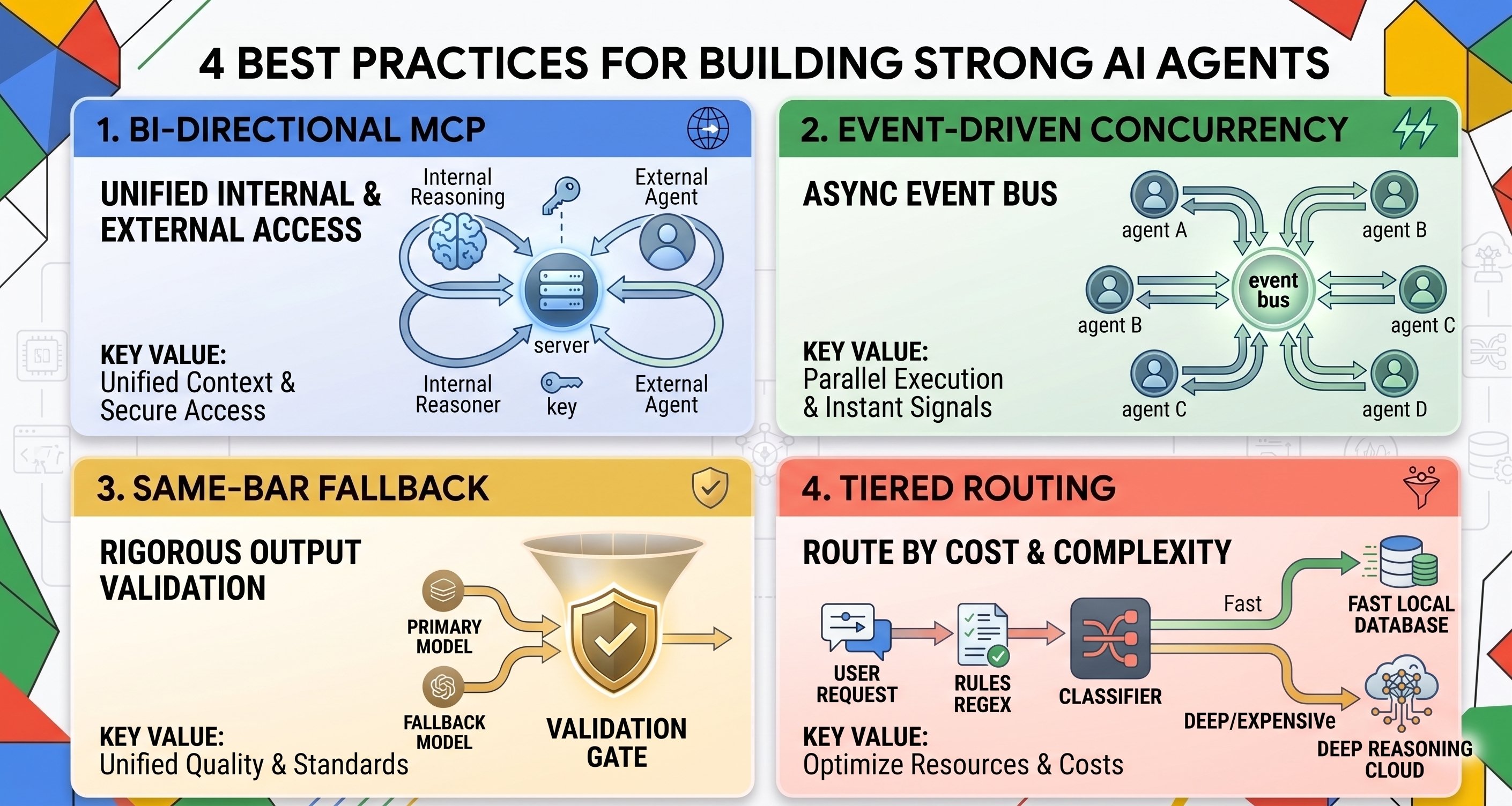
Google analyzed winning entries from its 2026 AI Agents Challenge to identify four reusable engineering patterns for building robust multi-agent systems.
Google details how native TPU support in vLLM enables elastic scaling and high-precision embedding inference for Qwen3 models.
HeyGen and Google Cloud engineers detail how they ported the Avatar IV video generation pipeline to Trillium v6e TPUs, achieving a 1.86x speedup through kernel optimization and parallelism strategies.
Google's 2026 guide details using LiteRT to run Gemma models on Raspberry Pi 5, achieving real-time inference for robotics and edge agents without cloud dependency.
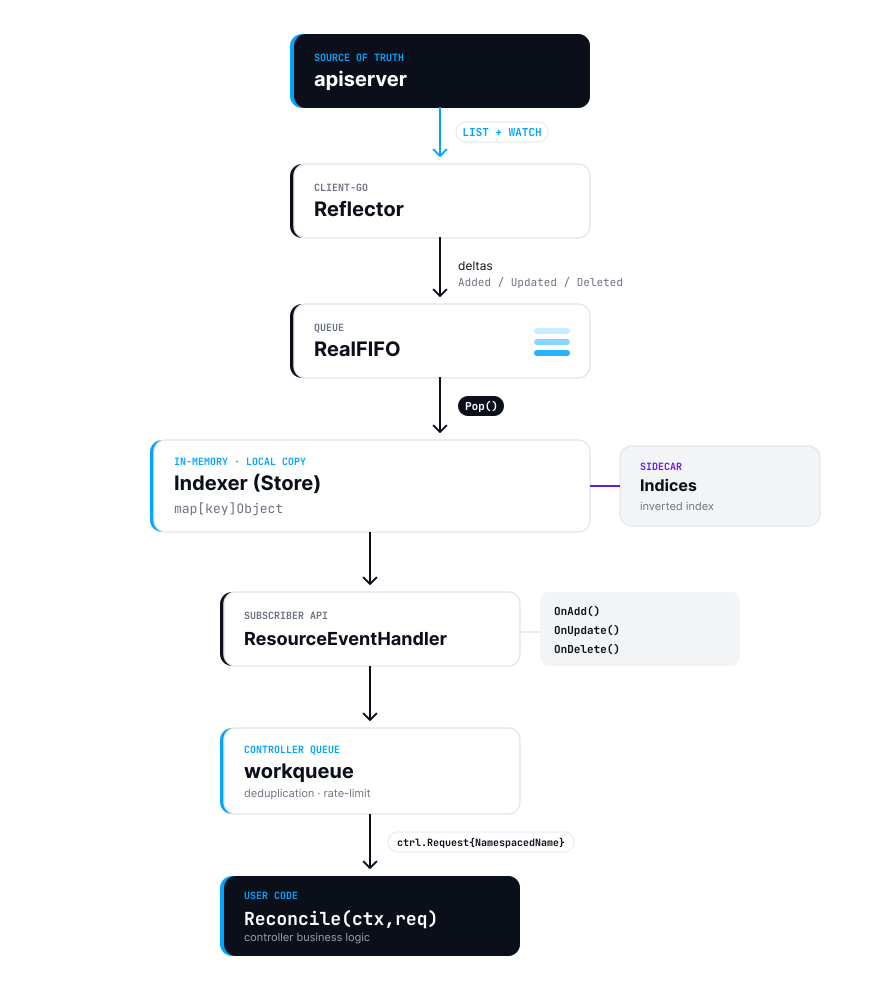
A deep dive into the list-watch pattern and local caching in Kubernetes controllers, explaining why reads are cheap but consistency is eventual.
A 2021 guide explains how to bypass namespace restrictions by importing cloud provider snapshots as golden images for fast, isolated development environments.