Four engineering patterns from top AI agent submissions
Google analyzed winning entries from its 2026 AI Agents Challenge to identify four reusable engineering patterns for building robust multi-agent systems.
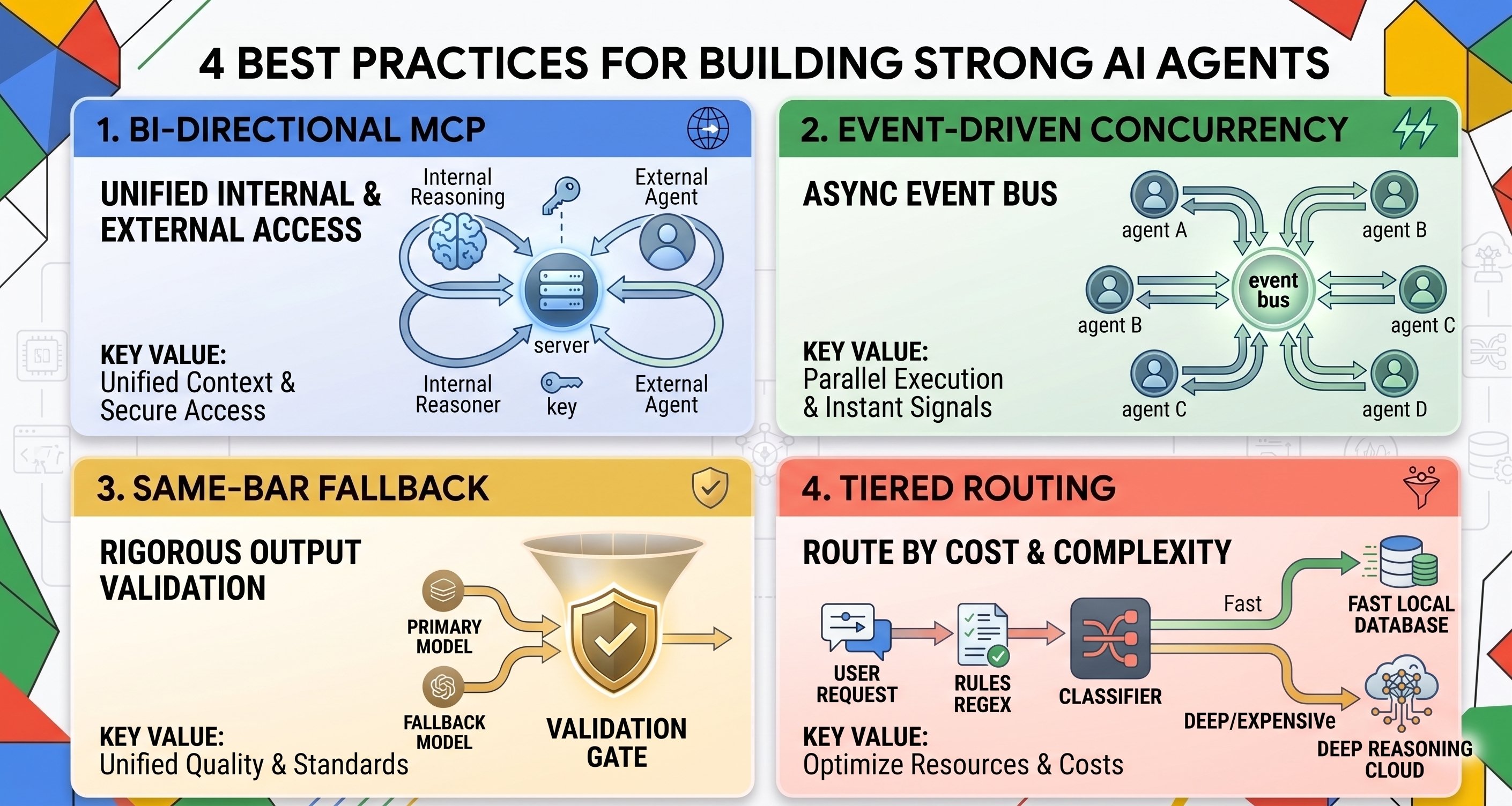
In a post on the Google Developers Blog in September 2026, engineers summarized key architectural decisions from the Google for Startups AI Agents Challenge. The analysis focused on thousands of global submissions, isolating four specific patterns that distinguished top-ranked entries from the rest. These practices address common pitfalls in concurrency, cost management, and system integration for autonomous agents.
What happened
The Google for Startups AI Agents Challenge recently concluded, featuring thousands of builders submitting agents across three tracks. Judges evaluated these projects, noting that while many claimed to use multi-agent systems, only some implemented truly sophisticated architectures. Many submissions were merely single models executing chained prompts with different agent labels attached. However, the highest-ranking entries consistently demonstrated four distinct engineering patterns that improved reliability and performance.
These patterns emerged from real code submissions rather than theoretical designs. The report anonymized the teams to focus on the technical decisions themselves. The identified strategies include bidirectional Model Context Protocol (MCP) usage, event-driven concurrency, strict fallback validation, and tiered request routing. These approaches helped teams build systems that could handle real-world load and complexity without relying solely on larger or newer models.
How it works
The first pattern involves making an agent both a client and a server using MCP. Typically, agents use MCP to call external tools for data. In the winning submissions, agents also exposed their own internal reasoning tools as MCP servers. This allowed other agents to query them directly without human intervention. For example, a coding agent could ask a performance agent about a specific job via MCP, avoiding the need for a chat interface. This approach requires strict access control since external callers can now invoke the reasoning layer directly. It also prevents token budget exhaustion by filtering data programmatically before it reaches the model context.
The second pattern replaces linear call chains with event-driven concurrency. Instead of Agent A calling Agent B and waiting for a response, agents publish typed events to a shared bus. Each agent subscribes to relevant topics and processes events in parallel using separate worker coroutines. This decouples agents with different processing tempos. For instance, a compliance check can run simultaneously with a messaging task if they do not depend on each other’s output. This reduces total latency because no single slow agent blocks the entire pipeline.
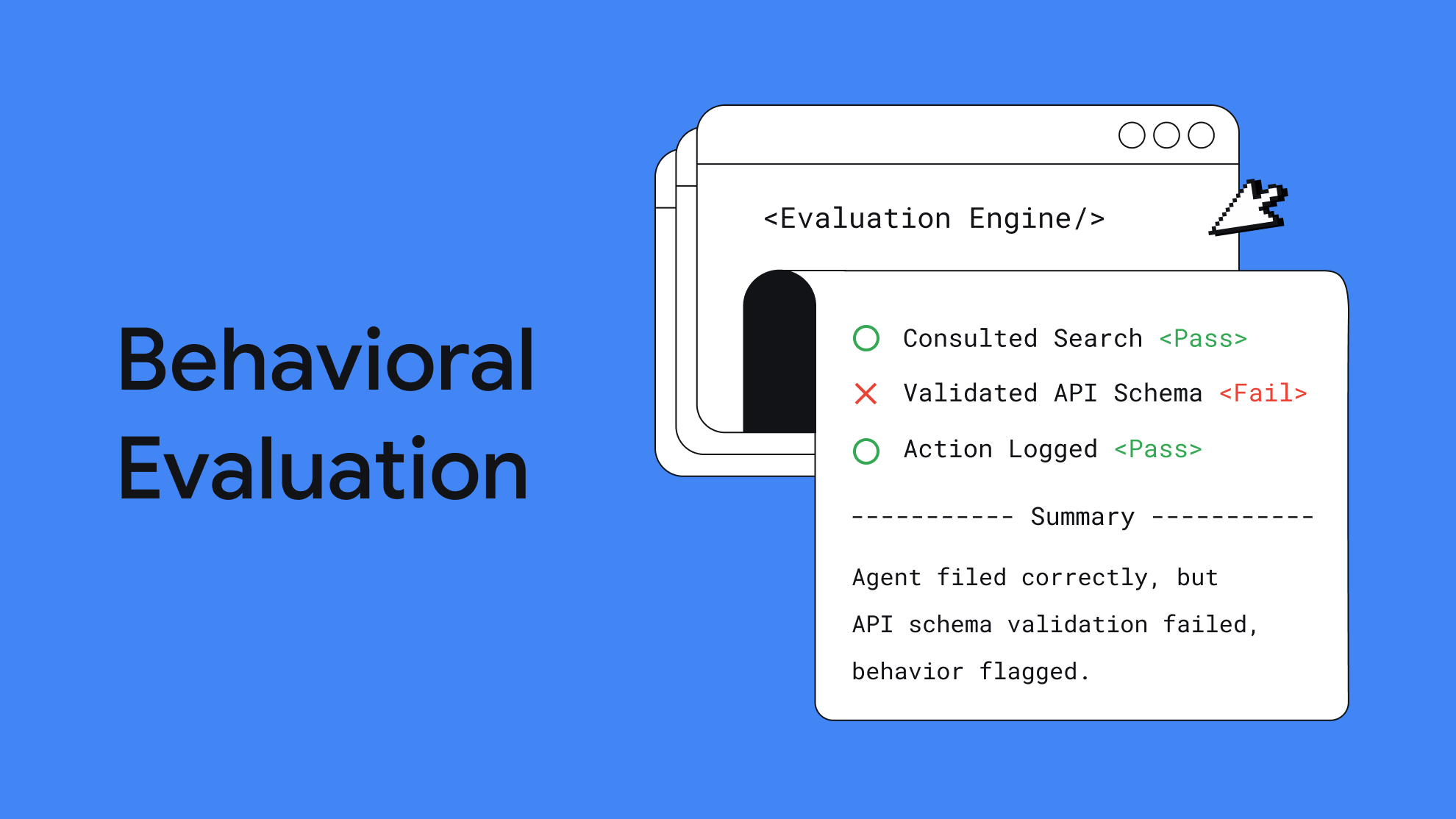
The third pattern ensures fallback models meet the same quality standards as primary models. When a high-end model like Gemini 3.1 Pro returns errors under load, systems often switch to a cheaper alternative like Gemini 3.6 Flash. The top entries used a single validation function for both paths. This function checks citations or other quality metrics before accepting any response. By centralizing validation, teams prevented fallbacks from silently lowering output quality. The fourth pattern uses tiered routing to reduce inference costs. Simple queries are handled by local regex or cheap models before reaching expensive frontier models. One team reported that this first pass handled over 40 percent of messages, saving significant budget.
Key details
- Bidirectional MCP allows agents to expose internal tools as servers for other agents to call directly.
- Event-driven architectures use shared signal buses to enable parallel processing instead of sequential blocking.
- Fallback models must pass through the same validation functions as primary models to maintain quality bars.
- Tiered routing filters simple requests using regex or cheap models before invoking expensive reasoning engines.
- Top submissions frequently used the Agent Development Kit (ADK) and Agents CLI to implement these patterns.
- Access control is critical when exposing agent tools externally via MCP servers.
Why it matters
For software engineers building AI products, these patterns offer practical solutions to scalability and cost issues. Linear agent chains often fail under real-world conditions because latency adds up with each step. Moving to an event-driven model allows systems to scale horizontally and respond faster to critical signals. This is especially important in time-sensitive applications like healthcare monitoring, where delays can have serious consequences.
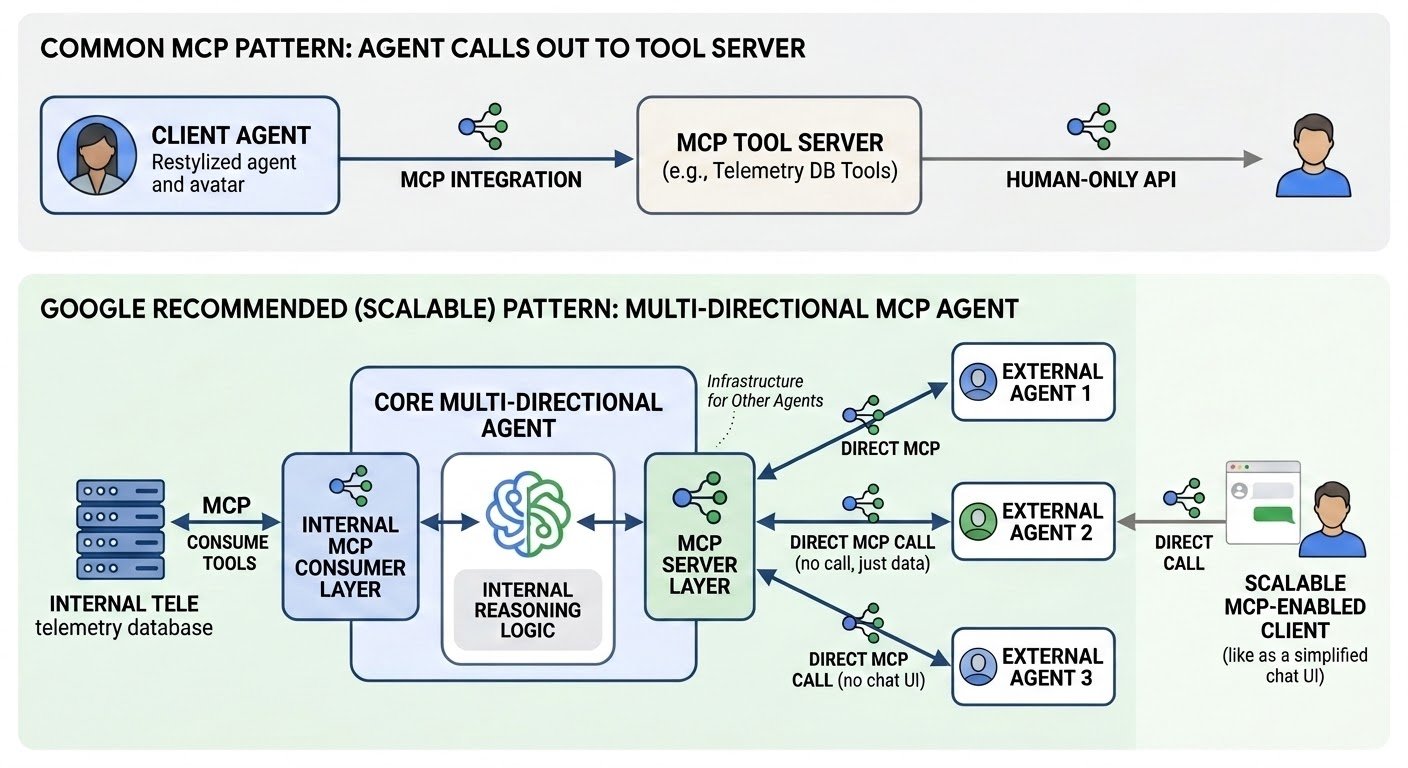
Cost management is another major concern as inference prices remain high. Tiered routing ensures that expensive models are only used for complex tasks that actually require deep reasoning. Similarly, bidirectional MCP turns agents into reusable infrastructure components rather than isolated chatbots. This enables composability, where one team’s agent can become a tool for another team’s workflow without building custom integrations. These patterns emphasize sound engineering over model size, proving that architecture often matters more than raw model power.
What you can do
- Audit your agent’s data access to see if internal MCP tools can be exposed securely as external servers.
- Identify agents that wait on each other and refactor them to use an event bus for parallel execution.
- Centralize validation logic so that fallback models cannot bypass quality checks applied to primary models.
- Analyze your traffic distribution to determine if simple queries can be handled by cheaper models or regex.
- Implement strict access controls if you expose agent tools via MCP to prevent unauthorized usage.
- Use frameworks like ADK that support concurrency and tool sharing to simplify implementation of these patterns.