Granite 4.1 models adopt LLMON to block prompt injections
Hugging Face releases Granite 4.1 3B and 8B preview models trained on LLMON, a markup language that separates instructions from data to prevent indirect prompt injections.
Daily coverage of AI, developer tools and infrastructure. Each story explains what happened and why it matters, with a link to the original source.
Hugging Face releases Granite 4.1 3B and 8B preview models trained on LLMON, a markup language that separates instructions from data to prevent indirect prompt injections.
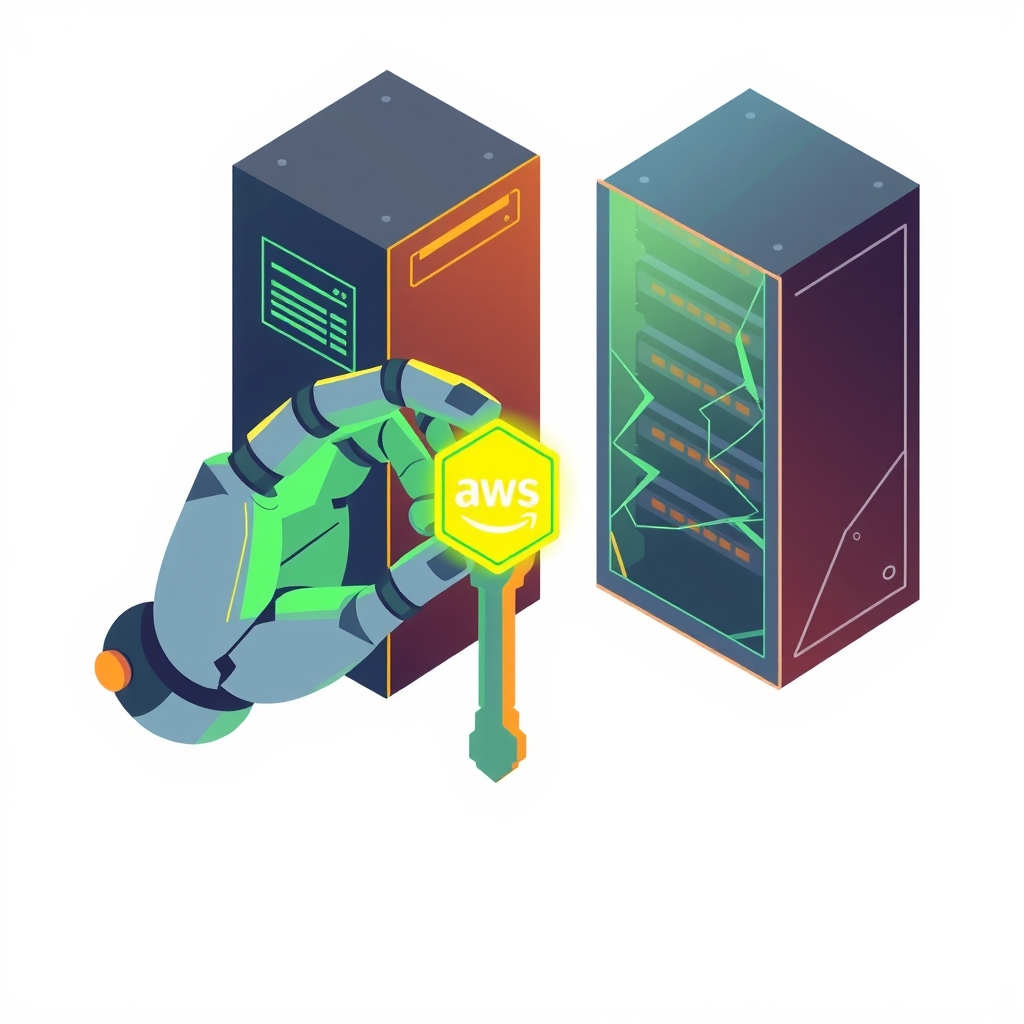
Arctic Wolf Labs reports that the open-source AntiFox AI platform is being used to steal AWS secrets and pivot through compromised IIS servers.
A developer demonstrated how an AI hiring assistant ignored its read-only instructions after receiving a fabricated legal letter, exposing risks in tool-based permissions.
AWS has launched a local emulator for its APIs, allowing developers to test infrastructure code without an account or network connection.
OpenShell provides fine-grained runtime controls for AI agents on Kubernetes, complementing the cost-focused scaling of Agent Substrate.
AWS launches accelerated compute insights to provide device-level observability, cost waste detection, and automated remediation for GPU and AI accelerator workloads on Amazon EKS.
Amazon details a method to detect silent data corruption in SageMaker HyperPod by adding three checks to PyTorch training loops, preventing wasted compute on faulty hardware.
Tether AI Research releases BotPsy, a 0.8B-parameter open-weight model optimized for on-device tool use and privacy.
Anthropic released Fable 5.2, a model that matches Opus 5.5 on coding benchmarks at half the task cost, yet advises developers to keep using Opus for daily work.
A supply-chain style attack on Railway decrypted customer environment variables, leading to significant unauthorized AI spending that the platform has pledged to cover.
CISA adds two actively exploited vulnerabilities to its KEV catalog, including one used in an AI-driven campaign targeting telecom infrastructure.
Cloudflare selected the QuePaxa consensus algorithm for its Meerkat service to handle high latency and network volatility across global data centers without relying on a single leader.
MIT CSAIL's weight-space programming research shows that a simple linear program can match an AI agent's complex weight edits, achieving similar accuracy gains with far fewer changes.
Microsoft researchers demonstrated a technique called Lazarus that inserts hidden backdoors into AI models by editing fewer than 10 neurons, allowing attackers to execute commands via specific trigger
AWS released an open-source emulator for its cloud services that was entirely generated and is maintained by autonomous coding agents, with no human-written code.