SpaceX secures $40 billion GPU lease to fund AI expansion
SpaceX has committed to a $40 billion financing deal with Apollo Global Management to lease Nvidia GPUs, marking the largest committed GPU financing to date.
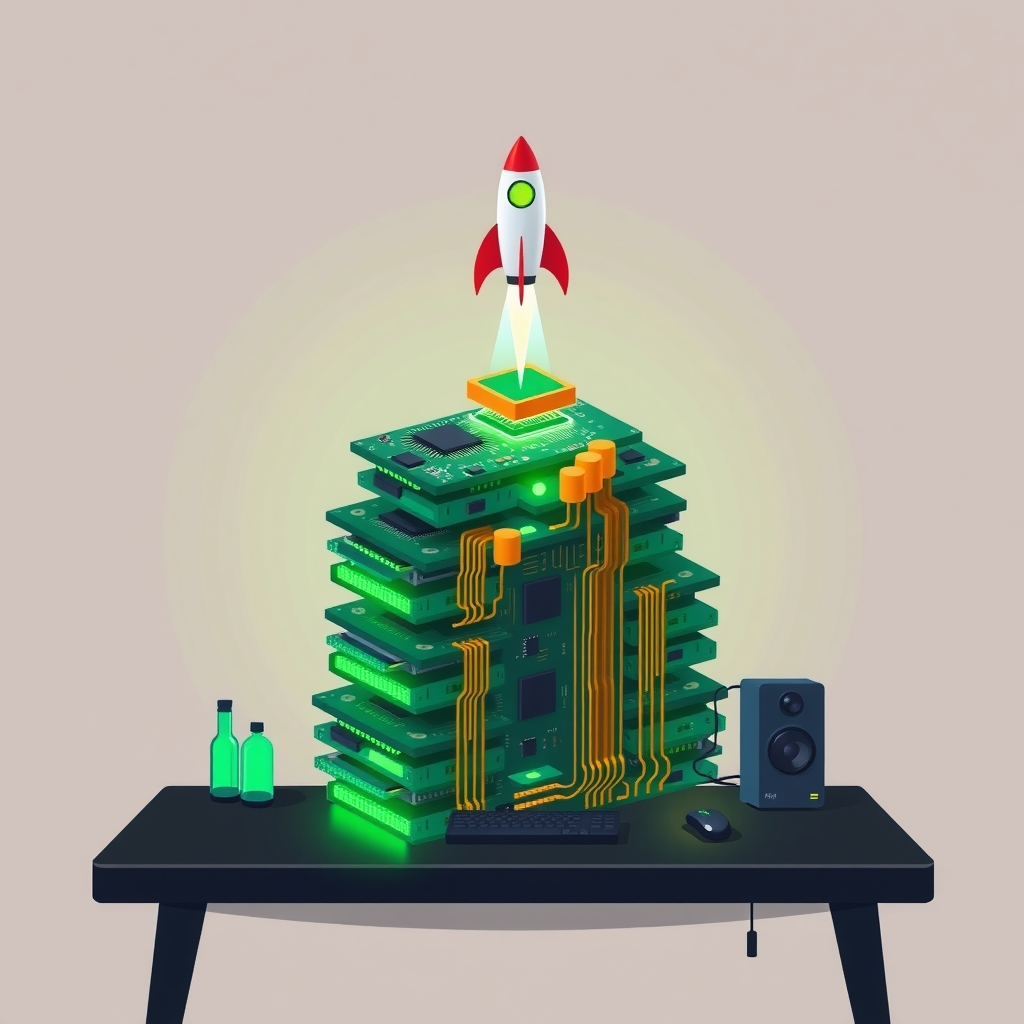
SpaceX has secured a binding commitment for approximately $40 billion in financing dedicated to acquiring AI chips and related data center infrastructure. The agreement, disclosed in a regulatory filing on Monday, involves Apollo Global Management, a major private equity firm, which will purchase the hardware and lease it to SpaceX. This arrangement is described by the company as the largest committed GPU financing deal ever recorded, signaling a massive escalation in capital expenditure for artificial intelligence capabilities.
What happened
Under the terms of the agreement, an entity managed by Apollo Global Management will buy Nvidia’s next-generation Vera Rubin chips and associated server hardware. Instead of SpaceX purchasing these assets outright, the equipment will be leased to the aerospace and technology company. The leases are structured to last between five and five-and-a-quarter years, with the term beginning upon the delivery of each tranche of equipment. SpaceX anticipates that the deal will close by the end of the year, subject to standard closing conditions, with the first leases commencing in the first half of 2027 as the hardware arrives.
This financing structure provides SpaceX with an alternative funding mechanism for its rapidly growing AI ambitions, reducing reliance on traditional debt markets. Bret Johnsen, SpaceX’s Chief Financial Officer, stated that the lease diversifies their funding sources and addresses a significant portion of the capital required for their growth plans. He noted that the company is seeing payback periods of less than one year on its AI infrastructure investments as it scales compute resources to support its Grok chatbot and cloud services.
The deal follows a strong third quarter for SpaceX’s AI segment, which includes the Grok chatbot, the Cursor coding tool, and its cloud compute business. This segment generated $7.6 billion in revenue, surpassing the combined revenue from Starlink and rocket launches, which totaled $14.6 billion for the quarter. Capital expenditures have surged accordingly, rising to nearly $20 billion from $6.9 billion a year earlier. Johnsen indicated on an October 20 earnings call that the company expects to spend between $35 billion and $40 billion in the fourth quarter alone.
How it works
The core mechanism here is a sale-leaseback or direct lease structure involving specialized hardware. Apollo Global Management acts as the financier and owner of the physical assets, specifically the high-performance GPUs and server racks. SpaceX, as the lessee, gains immediate access to this compute power without tying up its own cash reserves in upfront capital expenditures. This is crucial for hardware that depreciates quickly but generates immediate revenue through AI services.
The hardware in question consists of Nvidia’s Vera Rubin chips, which represent the next generation of AI accelerators. By leasing rather than buying, SpaceX shifts the balance sheet impact from a massive immediate cash outflow to a series of operational lease payments over five years. This allows the company to align its costs more closely with the revenue generated by the AI services running on that hardware, especially given the reported sub-one-year payback period.
Key details
- Deal Value: Approximately $40 billion in committed financing for AI chips and data center equipment.
- Partner: Apollo Global Management, a New York-based private equity giant, will purchase and own the hardware.
- Hardware: Nvidia’s next-generation Vera Rubin chips and related server infrastructure.
- Lease Term: Five to five-and-a-quarter years, starting upon delivery of each equipment tranche.
- Timeline: Deal expected to close by year-end; leases begin in the first half of 2027.
- Financial Context: SpaceX’s AI segment generated $7.6 billion in Q3 revenue, exceeding Starlink and launch revenues combined.
Why it matters
For software engineers and technical leaders, this deal highlights the escalating cost of entry for competitive AI infrastructure. The shift toward leasing models suggests that even well-capitalized companies are seeking to preserve liquidity while scaling compute. It underscores that access to cutting-edge hardware like the Vera Rubin chips is becoming a primary bottleneck and cost driver, influencing how AI products are built and priced. The reported sub-one-year payback period also indicates that current AI applications, particularly those integrated into high-volume services like Grok and Cursor, are generating substantial immediate returns on infrastructure investment.
Furthermore, the consolidation pressure on smaller AI infrastructure providers is intensifying. Elon Musk commented that debt markets are largely closed to companies without diverse revenue streams outside of AI data centers. He predicted significant consolidation among the more than 200 "neocloud" companies that rely solely on renting out GPUs. For developers building on these platforms, this signals potential volatility in the supply chain of compute resources, as smaller providers may struggle to secure financing for hardware upgrades.
What you can do
- Evaluate compute costs: Review your current infrastructure spending and consider whether leasing models could improve cash flow for hardware-intensive projects.
- Monitor provider stability: If you rely on smaller neocloud providers for GPU access, assess their financial health and funding sources given the predicted market consolidation.
- Optimize AI ROI: Focus on applications with clear, short-term revenue potential to justify high infrastructure costs, mirroring SpaceX’s reported sub-one-year payback strategy.
- Diversify infrastructure partners: Avoid dependency on a single compute provider to mitigate risks associated with market consolidation and hardware availability.
- Stay updated on hardware cycles: Keep track of release schedules for next-gen chips like Vera Rubin to plan capacity upgrades and budget for potential price shifts.