Google launches enterprise-focused Gemini agent with multi-model support
Google introduced a unified agentic AI for businesses that connects to internal systems, supports third-party models like Claude, and operates with its own Workspace identity.
At a Google Cloud event on Thursday, the company announced a significant expansion of its Gemini AI platform, introducing a unified agent designed for enterprise use. This new capability moves beyond simple question-answering to execute complex tasks on behalf of users, integrating directly with business data and workflows. The launch targets corporate environments first, leveraging Gemini’s existing footprint in nearly 90% of Fortune 100 companies.
What happened
Google is shifting Gemini from a conversational tool to an active agent capable of planning and executing work. Thomas Kurian, CEO of Google Cloud, stated that users can now provide objectives rather than just instructions. The agent autonomously determines the necessary steps, utilizes custom skills, and connects to internal systems to achieve these goals. This approach addresses the growing demand for AI that can handle end-to-end processes, such as scheduling, coding, and data analysis, without constant human intervention.
The rollout strategy prioritizes businesses to address critical challenges in security, scale, and performance before expanding to consumer markets. Sundar Pichai, Google CEO, highlighted that this phased approach allows the company to refine the technology within controlled enterprise environments. With over 1 billion monthly active users already engaging with Gemini, the infrastructure is in place to support widespread adoption, but the initial focus remains on solving harder operational problems for large organizations.
Early testing involved major companies including Shopify, PayPal, and On. Other notable Gemini Enterprise customers include BNP Paribas, Merck, and Ulta Beauty. These organizations are using the platform to integrate AI into their daily operations, testing its ability to manage complex workflows and interact with diverse software ecosystems securely.
How it works
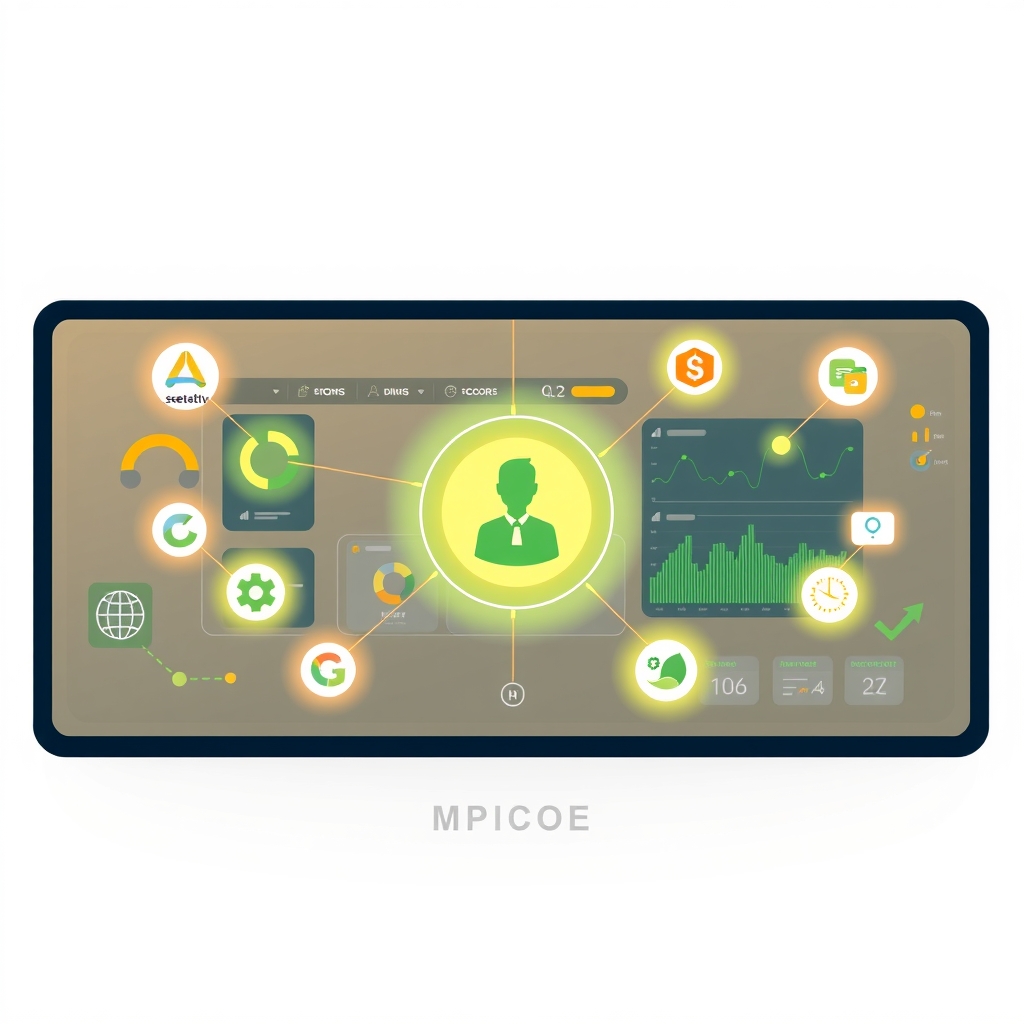
The agent functions as a distinct entity within the organization, complete with its own Google Workspace account, email address, and context. It understands organizational structures, including team memberships, time zones, and approval hierarchies. Users can interact with the agent by tagging it in chats, sending emails, or sharing files. As it performs tasks, it generates an audit trail attributed to the agent itself, ensuring transparency and accountability for automated actions.
A key technical feature is the model picker, which allows the system to select the most appropriate AI model for a given task. By default, Gemini chooses the best model, but users can manually override this selection. The system currently supports third-party models, starting with Anthropic’s Claude, and plans to include open-source and private models in the future. This flexibility enables businesses to balance performance, cost, and specific capability requirements.
Connectivity is handled through standard integrations and the Model Context Protocol (MCP). The agent connects to platforms like Microsoft 365, Slack, Jira, Git, BigQuery, Snowflake, and Postgres. It can also interface with any MCP server, whether located inside or outside the company network. A "tasks inbox" interface provides visibility into the agent’s reasoning, subagent delegation, and progress, allowing users to monitor and intervene if necessary.
Key details
- The agent operates with its own Workspace identity, including a unique email address and contextual awareness of company structure.
- Users can choose from multiple AI models, including third-party options like Anthropic’s Claude, with future support for open-source models.
- Integration extends to major enterprise tools such as Microsoft 365, Slack, Jira, Git, BigQuery, Databricks, and Snowflake.
- The system supports the Model Context Protocol (MCP) for secure connections to internal and external servers.
- New financial controls include multi-model orchestration, smart routing, and real-time spend caps to manage AI costs.
- Access is available across iOS, Android, Windows, Mac, command line interfaces, and various productivity platforms.
Why it matters
For software engineers and IT leaders, this launch represents a shift toward agentic workflows that require robust governance and monitoring. The ability to assign objectives rather than step-by-step instructions reduces the cognitive load on developers but increases the need for trust in autonomous decision-making. The built-in audit trails and distinct agent identities help mitigate risks by providing clear attribution for actions taken by AI, which is crucial for compliance and debugging in enterprise environments.
The support for multi-model orchestration and MCP connectivity addresses a common pain point in AI adoption: vendor lock-in and integration complexity. By allowing teams to route tasks to different models based on cost or capability, organizations can optimize their AI spending and performance. The inclusion of open-source and private models in the roadmap further suggests a move toward hybrid AI architectures, where sensitive data can be processed locally while leveraging powerful cloud models for other tasks.
What you can do
- Evaluate your current workflow automation needs to identify tasks suitable for objective-based delegation.
- Review your existing integrations with tools like Slack, Jira, or BigQuery to prepare for MCP-compatible connections.
- Establish guidelines for AI agent interactions, including approval hierarchies and audit trail review processes.
- Monitor the availability of third-party and open-source model support to plan for multi-model strategies.
- Test the "tasks inbox" interface to understand how visibility into agent reasoning can improve oversight.
- Assess your current AI spending and explore the new flexible spending options like real-time spend caps.