From prompt engineer to clinical AI integrator at Boston Children’s Hospital
Dinesh Rai’s role at Boston Children’s Hospital evolved from prompt engineering to building trusted clinical AI systems, highlighting the shift toward integration and evaluation in healthcare.
In August 2023, Boston Children’s Hospital hired Dinesh Rai as a prompt engineer, a role that was then considered a emerging specialty in generative AI. Three years later, Rai’s title has shifted to Clinical AI Engineer, reflecting a broader industry move away from simple prompt crafting toward complex system integration and rigorous evaluation of large language models in healthcare settings.
What happened
When the hospital posted its initial job listing in 2023, the focus was on coaxing better answers from large language models through careful instruction and context setting. Rai, an emergency physician with self-taught coding skills and a fellowship in clinical informatics, secured the position. At the time, hospital leadership believed that knowing how to prompt AI properly would be the primary job function of the future. John Brownstein, the chief innovation officer, noted that the hospital needed internal expertise to begin using these new tools effectively.
However, the rapid improvement of underlying models has made elaborate prompting less critical. The challenge has shifted from getting an answer to embedding AI tools into daily operations and building agents that can manage complex workflows. Rai now spends roughly half his day working with developers on technical projects and the other half collaborating with clinicians to identify their actual needs. This hybrid approach allows him to bridge the gap between technical possibilities and clinical realities, ensuring that AI solutions are both functional and safe for patient care.
Rai’s background includes a bachelor’s degree in supply-chain management and marketing sciences from Rutgers Business School, followed by a Doctor of Medicine from Albert Einstein College of Medicine. Before joining Boston Children’s, he worked at Pieces, a healthcare AI company, where he led efforts to bring LLM-based medical summarization into clinical use. He temporarily stepped away from practicing medicine to focus on technology but has since reactivated his medical license and plans to return to clinical practice in some capacity within the next year.
How it works
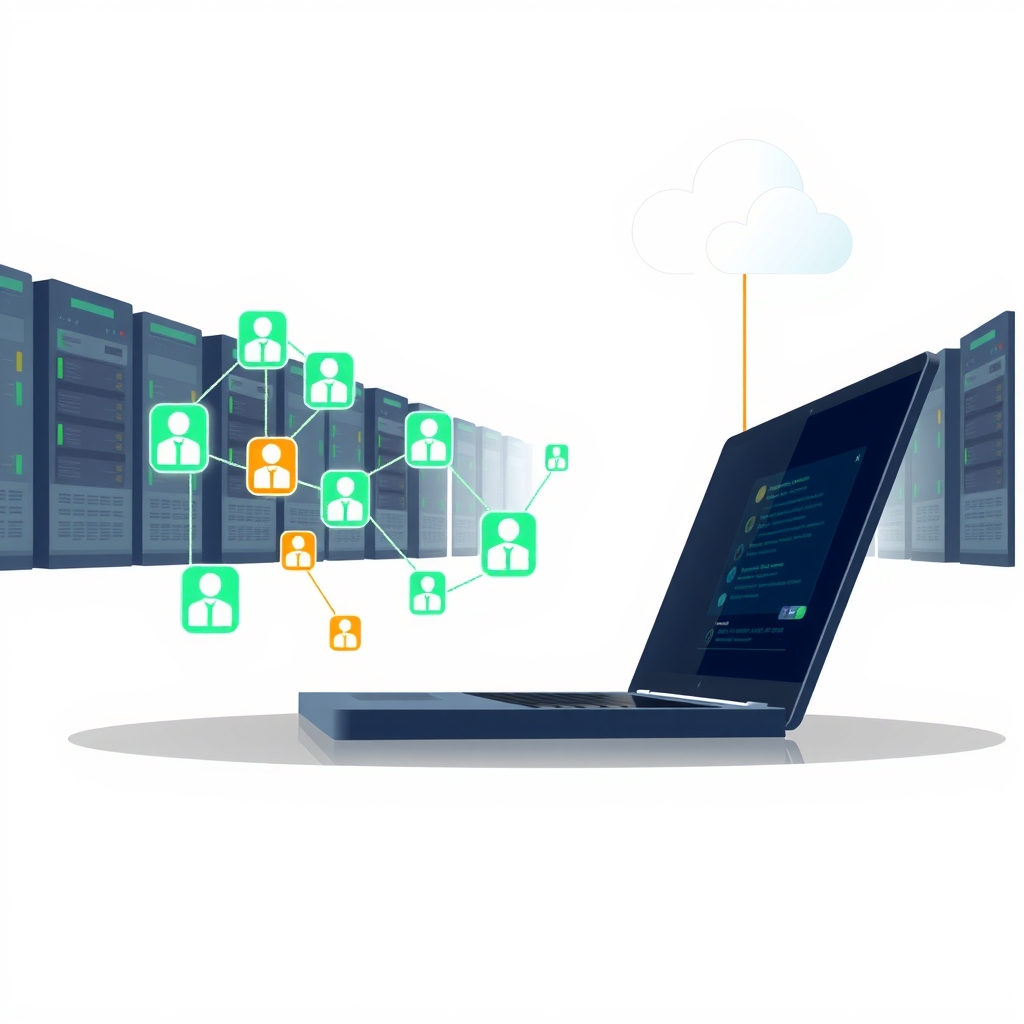
The core of Rai’s current work involves integrating AI into existing healthcare systems rather than just interacting with chat interfaces. One key project, called "clinical doppelgangers," helps doctors treating complicated patients find similar cases in the hospital’s historical data. Since medical guidelines are often based on large populations, they may not apply to individual children with rare or complex diseases. The system allows clinicians to identify previous patients with relevant similarities, examine their treatment trajectories, and see how different interventions turned out. This provides an additional source of evidence when published literature offers little guidance.
Building such systems requires more than just querying a model. It demands a deep understanding of what hospital data represents and how AI systems can fail. For example, when deciding how much of a patient’s record to feed an AI model, developers might assume more data is always better, while clinicians might assume the model will ignore irrelevant information. Rai identifies the flaw in both assumptions: clinically, an abnormal lab result may not be relevant to the specific question, and technically, an LLM cannot be trusted to recognize that irrelevance. If asked, the model may construct a plausible but unsupported explanation for why an abnormality matters.
Key details
- Dinesh Rai joined Boston Children’s Hospital in August 2023 as a prompt engineer and now serves as a Clinical AI Engineer.
- The role has evolved from focusing on prompt engineering to building AI agents and integrating them into daily healthcare operations.
- Rai splits his time equally between technical development work and collaborating with clinicians to define requirements.
- The "clinical doppelgangers" project uses historical data to help doctors find similar cases for complex patients who do not fit standard population guidelines.
- Evaluation of AI outputs now relies heavily on clinician review, with users trusting tools more after seeing and correcting their mistakes.
- Rai emphasizes that domain knowledge of healthcare workflows and data structures is more durable and valuable than mastery of specific AI tools.
Why it matters
For software builders and technical leads, this story illustrates that the value of AI in high-stakes environments lies not in the model itself but in the surrounding infrastructure. As models become more capable, the bottleneck shifts to integration, data quality, and trust. Engineers must design systems that account for the limitations of LLMs, such as their tendency to hallucinate connections between unrelated data points. This requires a shift from optimizing prompts to building robust evaluation frameworks and user interfaces that allow experts to verify outputs efficiently.
The experience at Boston Children’s also highlights the importance of cross-functional collaboration. Technical teams often make assumptions about data utility that do not align with clinical reality, while clinicians may overestimate the model’s ability to filter noise. A professional who understands both domains can identify these mismatches early, preventing the deployment of systems that look reasonable in isolation but fail in practice. This dual perspective is essential for creating AI tools that support rather than replace human judgment.
What you can do
- Prioritize learning fundamental programming and system design skills over mastering specific prompt engineering techniques, as the latter becomes less critical with better models.
- Gain deep domain knowledge in the industry you serve, understanding workflows, data sources, and common failure points to provide necessary context for AI systems.
- Build evaluation pipelines that involve end-users early in the process, allowing them to review outputs and identify errors before full deployment.
- Design interfaces that make AI limitations visible, helping users understand when to trust the output and when to rely on their own expertise.
- Collaborate closely with subject matter experts to challenge assumptions about data relevance and model behavior during the development phase.
- Focus on creating tools that augment human decision-making rather than attempting to fully automate complex, nuanced tasks.