Clay’s strategy for building production-grade go-to-market agents
Jeff Barg explains how Clay rebuilt its agent infrastructure, why customers hate model selectors, and the economics of scoring every company in the world.
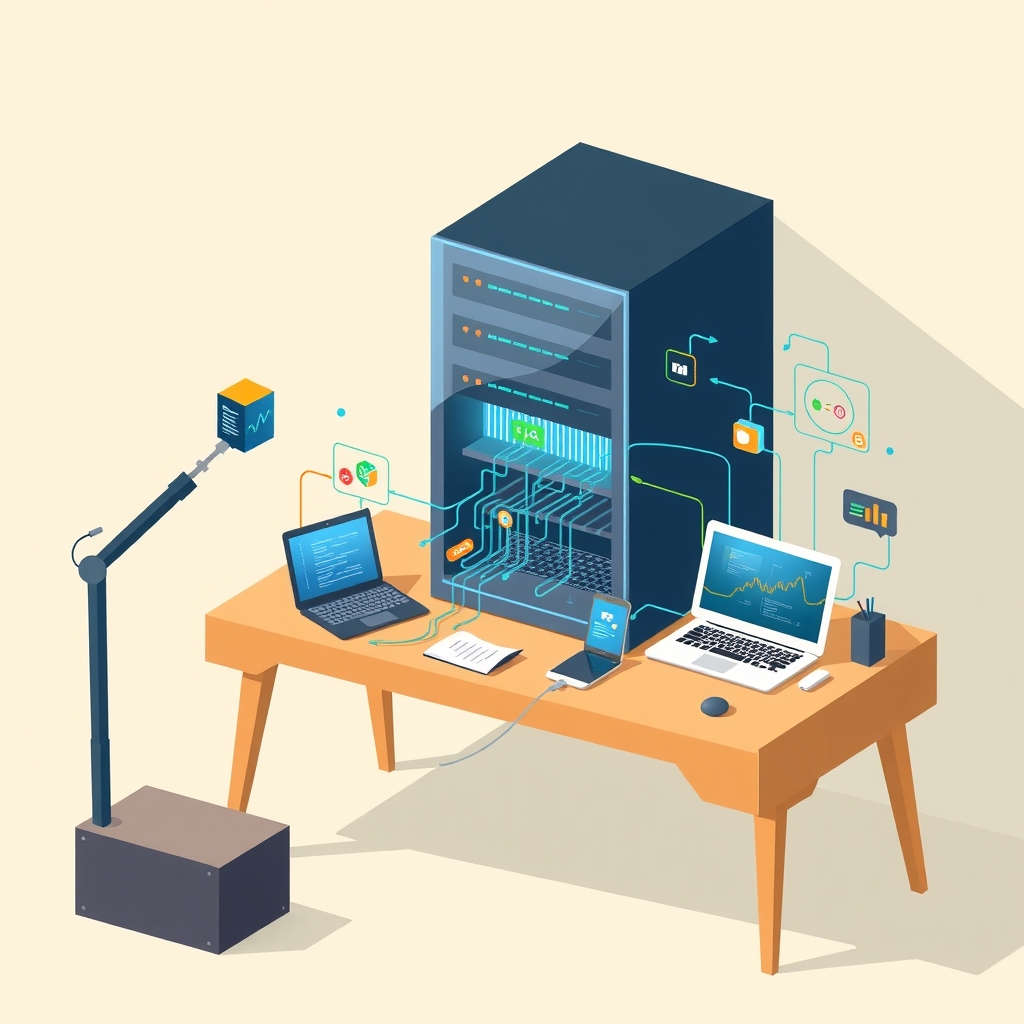
Clay is restructuring its go-to-market infrastructure to support both its native AI agent and external coding harnesses like Claude Code. Jeff Barg, Head of AI at Clay, describes a shift toward open tooling that delivers consistent results regardless of the interface users prefer. This approach reflects a broader industry move where usage is now split nearly evenly between proprietary agents and third-party integrations.
What happened
Clay has grown significantly since acquiring Avenue, an ops alerting startup cofounded by Barg, in early 2025. At the time of the acquisition, Clay had about 50 employees while Avenue had five. Today, the combined team numbers around 600 people, and the company recently raised $115 million in a Series D round led by Wellington, valuing the business at $7.1 billion. Despite this growth, the engineering culture retains a scrappy persistence from its early days.
The product strategy has evolved from a closed system to an open platform. Initially, Clay’s internal go-to-market team resisted moving away from their existing tools, specifically Cursor. To accommodate them, the engineering team built a command-line interface and API that allows external agents to access Clay’s data and tools. This decision resulted in a surprising outcome: usage is now divided roughly 50/50 between Clay’s own agent and outside harnesses. The company aims to ensure that a user pointing Claude Code at Clay gets the same quality of results as someone using the native interface.
A significant portion of the recent engineering effort went into rebuilding Sculptor, Clay’s primary agent. Originally launched in September 2025 as a tool-loop agent based on Sonnet 3.5 models, it struggled with complex tasks like booking meetings because it lacked visibility into CRM data and campaign results. The team realized that coding agents excel at Bash and Python but fail when tools are too limited or data silos exist. Consequently, they rearchitected Sculptor as a coding agent running on the Pi harness within a cloud sandbox, integrating a new data layer called Audiences to unify records from CRMs and Gong.
How it works
Clay’s infrastructure relies on a self-built stack rather than popular orchestration frameworks. The team uses BullMQ to manage agent jobs, Postgres and ClickHouse for product data, and Snowflake for analytics. They deliberately avoided using Temporal or LangGraph. While Barg admits uncertainty about how BullMQ will handle another tenfold increase in usage, it has remained stable so far. To manage scale, especially when users trigger agents on large tables, Clay implemented request throttling and pause-resume capabilities to handle provider rate limits and outages.
Model selection is becoming automated to reduce user friction. Customers have expressed strong dissatisfaction with manually choosing models for each task, as they cannot constantly evaluate new releases. Clay is introducing an automatic router that selects the appropriate model based on the specific job, such as distinguishing between finding a well-known CEO versus researching an obscure local contact. This router operates without flashy branding, aiming to let most users work on autopilot while preserving manual control for power users and agency owners who require specific model behaviors.
Key details
- Usage of Clay’s platform is split approximately 50/50 between its native agent and external harnesses like Claude Code.
- Scoring all 40 million companies in Clay’s database against an ideal customer profile would cost roughly $1,500 using a classifier like TypeSafe’s Jev.
- Clay raised $115 million in September 2026 at a $7.1 billion valuation, led by Wellington.
- The engineering team rebuilt the Sculptor agent to run as a coding agent in a cloud sandbox, integrating CRM and Gong data via a new Audiences layer.
- Clay uses BullMQ for job management instead of Temporal or LangGraph, relying on custom throttling and pause-resume logic for scale.
- Frontier models are reserved for deep research and orchestration, while cheaper models handle routine qualification tasks that are considered close to solved.
Why it matters
For software engineers and technical founders, Clay’s experience highlights the diminishing returns of building closed AI ecosystems. The fact that half of Clay’s usage comes from external tools suggests that developers prefer integrating AI into their existing workflows rather than adopting new standalone interfaces. This validates the strategy of providing robust APIs and CLIs over forcing users into proprietary dashboards. It also demonstrates that "agent" products must be flexible enough to serve as data layers for other AI systems, not just as end-user applications.
The economic analysis of lead qualification offers a practical benchmark for AI adoption. With the cost to score the entire global market dropping to around $1,500, the barrier to entry for comprehensive market analysis has vanished. However, Barg notes that post-training custom models only makes financial sense once inference costs reach between $10 million and $100 million. For most companies, swapping in cheaper open-weight models and optimizing prompts is a more viable path than training proprietary models, which remain difficult to beat even in narrow domains.
What you can do
- Evaluate whether your AI product needs a native interface or if a robust CLI and API would better serve developers already using tools like Cursor or Codex.
- Implement automatic model routing in your applications to spare users from manually selecting models for different task complexities.
- Consider using cheaper, open-weight models for routine classification tasks and reserve frontier models for complex orchestration and deep research.
- Build throttling and pause-resume mechanisms into your agent infrastructure to handle sudden spikes in demand and provider rate limits.
- Delay post-training custom models until your inference spend exceeds $10 million, focusing first on prompt engineering and tool optimization.
- Ensure your agents have access to unified data layers across CRMs and communication platforms to avoid context blindness during complex tasks.