Cognition boosts SWE-2.1 speed tenfold with Cerebras hardware
Cognition released SWE-2.1, a reinforcement learning-trained coding model that doubles benchmark scores and runs at 600 tokens per second on Cerebras chips.
Cognition has unveiled SWE-2.1, its latest in-house coding model trained via pure reinforcement learning on Moonshot AI’s Kimi K3. Released in late November 2026, the update delivers significant performance gains and introduces an Ultrafast variant that achieves ten times the token generation speed of its predecessor through specialized hardware integration.
What happened
The new model represents Cognition’s third release in just eleven weeks, following SWE-2 in September and SWE-2 Flash in early November. Built on the open-weight Kimi K3 architecture, SWE-2.1 demonstrates substantial improvements across multiple industry benchmarks. The company reports that the model scores twice as high as SWE-2 on Terminal-Bench 4.1, marking a notable step forward in autonomous coding capabilities. While it still trails behind frontier models like Claude Opus 5.5, the gap is narrowing, particularly in specialized tasks involving science, performance engineering, and cybersecurity.
Alongside the base model, Cognition introduced two distinct variants to address specific user needs. The SWE-2.1 Ultrafast version leverages a partnership with AI chip manufacturer Cerebras to dramatically increase inference speed. Additionally, the company launched SWE-2.1 Cyber, a variant with adjusted safety safeguards designed specifically for defensive security workflows. This specialized model is now powering normal scans within the Devin Security platform, offering a more permissive environment for identifying vulnerabilities without the strict constraints typical of general-purpose assistants.
Access to these tools is currently structured around promotional periods and tiered pricing. Subscribers to Devin Pro, Max, and Teams plans can use SWE-2.1 for free in Devin Desktop and CLI until December 8. After this window, discounted rates will apply until January 30, 2027, before standard list pricing takes effect. This strategy allows developers to test the model’s efficacy in their daily workflows before committing to long-term costs.
How it works
The core advancement in SWE-2.1 lies in its training methodology and infrastructure optimization. Cognition expanded its reinforcement learning environment to handle both short-term coding tasks and long-horizon projects. The team also refined post-training algorithms to better control rollout length and reduce oscillations that previously destabilized training. These adjustments allow the model to maintain stability while learning from complex, multi-step engineering problems.
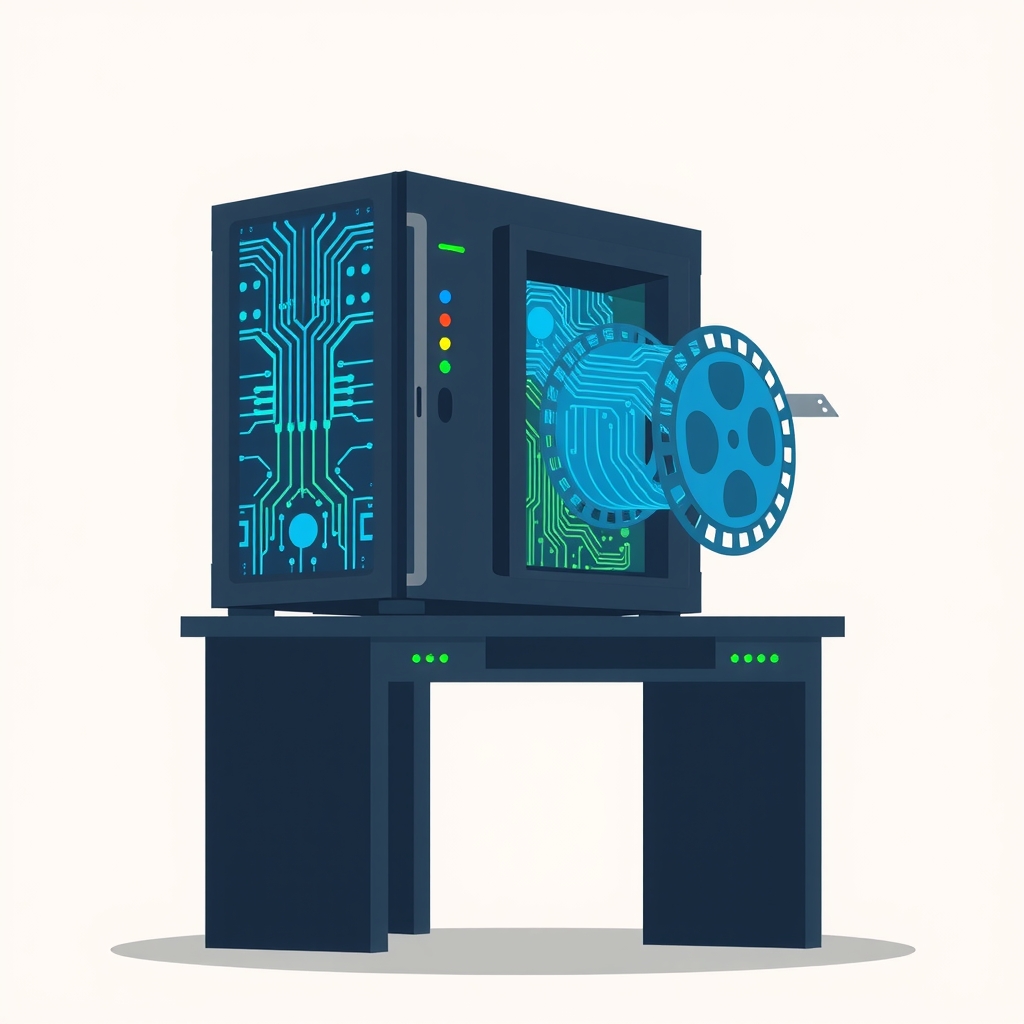
For the Ultrafast variant, the speed boost comes from hardware rather than model compression. By running the same SWE-2.1 model on Cerebras chips, Cognition increased throughput from 60 tokens per second to 600 tokens per second. This approach avoids the quality degradation often associated with quantization or distillation, preserving the model’s reasoning capabilities while delivering near-instantaneous code generation. The Cyber variant, meanwhile, operates on the same underlying architecture but modifies the safety layer to permit actions necessary for penetration testing and vulnerability scanning.
Key details
- SWE-2.1 scores 50.0 on Terminal-Bench 4.1, doubling the 24.2 score achieved by SWE-2.
- The Ultrafast variant runs at 600 tokens per second on Cerebras hardware, up from 60 tokens per second.
- SWE-2.1 Cyber achieves an 80% success rate on ExploitBench, compared to 36.1% for the previous SWE-2 model.
- Discounted pricing of $0.50 per million input tokens and $2.50 per million output tokens applies until January 30, 2027.
- Standard list pricing will rise to $2 per million input tokens and $10 per million output tokens after the discount period ends.
- SWE-2.1 Ultrafast is priced separately at $5 per million input tokens and $25 per million output tokens.
Why it matters
For engineering teams, the jump in inference speed changes the economics of using large language models for coding assistance. At 600 tokens per second, the latency between prompt and response becomes negligible, enabling more interactive and iterative development workflows. This speed allows developers to treat the AI as a real-time pair programmer rather than a batch processing tool, potentially reducing context switching and maintaining flow state during complex debugging sessions.
The introduction of a dedicated cybersecurity variant also signals a maturation in how AI tools handle sensitive operations. By separating general coding tasks from security scanning, Cognition acknowledges that defensive security work requires different risk tolerances. This specialization allows security engineers to use AI for routine vulnerability scans without triggering unnecessary refusals, while still relying on more powerful frontier models for deep, high-stakes analysis. It reflects a broader trend toward task-specific model tuning rather than one-size-fits-all solutions.
What you can do
- Test SWE-2.1 for free in Devin Desktop or CLI if you are a Pro, Max, or Teams subscriber before December 8.
- Evaluate the Ultrafast variant for latency-sensitive tasks if your budget allows for the higher token cost.
- Use SWE-2.1 Cyber for routine security scans within Devin Security to benefit from its specialized safeguards.
- Compare benchmark results against your current workflow tools, keeping in mind that FrontierCode 2.0 is a Cognition-specific benchmark.
- Plan your budget for January 2027 when discounted pricing ends and standard rates of $2 and $10 per million tokens begin.
- Monitor independent reproductions of benchmark scores, as current data comes primarily from Cognition’s own testing environments.