How AI agents are reviving the self-hosting hobby for developers
A developer explains how AI coding assistants reduced the friction of infrastructure management, making it easier to adopt complex tools like NixOS and automate deployments.
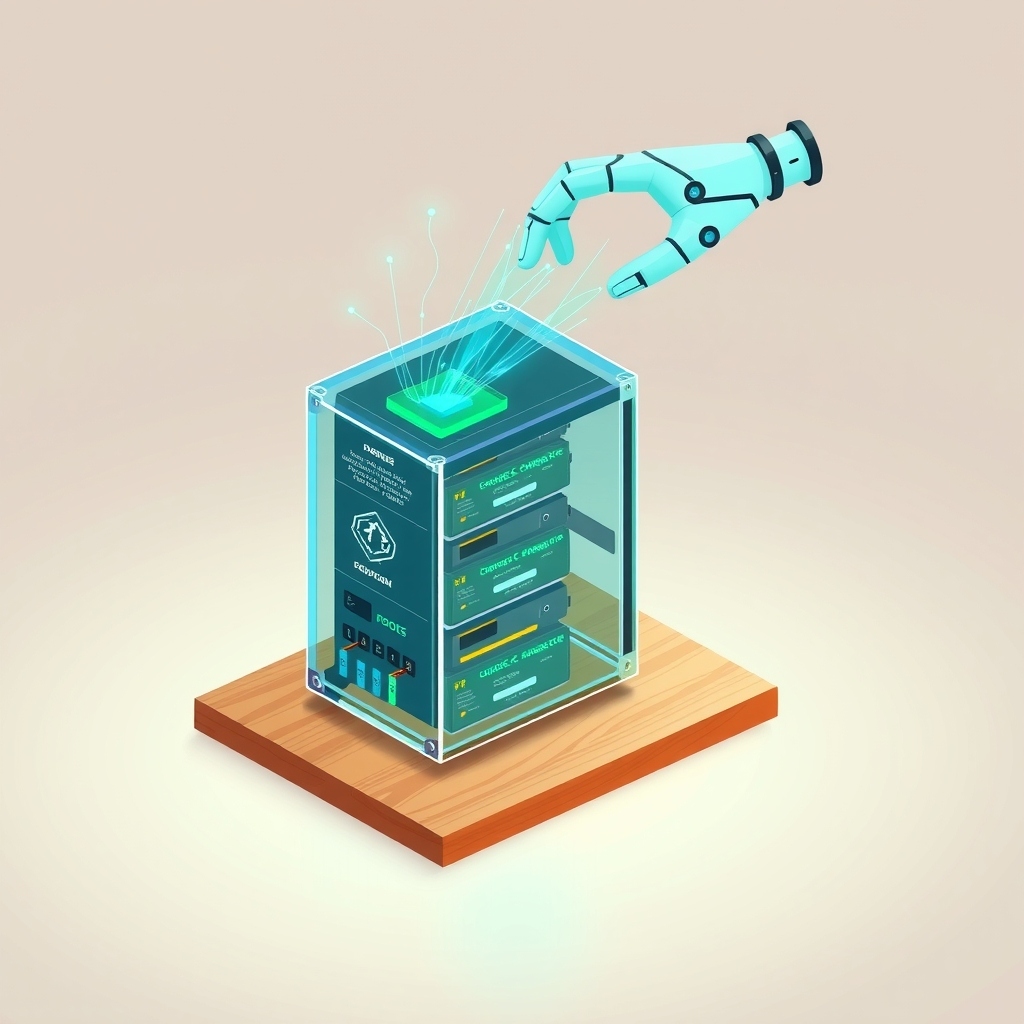
For many years, self-hosting personal services was a labor of love that eventually turned into a chore for one experienced developer. In late 2026, Jan-Lukas Else described how his enthusiasm for maintaining home infrastructure had waned due to the high effort required for routine maintenance and experimentation. Recently, however, he found his passion renewed, not by new hardware alone, but by the integration of artificial intelligence coding agents into his workflow.
What happened
Else’s journey reflects a common trajectory among homelab enthusiasts. Initially excited by the control and customization self-hosting offers, he eventually reached a point where maintaining existing services felt like enough work. The barrier to trying new software or adjusting configurations became too high, as it often required spending evenings reading documentation, parsing changelogs, and troubleshooting obscure errors. This friction caused him to stop experimenting, sticking only to what was already running.
The shift occurred when he began treating his infrastructure configuration files as code projects that could be managed by AI agents. By storing Docker Compose files, scripts, and other configurations in Git repositories, he enabled AI tools to assist with modifications. This change lowered the cognitive load required to implement spontaneous ideas. Instead of abandoning a concept because the setup seemed tedious, he could now delegate the initial heavy lifting to an assistant, allowing even complex adjustments to happen with significantly less personal effort.
This approach also opened doors to technologies he had previously avoided due to their steep learning curves. NixOS, a Linux distribution known for its declarative system configuration, is a prime example. While he appreciated the theoretical benefits of defining an entire operating system in code, the practical hurdle of getting it right was prohibitive. With AI assistance, he successfully deployed NixOS on his home server and began building custom Debian-based bootc images for his VPS infrastructure. Tasks that might have taken a week of solitary study were completed in half a day, allowing him to learn incrementally rather than mastering every detail upfront.
How it works
The core mechanism relies on treating infrastructure-as-code (IaC) files as standard software artifacts. Since configurations for containers and systems are text-based and version-controlled, AI coding agents can read, understand, and modify them just as they would application source code. When Else wants to add a service or update a setting, he prompts the AI to make the necessary changes to the relevant files. The agent handles the syntax, references documentation, and suggests best practices, reducing the need for manual research.
This capability is paired with robust automation pipelines. Tools like Renovate automatically monitor dependencies and create pull requests for updates, while GitHub Actions or Forgejo Actions handle the build and deployment steps. When a change is merged, the pipeline takes over, building images and deploying them to the server. This creates a feedback loop where the AI helps generate the configuration, and the automation ensures it is applied consistently without manual SSH sessions or error-prone command-line interventions.
Key details
- Infrastructure configurations are stored in Git repositories, enabling AI agents to treat them as code projects.
- The developer adopted NixOS for his home server, a task he previously avoided due to its complexity.
- Custom Debian-based bootc images are now built for VPS infrastructure, defined entirely in Git.
- AI assistance reduced the time to set up complex OS configurations from an estimated week to half a day.
- Renovate automates dependency updates, creating pull requests that can be reviewed and merged remotely.
- Hardware was upgraded from an HP t640 thin client to an ASRock DeskMini A300 with a Ryzen 5 PRO 4650G CPU.
Why it matters
For software engineers and technical founders, this narrative highlights a shift in how we approach personal and professional infrastructure. The traditional model of self-hosting requires deep, upfront knowledge of every component in the stack. AI lowers this barrier, allowing practitioners to leverage advanced tools like declarative operating systems without needing to memorize their entire specification. This democratizes access to robust infrastructure patterns, enabling developers to focus on architecture and outcomes rather than syntactic details.
Furthermore, the combination of AI generation and automated pipelines addresses the "maintenance tax" that often kills side projects. By automating the boring parts—version bumps, image builds, and deployments—developers can sustain a larger portfolio of services with less ongoing mental overhead. This efficiency makes it viable to run more complex, personalized tools at home, reducing reliance on big tech platforms for everyday digital tasks.
However, this ease of creation introduces new risks. AI-generated code can contain bugs, security vulnerabilities, or subtle misconfigurations. The developer notes that using an agent does not absolve the human operator of responsibility. Understanding the changes remains critical, and the temptation to deploy unnecessary services simply because it is easy must be checked. The goal is not to accumulate technical debt, but to reduce friction for valuable experiments.
What you can do
- Store all infrastructure configuration, including Docker Compose files and scripts, in version-controlled Git repositories.
- Use AI coding agents to draft initial configurations for new services or to refactor existing ones.
- Implement automated update tools like Renovate to manage dependency versions via pull requests.
- Set up CI/CD pipelines using GitHub Actions or similar tools to automate building and deploying changes on merge.
- Start small with declarative systems like NixOS by using AI to help translate your requirements into configuration code.
- Regularly review AI-generated changes for security implications and ensure you understand the underlying logic before deploying.