Goldman Sachs restricts AI coding agents to engineers amid security review
Goldman Sachs has limited access to Anthropic's Claude Code and Microsoft's GitHub Copilot to engineering staff, revoking permissions for traders and bankers following a risk assessment.
Goldman Sachs has restricted access to AI coding agents, limiting tools like Anthropic’s Claude Code and Microsoft’s GitHub Copilot exclusively to its engineering staff. The internal guidance, updated in October 2026, removes these capabilities from traders and bankers who had previously used them for market modeling and client flow analysis. This shift occurs just weeks before Goldman acts as a lead underwriter for Anthropic’s expected initial public offering.
What happened
The restriction follows an internal review of productivity and security risks associated with non-engineers generating and executing code. While Chief Information Officer Marco Argenti praised "vibe coding" by non-technical staff in July, noting that traders built useful prototypes for engineers to refine, the bank has since reversed this open approach. Traders and bankers expressed frustration over the change, as they relied on these agents to monitor trading flows, model market positions, and create visual materials without waiting for engineering resources.
Access remains available for "Strats," a hybrid role combining trading, quantitative research, and software engineering, according to sources familiar with the matter. A Goldman spokesperson stated that the firm makes certain AI tools available to determine the best use cases across the organization. This move aligns with earlier actions in April 2026, when Goldman removed Claude from its internal platform for bankers in Hong Kong due to contract interpretations, though ChatGPT and Gemini remained available there.
Despite restricting general employee access to third-party coding agents, Goldman maintains a close partnership with Anthropic. Engineers from Anthropic spent six months at the bank earlier this year helping build Claude-based agents for back-office functions like trade accounting and client onboarding. These enterprise-grade agents are managed directly by Goldman’s engineering teams, ensuring they operate within strict compliance frameworks. Meanwhile, Goldman and Morgan Stanley are preparing to lead Anthropic’s IPO, with the company expected to list on Nasdaq under the ticker ANT before the end of November 2026.
How it works
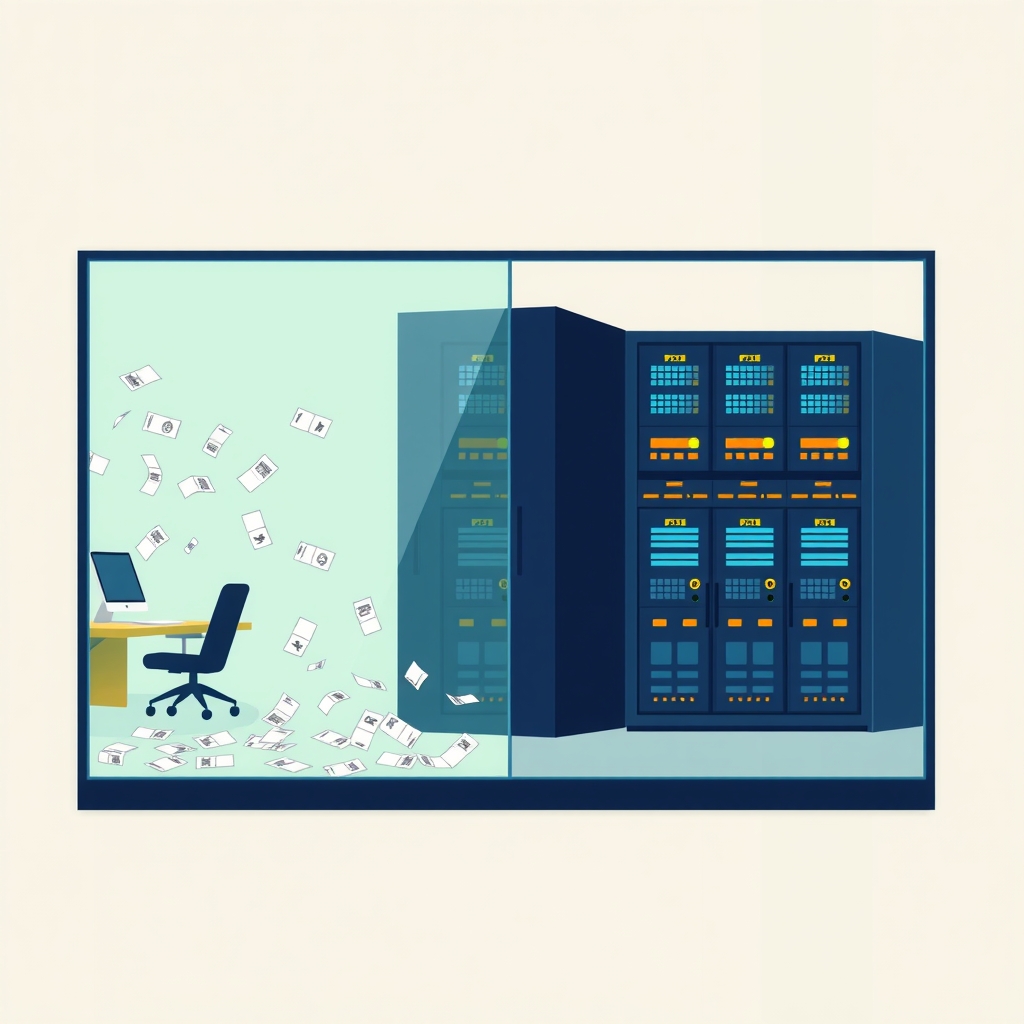
AI coding agents like Claude Code function by reading files, writing programs, and executing them with the same access privileges as the user. In a traditional engineering workflow, code undergoes rigorous review, testing, and deployment controls before reaching production environments. However, when traders or bankers use these agents, they often create scripts for immediate personal use, bypassing standard software development lifecycle checks. This creates a shadow IT environment where unreviewed code operates on machines handling sensitive client information.
The core risk lies in the lack of transparency and control. A trader using an agent to model positions may not understand how the generated code handles edge cases or unusual market conditions, potentially leading to significant financial losses. Furthermore, banks are legally required to maintain information barriers between different departments, such as investment banking and trading, to prevent conflicts of interest. Tools built ad-hoc by employees do not inherently respect these barriers, and engineers can only audit them if explicitly asked, leaving gaps in compliance monitoring.
Key details
- Restricted tools: Access to Anthropic’s Claude Code and Microsoft’s GitHub Copilot is now limited to engineers and Strats.
- Timeline: Internal guidance was updated in October 2026, following a July promotion of non-technical AI use by CIO Marco Argenti.
- Previous restrictions: Goldman barred Hong Kong bankers from using Claude in April 2026 based on contract terms.
- Continued partnership: Goldman engineers still work with Anthropic on back-office agents for trade accounting and client onboarding.
- IPO context: Goldman is a lead underwriter for Anthropic’s IPO, expected to list on Nasdaq as ANT in November 2026.
- Industry trend: JPMorgan and Schwab are also blocking outside agents from customer accounts, while Barclays plans to equip half its developers with Claude Code.
Why it matters
For technical leaders and founders, this decision highlights the tension between rapid innovation and regulatory compliance in high-stakes industries. Allowing non-engineers to execute code introduces significant operational risk, as these users lack the training to identify security vulnerabilities or logical errors in generated scripts. The incident underscores that AI adoption cannot be purely bottom-up in regulated sectors; governance structures must evolve alongside tool accessibility to prevent unauthorized data access or compliance breaches.
The move also signals a maturing market for enterprise AI, where distinction is made between consumer-facing chatbots and autonomous coding agents. While chatbots assist with information retrieval, coding agents actively change system states. Companies must define clear ownership models for AI-generated code, ensuring that every script touching production data has a designated engineer responsible for its maintenance and security. Without this accountability, organizations face increased liability and potential financial exposure from unvetted automation.
What you can do
- Define ownership policies: Establish clear rules requiring a named engineer to review and take responsibility for any code generated by non-technical staff before it interacts with production systems.
- Audit current usage: Identify where employees are currently using AI agents for scripting or data analysis and assess whether these workflows bypass existing security controls.
- Implement role-based access: Restrict autonomous coding agents to staff with formal software engineering training or equivalent quantitative expertise, similar to Goldman’s Strat model.
- Enhance monitoring: Deploy tools that log and analyze code execution patterns to detect unapproved scripts running on employee devices, especially those accessing sensitive client data.
- Document use cases: Record legitimate business needs identified by restricted users, such as market modeling, to inform the development of secure, engineer-built internal tools that meet those demands.
- Review vendor contracts: Ensure agreements with AI providers clearly define supported regions and usage rights to avoid sudden service disruptions like the Hong Kong restriction.