Five layers for sandboxing AI agents on Kubernetes
Oracle engineers outline a five-layer architecture for isolating autonomous AI agents on Kubernetes, balancing security and performance using runtimes like gVisor and Kata Containers.
Autonomous AI agents that generate and execute code introduce new security risks to shared Kubernetes infrastructure. To address this, engineers from Oracle Cloud Infrastructure have defined a five-layer sandboxing strategy that isolates agent workloads without sacrificing cluster efficiency. This approach leverages existing cloud-native tools to create secure boundaries around untrusted code execution.
What happened
As AI agents become more common in development workflows, they increasingly operate with autonomy to install packages, run scripts, and iterate on code. While this behavior is manageable on a local laptop, it poses significant risks in enterprise environments where agents share Kubernetes clusters with other critical workloads. Standard container isolation relies on the host kernel, meaning a kernel vulnerability exploited by an agent could compromise the entire node.
Mickey Boxell and Kay, product leaders at Oracle Cloud Infrastructure (OCI), detailed a structured approach to mitigating these risks in a technical deep dive. They argue that workload isolation has shifted from a niche hardening requirement to a baseline necessity for platforms running AI agents. The proposed solution does not require reinventing the wheel but rather assembling existing open-source components into a coherent stack.
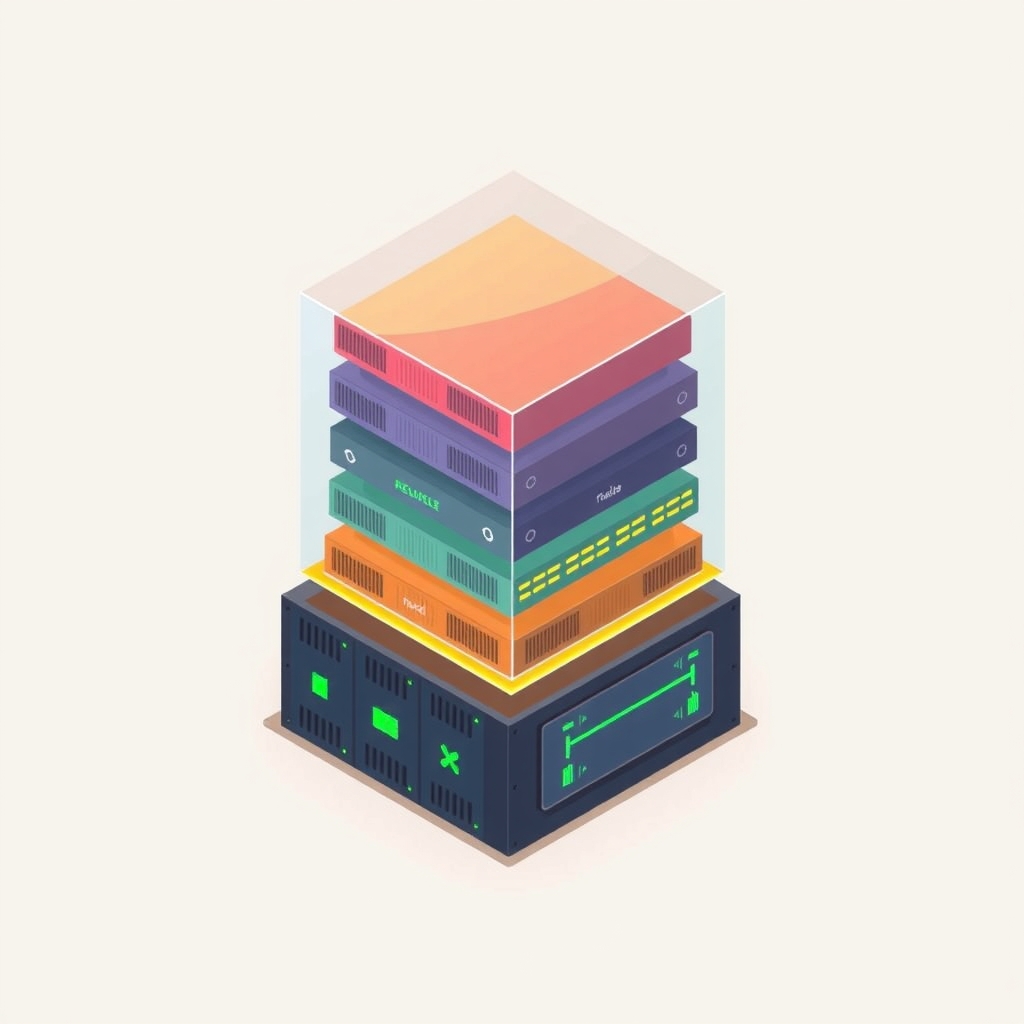
The framework consists of five distinct layers: the isolation runtime, the node configuration, the access policy, the Kubernetes request mechanism, and the session management layer. By addressing each layer, platform teams can limit the blast radius of autonomous code execution while maintaining the performance and flexibility developers expect.
How it works
The core of this strategy lies in choosing the right isolation boundary. Standard runc containers share the host kernel, offering high performance but lower security. For stronger isolation, teams can use gVisor, which implements a user-space application kernel to handle system calls, reducing the attack surface exposed to the host. For the highest level of security, Kata Containers runs each pod in a lightweight virtual machine with its own guest kernel, separated from the host by hardware virtualization. This prevents kernel-level exploits from escaping the container, though it incurs higher resource overhead.
Once the runtime is selected, the node must be configured to support it. This involves installing specific shims and ensuring hardware virtualization support for VM-based runtimes. The access layer then restricts what the agent can do inside the sandbox. This includes enforcing default-deny network policies, issuing short-lived credentials, and mounting data volumes as read-only unless write access is explicitly required. These policies ensure that even if an agent is compromised, its ability to exfiltrate data or damage external systems is minimized.
Kubernetes RuntimeClass objects allow pods to opt into these isolated runtimes dynamically. This means non-agent workloads can continue using the default high-performance runtime, while agent tasks automatically select the more secure, albeit heavier, environment. Finally, the Agent Sandbox project standardizes session management, allowing for stateful environments that can pause and resume, balancing resource usage with responsiveness.
Key details
- Isolation options:
runcshares the host kernel;gVisoruses a user-space kernel;Kata Containersuses lightweight VMs with separate guest kernels. - Node requirements:
Kata Containersrequires nodes with hardware virtualization support (KVM) and nested virtualization capabilities if running on VMs. - Access control: Network policies should default to deny egress, allowing only specific destinations like package mirrors or model endpoints.
- Credential management: Use short-lived tokens scoped to specific tasks rather than long-lived secrets mounted in the pod.
- Resource overhead: Sandboxed runtimes add CPU and memory overhead;
RuntimeClassdefinitions must include measured overhead values for accurate scheduling. - Session management: The Agent Sandbox API supports warm pools and persistent storage to handle the bursty nature of agent interactions.
Why it matters
For software engineers and platform leads, the proliferation of AI agents means that traditional container security models are no longer sufficient. An agent that can arbitrarily execute code represents a dynamic threat vector that static scanning cannot fully address. Implementing these five layers provides a defense-in-depth strategy that protects the underlying infrastructure from unpredictable agent behavior.
The trade-off between security and performance is central to this discussion. While Kata Containers offers the strongest isolation, the cost of booting a guest kernel and managing additional resources may be prohibitive for high-throughput, low-latency tasks. gVisor offers a middle ground, but its emulation of Linux system calls may not support all agent behaviors, such as complex nested builds or specific compiler operations. Understanding these trade-offs allows teams to make informed decisions based on their specific risk tolerance and workload requirements.
Furthermore, this approach leverages standard Kubernetes APIs, ensuring portability across different cloud providers and on-premises setups. By relying on community-driven projects like gVisor, Kata Containers, and the Agent Sandbox, organizations avoid vendor lock-in and benefit from continuous security updates and design reviews from a broad ecosystem of contributors.
What you can do
- Evaluate your current agent workloads to determine the appropriate isolation level, choosing between
gVisorfor balanced security andKata Containersfor maximum isolation. - Configure your Kubernetes nodes with the necessary runtimes and ensure hardware virtualization is enabled if using VM-based sandboxes.
- Define
RuntimeClassobjects for each sandboxed runtime, including accurate resource overhead measurements to prevent scheduling failures. - Implement strict network policies that default to denying all egress traffic, explicitly allowing only the endpoints required for agent tasks.
- Refactor credential management to issue short-lived, scoped tokens for agent sessions instead of using static secrets.
- Explore the Agent Sandbox project to manage stateful agent sessions and optimize resource usage through warm pools.