Cursor and Google add two-way voice to coding agents
Cursor and Google now let developers speak with coding agents in real time, while Anthropic’s Claude Code remains limited to dictation.
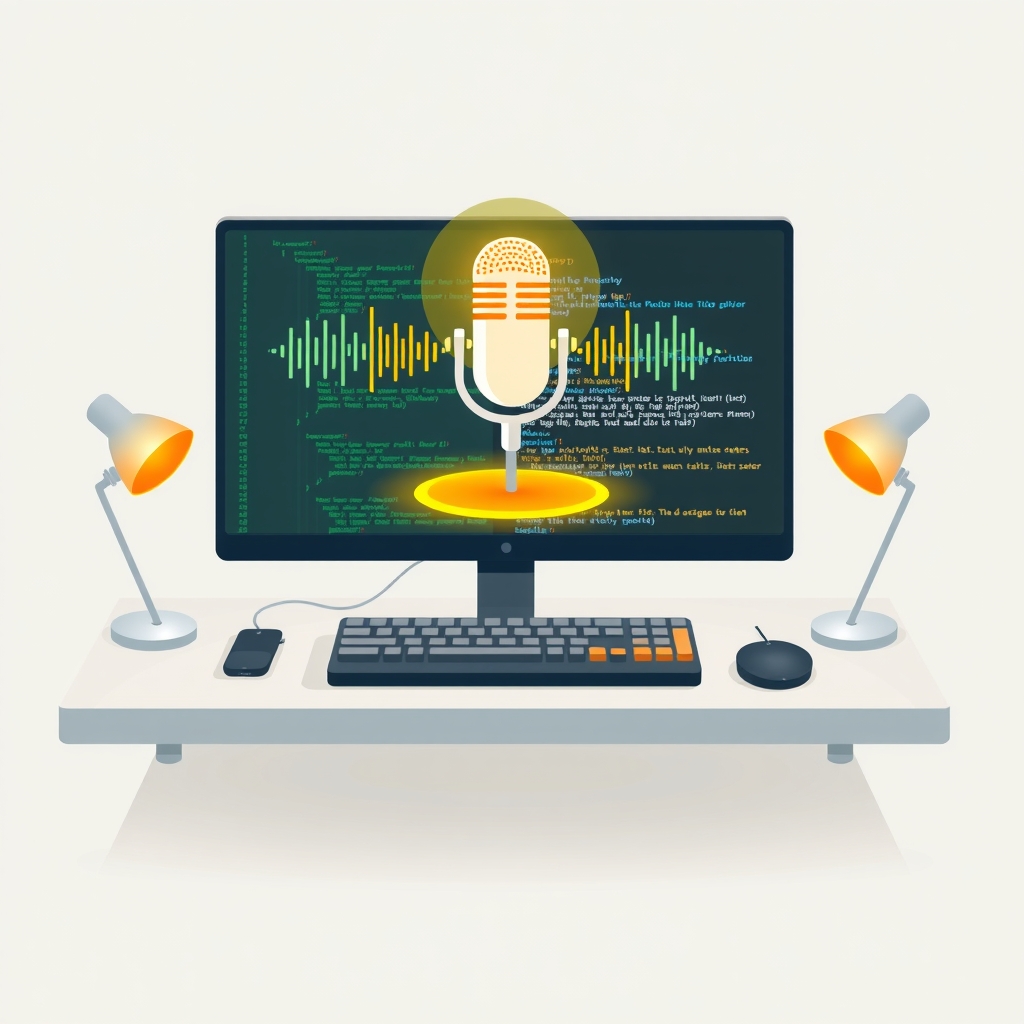
Two major players in AI-assisted software development have introduced bidirectional voice capabilities for their coding agents. On November 9, 2026, both Cursor and Google announced features that allow engineers to hold spoken conversations with their AI tools, enabling real-time updates and interruptions without typing. This move follows OpenAI’s earlier integration of similar voice functions into its Codex platform.
What happened
Cursor launched Voice Chat with Agents, a feature powered by xAI’s Grok Voice technology. This update allows developers to initiate a call with their agent, describe changes verbally, and listen to progress updates as the agent works. The feature is available across Cursor’s web interface, iOS app, and desktop client. Around the same time, Google introduced Voice mode for Antigravity, its agentic development platform. Leveraging Gemini Live, this feature brings spoken interaction to both the Antigravity desktop application and its command-line interface.
These announcements highlight a shift from simple dictation to interactive dialogue. While previous voice features mostly converted speech to text prompts, these new tools maintain an open audio channel. Developers can hear the agent’s thoughts, ask follow-up questions, or interrupt the process if requirements change. Nick Van der Auwermeulen, a developer relations engineer at Google, noted that engineering often happens out loud, such as when talking through bugs with teammates. He argued that voice mode restores this natural rhythm to human-agent collaboration.
In contrast, Anthropic’s Claude Code has not yet adopted two-way voice. While the main Claude app supports bidirectional voice chat, Claude Code currently only offers dictation via the /voice command. This means users can speak their instructions, but the agent responds only in writing. This distinction places Anthropic behind Cursor, Google, and OpenAI in terms of voice-based interaction models for coding tasks.
How it works
The core mechanism behind these features is maintaining a persistent audio session rather than treating voice as a one-off input method. In Google’s Antigravity, users click a waveform button in the desktop app or run /voice live in the CLI to start a call. The agent replies aloud and keeps the line open while executing code changes. Users can interrupt the agent mid-sentence to clarify instructions or approve specific actions. Once the task is complete, the agent provides a written summary and a link to review code changes within the same chat interface.
Cursor’s implementation operates similarly but relies on Grok Voice API. It allows users to describe changes, query the agent’s current status, and receive spoken progress reports. The system is designed to reduce context switching, letting developers keep their focus on the code or other visual elements while receiving auditory feedback. Both systems aim to mimic the dynamic of pair programming, where continuous verbal feedback loops help resolve issues faster than static text exchanges.
Key details
- Cursor’s Voice Chat uses xAI’s Grok Voice and is available on web, iOS, and desktop.
- Google’s Antigravity Voice mode uses Gemini Live and works in the desktop app and CLI.
- Users can interrupt agents mid-task in both platforms to adjust instructions.
- Anthropic’s Claude Code currently supports only one-way dictation, not two-way voice.
- OpenAI previously added two-way voice to Codex in February and September 2026.
- Google is consolidating its coding tools under Antigravity, sunsetting Jules and migrating Gemini CLI users.
Why it matters
For software engineers, the introduction of two-way voice reduces the friction of interacting with AI agents. Traditional text-based prompting requires constant context switching between the code editor, the chat interface, and the keyboard. By allowing spoken interruptions and updates, these tools enable a more fluid workflow. Developers can monitor long-running tasks without breaking their visual focus, which is particularly useful during complex debugging or refactoring sessions.
This shift also signals a broader trend toward multimodal interfaces in development environments. As agents take on more autonomous tasks, the need for real-time oversight grows. Voice provides a low-bandwidth, high-engagement channel for this oversight. It allows for quicker clarification of ambiguous requirements and faster iteration cycles. Teams that adopt these tools may find they can collaborate with AI more naturally, treating agents less like search engines and more like junior partners who can talk through problems.
What you can do
- Test the new Voice Chat in Cursor if you are already using the platform on desktop or iOS.
- Try the
/voice livecommand in Google Antigravity CLI to experience terminal-based voice interaction. - Compare the latency and accuracy of Grok Voice versus Gemini Live for your specific coding tasks.
- Evaluate whether voice interruptions improve your workflow during long agent runs compared to text checks.
- Monitor Anthropic’s roadmap to see if and when Claude Code will support two-way voice.
- Consider how voice-enabled agents might fit into your team’s pair programming or code review practices.