Kubernetes evolves to fix GPU idle time and AI observability gaps
New Kubernetes integrations aim to sync schedulers with autoscalers, while llm-d v1.0 matures distributed inference. Observability tools struggle to track state changes in agentic workloads.
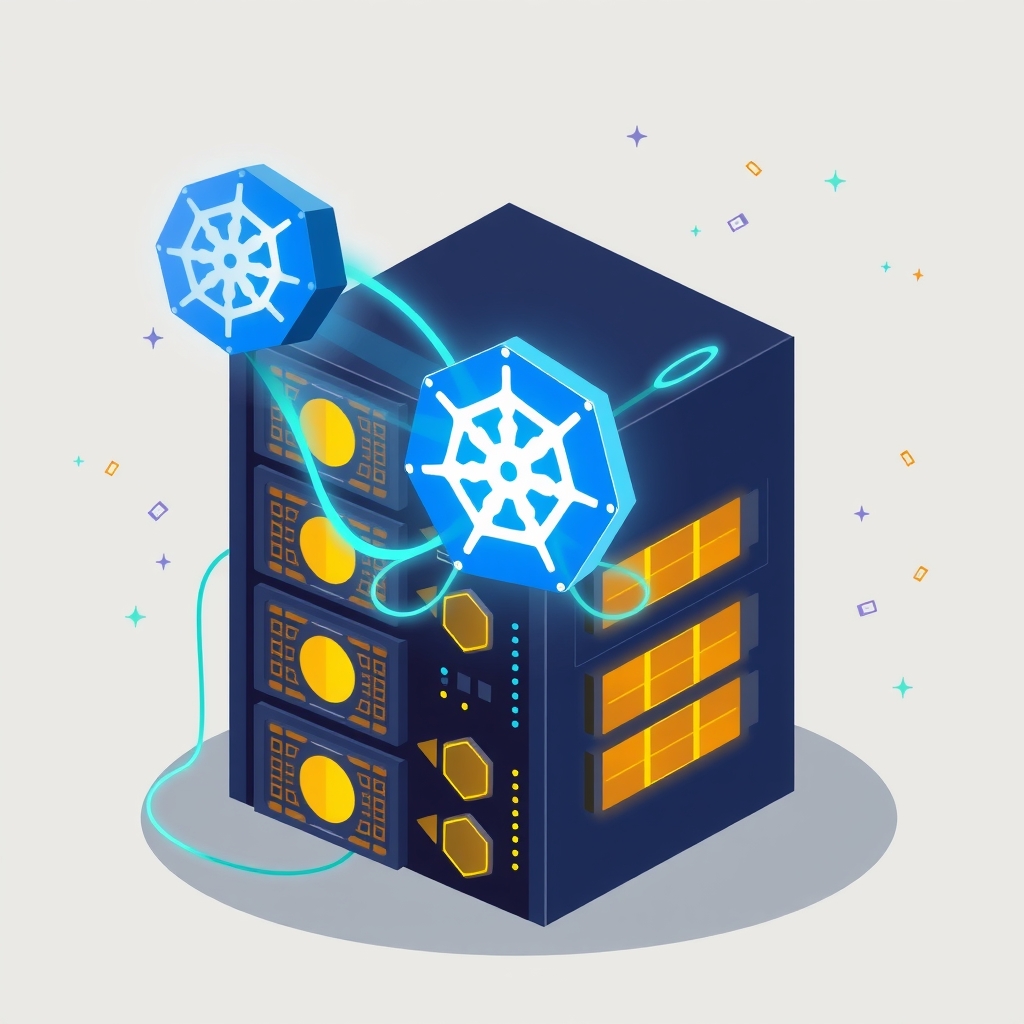
The cloud-native ecosystem is rapidly adapting to the unique demands of large-scale artificial intelligence workloads. As enterprises deploy more agentic AI and inference services on Kubernetes, they face critical bottlenecks in resource utilization, troubleshooting, and observability. Recent developments highlight a push toward tighter integration between scheduling and autoscaling mechanisms, the maturation of open-source inference serving, and new strategies for diagnosing complex cluster failures.
What happened
Hewlett Packard Enterprise (HPE) identified a significant operational hurdle for customers using HPE Private Cloud AI: frequent pod restarts in ephemeral container environments. Guoping Jia, a system software engineer at HPE, noted that while Kubernetes offers basic troubleshooting commands, manual investigation does not scale in large clusters. To address this, HPE is promoting an open-source tool, k8s-pod-restart-info-collector, which automatically gathers diagnostic data and sends it to Slack channels, reducing the manual burden on operators.
Simultaneously, AWS engineers Sajjan Gundapuneedi and Neelendra Bhandari highlighted a structural friction in Kubernetes between the scheduler and the autoscaler. The scheduler places pods on existing nodes, while the autoscaler provisions new ones. When managing scarce GPU accelerators, these two components often fail to coordinate, leaving expensive hardware idle while pods wait in a pending state. This misalignment is particularly problematic for bursty inference and agentic workloads that cannot tolerate the latency of cold node provisioning.
In the realm of inference serving, the CNCF sandbox project llm-d reached version 1.0 at the PyTorch Conference North America. Carlos Costa, lead maintainer and an IBM distinguished engineer, described this release as the transition from experimental code to dependable production infrastructure. The project has seen adoption at major tech firms including Tesla, AWS, Oracle, and Google. IBM Research demonstrated that using llm-d for agentic workloads reduced inference costs by 11.5x compared to proprietary configurations, achieving approximately 98% cache reuse.
How it works
The core technical challenge in GPU management lies in the disconnect between placement and provisioning. The scheduler decides where a pod should run based on current capacity, but it lacks visibility into future capacity that the autoscaler could provide. Conversely, the autoscaler adds nodes based on aggregate resource requests but does not understand specific placement constraints or device topology. New proposals within the SIG-Autoscaling group suggest creating APIs that allow these two loops to communicate directly. This would enable the scheduler to express placement preferences for capacity that has not yet been provisioned, allowing the autoscaler to act as a scheduler-aware partner.
For inference serving, llm-d bridges the gap between PyTorch application developers and cloud-native production stacks. Unlike earlier versions focused solely on raw performance benchmarks, v1.0 emphasizes sustained performance and stability. It handles bursty traffic patterns typical of agentic AI by optimizing cache reuse and distributing inference tasks efficiently across the cluster. This approach allows organizations to run open models with significantly lower costs than all-proprietary alternatives.
Observability gaps are being addressed through better context provision for AI agents. Roy Libman of Radar (Skyhook.io) demonstrated that AI coding agents like Claude Code can diagnose Kubernetes faults more accurately when given read-only context via Model Context Protocol (MCP) tools. In tests involving 50 injected faults, the agent reached correct diagnoses within two minutes for 86% of cases when provided with context, compared to only 60% when relying solely on shell access. This suggests that providing structured context is more effective than granting broad command-line access.
Key details
- HPE’s k8s-pod-restart-info-collector automates the gathering of diagnostic information for pod restarts, sending data directly to Slack to aid troubleshooting in large clusters.
- AWS engineers propose deeper integration between the Kubernetes scheduler and autoscaler to prevent GPU idle time caused by coordination failures.
- llm-d v1.0 was released as a CNCF sandbox project, focusing on production-grade stability for distributed AI inference.
- IBM Research found that llm-d reduced inference costs by 11.5x for agentic workloads compared to proprietary setups, with 98% cache reuse.
- AI coding agents diagnosed 86% of Kubernetes faults correctly within two minutes when given proper context via MCP tools, outperforming shell-based diagnosis.
- Kristiyan Ivanov noted that metrics alone fail to capture state changes like ACL updates or slowlog entries, which are lost between Prometheus scrapes in ephemeral environments.
Why it matters
For software engineers and infrastructure leads, the inefficiency of GPU utilization represents a direct financial loss. When schedulers and autoscalers operate in silos, organizations pay for accelerator hardware that sits unused while jobs queue. The proposed API integrations promise to resolve this by ensuring that provisioning decisions align with scheduling needs, reducing waste and improving the responsiveness of AI services. This is critical as agentic workloads become more common, requiring systems that can scale up and down rapidly without manual intervention.
Observability remains a blind spot for many teams running AI at scale. Traditional monitoring tools rely on time-series metrics, which miss transient state changes such as configuration updates or access control modifications. As AI agents generate bursty traffic and perform autonomous actions, the lack of durable history and audit trails makes root cause analysis difficult. Engineers must now consider how to provide rich context to both human operators and AI assistants to maintain system reliability.
What you can do
- Evaluate the k8s-pod-restart-info-collector tool if your team struggles with manual troubleshooting of pod restarts in large Kubernetes clusters.
- Review the SIG-Autoscaling proposals for scheduler-autoscaler integration to understand upcoming changes in resource provisioning APIs.
- Consider testing llm-d v1.0 for distributed inference workloads, particularly if you are running agentic AI services with bursty traffic patterns.
- Implement Model Context Protocol (MCP) tools to provide read-only context to AI coding agents, improving their ability to diagnose cluster issues.
- Audit your observability stack to identify gaps in tracking non-metric state changes, such as ACL updates or configuration modifications.
- Explore eBPF instrumentation and engine-level collection methods to capture granular tracing data that traditional scrapers miss.