Google takes over Crusoe's unfinished Wyoming data center project
Google is acquiring an incomplete data center site in Wyoming from Crusoe after concerns over cost and timeline. The tech giant plans to invest $17 billion to finish the campus.
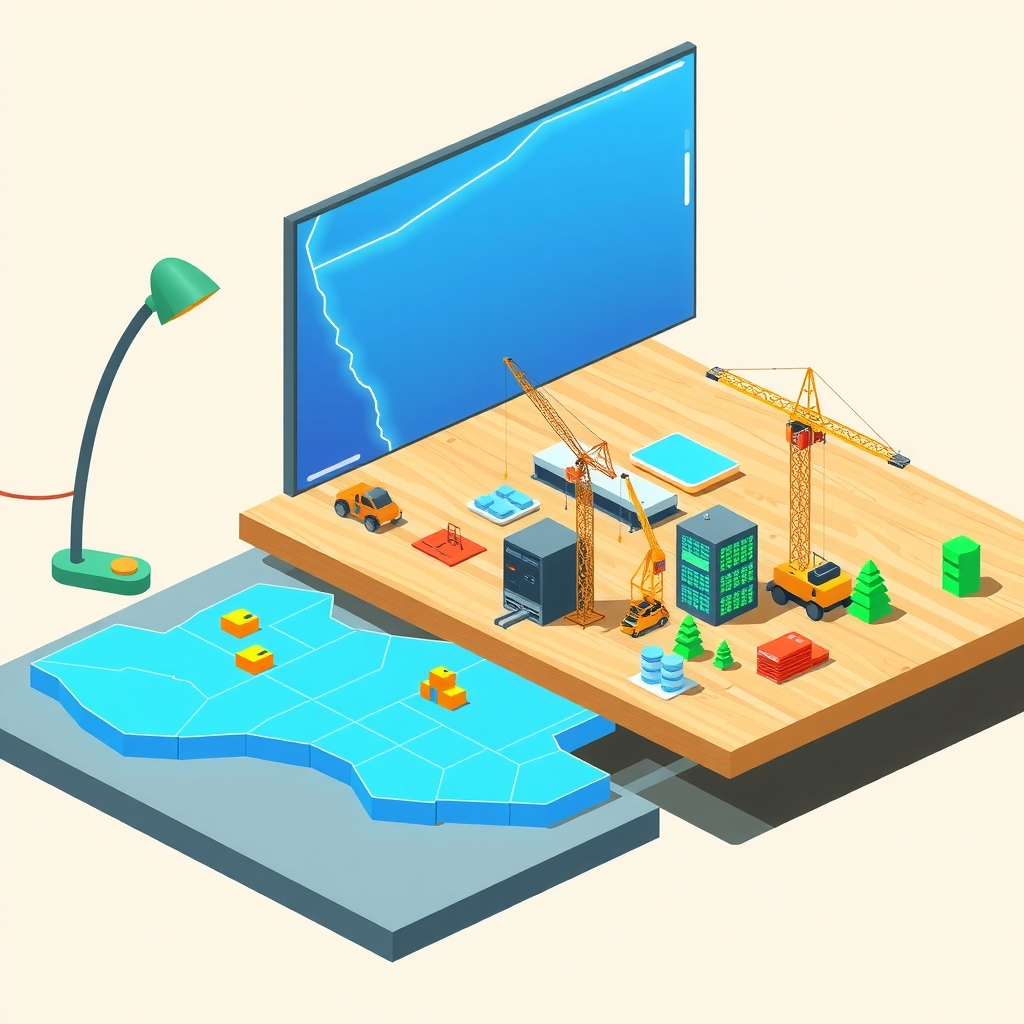
Google has agreed to purchase an unfinished data center project in southeastern Wyoming from Crusoe, a Denver-based infrastructure developer. The deal, confirmed on Friday, November 7, 2026, marks a significant shift in how hyperscalers manage their physical AI footprint. Google will take direct control of the development after previously failing to secure the site as a customer under Crusoe’s management.
What happened
Crusoe, which was recently valued at $30.9 billion, initially announced the Wyoming project last year in partnership with Tallgrass, an infrastructure company backed by Blackstone. The original plan aimed to scale the facility to a massive 10 gigawatts of power capacity. However, Google reportedly raised concerns about the construction timeline and costs associated with Crusoe’s execution. As a result, the search engine giant decided to take over the project entirely rather than wait for Crusoe to deliver it.
While Google did not disclose the specific purchase price paid to Crusoe for the unfinished site, the company announced it would invest $17 billion to develop the data center campus. This move underscores the intense pressure on independent developers to deliver complex infrastructure on schedule. Despite this setback in Wyoming, the relationship between the two companies remains active. Crusoe is currently developing a separate data center for Google near Amarillo, Texas, indicating that the sale was project-specific rather than a breakup of their broader partnership.
This transaction highlights the growing difficulties independent data center developers face in the current market. Securing equipment, managing power contracts, and navigating local community opposition have become major hurdles. Even well-funded players like Crusoe can struggle to meet the exacting standards of hyperscale customers who require predictable delivery schedules for their AI training clusters.
How it works
Data center development at this scale involves coordinating three critical resources: land, power, and hardware. Developers like Crusoe typically secure land and power rights, then build the shell and cooling infrastructure. Customers, such as Google or Microsoft, then install their own servers and networking gear. In this case, the handover occurred before the facility was complete, meaning Google is stepping in to manage the remaining construction phases directly.
The complexity arises from the sheer magnitude of power required. A 10-gigawatt target is enormous, equivalent to the output of several large nuclear power plants. Managing such capacity requires intricate negotiations with utility providers and often involves building new transmission lines. When timelines slip, the cost of capital increases, and the opportunity cost for the customer grows, as delayed facilities mean delayed AI model training. By taking over, Google gains direct control over these variables, reducing reliance on a third-party vendor’s ability to navigate regulatory and logistical bottlenecks.
Key details
- Google plans to invest $17 billion to complete the development of the Wyoming data center campus.
- The project was originally announced by Crusoe and Tallgrass with a goal of reaching 10 gigawatts of power capacity.
- Crusoe raised a $3.9 billion funding round in September 2026, despite the Wyoming setback.
- Google continues to work with Crusoe on a separate data center project near Amarillo, Texas.
- Crusoe’s valuation stands at $30.9 billion, and it serves major clients including Oracle, OpenAI, Microsoft, and Meta.
- The sale was first reported by Bloomberg in June 2026 but was officially confirmed by Crusoe in November 2026.
Why it matters
For software engineers and technical leaders, this news signals a tightening of the AI infrastructure supply chain. Hyperscalers are increasingly unwilling to tolerate delays from third-party developers when their competitive advantage depends on rapid deployment of compute resources. This trend may lead to more vertical integration, where companies like Google, Microsoft, and Amazon take greater ownership of the physical layer of their cloud services. It suggests that future availability zones might be built and operated more directly by the cloud providers themselves, potentially changing how we think about cloud reliability and expansion roadmaps.
Additionally, the financial resilience of specialized infrastructure firms is being tested. Crusoe’s ability to raise $3.9 billion shortly after losing a major project demonstrates that investors still believe in the long-term demand for AI compute. However, the shift in the Wyoming project shows that execution risk is real. For teams planning long-term infrastructure dependencies, this reinforces the need for diversified provider strategies. Relying on a single vendor for critical capacity carries risks if that vendor faces construction or regulatory headwinds.
What you can do
- Review your current cloud provider contracts to understand their commitments regarding capacity expansion and timeline guarantees.
- Diversify your infrastructure dependencies across multiple regions and providers to mitigate the risk of single-project delays.
- Monitor the development status of major data center projects in your primary regions, as local opposition or power constraints can affect availability.
- Consider the total cost of ownership when choosing between specialized AI cloud providers and general hyperscalers, factoring in potential migration costs.
- Stay informed about regulatory changes in key data center hubs, as community opposition can significantly impact project timelines.
- Evaluate your own compute usage patterns to ensure you are not over-provisioning based on optimistic expansion forecasts from vendors.