Anthropic lets Claude issue identity assertions for MCP plugins
Claude can now vouch for employee identities to third-party services, bypassing the need for compatible enterprise identity providers like Okta.
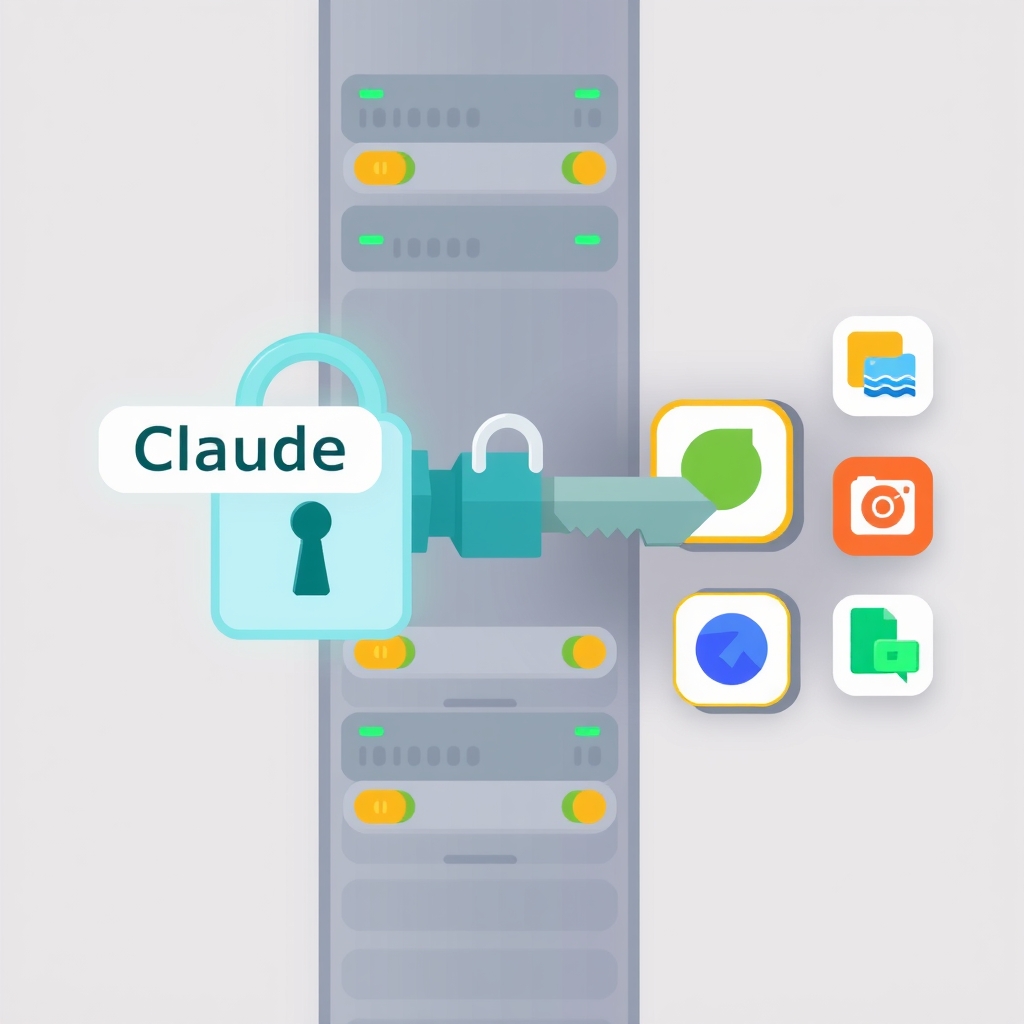
Anthropic has introduced a new authorization feature that allows Claude to act as an identity issuer for workplace plugins. Available in beta for Team and Enterprise customers as of November 4, 2026, this update enables automatic connections to supported services without requiring individual sign-ins or specific identity provider support.
What happened
Previously, connecting Claude to workplace tools like Notion, Figma, or Supabase required employees to authenticate each service individually. This friction was compounded by the reliance on the Enterprise-Managed Authorization (EMA) extension for the Model Context Protocol (MCP), which debuted in June. While EMA allowed central management through identity providers, only Okta supported it at launch, leaving many organizations unable to automate these connections.
To address this gap, Anthropic announced that Claude itself can now issue signed identity assertions. These assertions allow participating MCP services to recognize employees as members of their organization directly. Boris Cherny, head of applications at Anthropic, highlighted the user experience improvement, noting that signing in to company plugins one by one is annoying and that auto-connect resolves this pain point.
Administrators can configure which services are enabled and define access based on employee roles. For instance, general productivity tools might be open to all staff, while sensitive databases remain restricted to specific teams. When an eligible user accesses a plugin, Claude sends a signed assertion to the service, which then issues an access token. This process also handles token renewal automatically, reducing repetitive authorization prompts.
How it works
The mechanism relies on Claude acting as a trusted issuer rather than a full-scale identity provider. When a user attempts to connect to a supported service, Claude generates a signed assertion confirming the user’s organizational membership. The third-party service validates this assertion against a registered issuer URL provided by Anthropic. If valid, the service grants access based on its own internal permission rules.
This approach decouples plugin connectivity from the underlying enterprise identity infrastructure. Services like Supabase have integrated this capability to allow customers to use Claude for authentication even if their primary identity provider does not support the EMA extension. The service still enforces its own access controls, meaning employees must have corresponding accounts and permissions within the target application.
Security responsibilities remain shared. While Claude verifies organizational membership, the connected service manages actual data access. Administrators must ensure that departing employees are removed from both Claude and the individual services, as revoking access in the corporate identity provider alone will not invalidate Claude-issued assertions.
Key details
- The feature is currently in beta for Anthropic Team and Enterprise customers.
- Fourteen services support auto-connect at launch, including Amplitude, Apollo.io, Atlassian, Datadog, Dropbox, Figma, Granola, HubSpot, Linear, Mixpanel, Notion, PagerDuty, Semrush, and Supabase.
- Claude issues signed identity assertions that participating MCP services use to verify employee status.
- Administrators control which services are enabled and map access to specific employee roles.
- The system automatically handles token refreshes, eliminating the need for repeated manual re-authorization.
- Revoking access requires removing users from both Claude and the target service, not just the corporate identity provider.
Why it matters
For software engineers and technical leads, this shift reduces the operational overhead of managing agentic workflows. By removing the dependency on specific identity providers like Okta, organizations can adopt MCP-based plugins more rapidly regardless of their existing IT infrastructure. This democratizes access to advanced AI integrations for companies using less common or custom identity solutions.
The change also impacts how developers build and secure MCP servers. Supporting Claude-issued assertions requires implementing validation logic for these specific signed tokens. However, it simplifies the user onboarding flow significantly, potentially driving higher adoption rates for internal tools. Developers must remain vigilant about permission modeling, ensuring that the convenience of auto-connect does not bypass necessary role-based access controls within their applications.
What you can do
- Review the list of fourteen supported services to identify immediate integration opportunities for your team.
- If you build MCP servers, implement support for validating Claude-issued signed identity assertions.
- Configure role-based access policies in Claude to restrict sensitive plugin connections to authorized personnel only.
- Audit your current offboarding procedures to ensure users are removed from both Claude and individual services.
- Test the auto-connect feature with a non-critical tool like Notion or Linear to evaluate the user experience.
- Monitor Anthropic’s documentation for updates as more services join the auto-connect ecosystem.