Anthropic filing reveals Claude Code drives 20x higher enterprise spend
Anthropic's IPO filing shows top Claude Code users spend 20 times more than other enterprise customers, with the tool writing over 90% of internal code contributions.
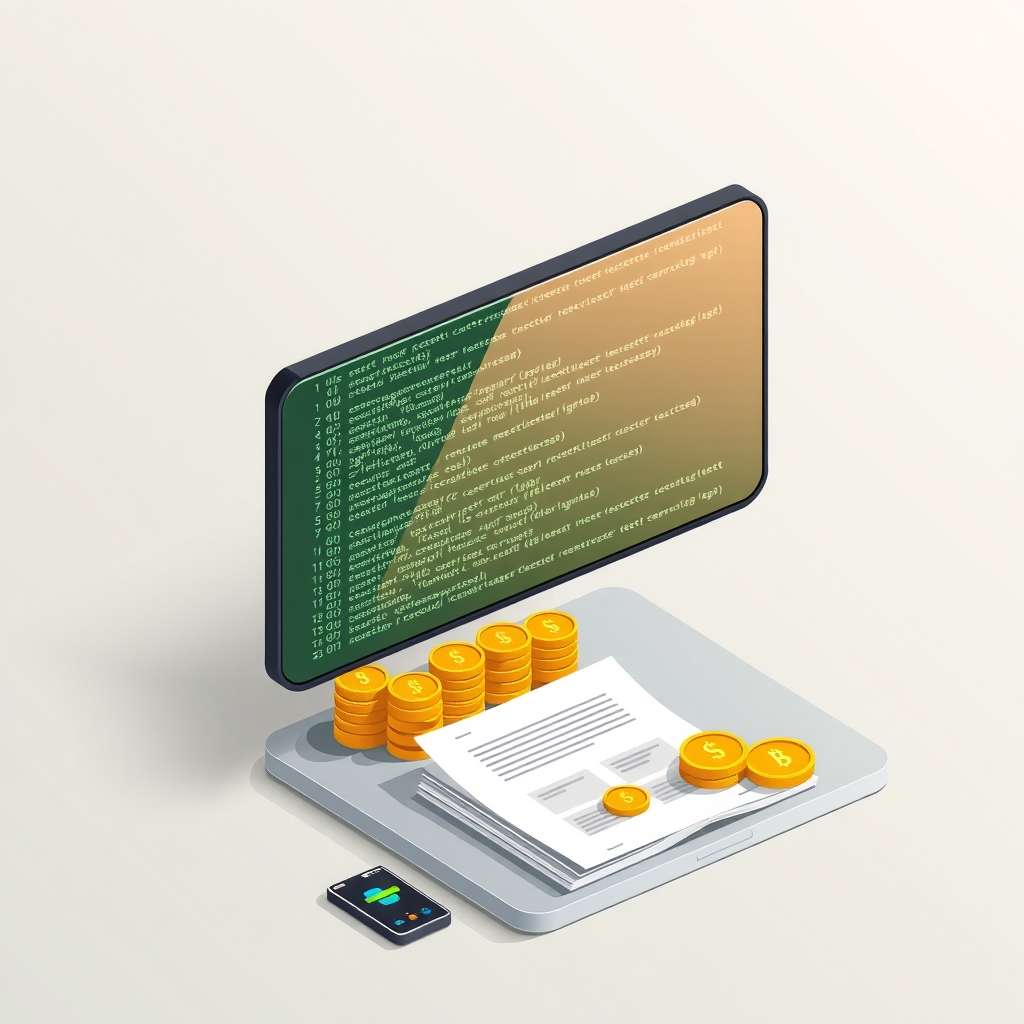
Anthropic filed for an initial public offering on Nasdaq this week, revealing that its AI coding assistant, Claude Code, has become the primary driver of enterprise revenue growth. The S-1 prospectus indicates that the most active enterprise users of this tool spend significantly more than those using standard chat interfaces, highlighting a shift toward autonomous agent workflows in professional software development.
What happened
The filing details a stark contrast in spending habits between different types of enterprise customers. In the third quarter, the average Claude Enterprise user who did not use Claude Code spent less than $75 per month. In comparison, the top 5% of Claude Code users on Enterprise plans spent approximately 20 times that amount. This disparity underscores how deeply integrated coding agents have become in high-value corporate workflows, moving beyond casual experimentation to critical infrastructure.
Anthropic describes this adoption pattern as a classic land-and-expand strategy. Individual engineers often start using Claude Code independently, find value in its capabilities, and begin pushing it within their teams. By the time Anthropic’s sales team engages with the organization, the tool is frequently already in widespread use. The company states that Claude Code has concretely defined what autonomous AI work looks like, noting that even non-technical teams are beginning to adopt the technology despite its origins as a terminal-based developer tool.
The financial impact of this adoption is substantial. As of September 30, 2026, Anthropic reported more than 11,900 customers paying at least $100,000 annually, a significant increase from just over 950 such customers a year earlier. Total revenue reached $16.3 billion in the first half of 2026, up from $1.2 billion in the same period of 2025, with token usage accounting for half of that figure. Internally, the reliance on the tool is extreme: in September, Claude wrote more than 90% of the contributions to Anthropic’s own codebase.
How it works
Claude Code operates not just as a chat interface but as an autonomous agent capable of executing complex engineering tasks. Anthropic emphasizes that a model alone does not constitute an agent. To support this distinction, the company sells the underlying software harness that powers Claude Code to other developers. This allows organizations to run Anthropic’s agent framework on their own servers via the Agent SDK or pay for managed services through Claude Managed Agents.
This architecture enables developers to build custom coding agents on top of Anthropic’s models while maintaining control over execution environments. The system is designed to handle multi-step workflows where the AI directs and executes code changes, rather than simply suggesting snippets. Anthropic reports that its average engineer produced more than 45 times as much code per day in the third quarter compared to 2024, attributing this velocity to engineers directing and reviewing Claude’s output rather than writing every line manually.
Key details
- Top 5% of Claude Code enterprise users spend roughly 20 times more than non-Code enterprise users.
- Claude wrote over 90% of contributions to Anthropic’s internal codebase in September 2026.
- Average engineer code output increased by more than 45 times daily compared to 2024 levels.
- Anthropic had over 11,900 customers paying $100,000+ annually as of September 30, 2026.
- Revenue grew from $1.2 billion in H1 2025 to $16.3 billion in H1 2026.
- The company offers its agent harness via Agent SDK for self-hosting or as Claude Managed Agents.
Why it matters
For technical leaders and founders, this data validates the economic case for integrating autonomous coding agents into production environments. The massive difference in spend suggests that companies deriving real value from these tools are willing to pay premium rates for the efficiency gains. It also signals a shift in procurement dynamics, where bottom-up adoption by engineers can drive enterprise-wide contracts before formal sales processes begin. This reduces friction for vendors but requires IT leads to maintain visibility into shadow IT deployments.
However, the filing also highlights significant operational risks. Anthropic lists Claude Code as a critical tool for its own development, meaning any failure in the product could directly impair its ability to build future models. More concerning is the warning that as AI takes on more engineering and research tasks, the company may lose visibility into certain processes. This lack of transparency could make it difficult for humans to understand or control the system’s behavior, a risk that grows as autonomy increases.
What you can do
- Evaluate your current AI tool spend to identify if high-usage teams are driving disproportionate value.
- Implement governance policies for autonomous agents to maintain visibility into code generation processes.
- Consider adopting agent frameworks like the Agent SDK to build custom workflows tailored to your stack.
- Train engineers on review practices for AI-generated code to ensure quality and security standards.
- Monitor internal adoption patterns to anticipate enterprise licensing needs before sales engagement.
- Assess the risk of dependency on single-vendor AI tools for critical development workflows.