StudentSim uses AI to simulate learners for faster tutor training
Microsoft Research introduces StudentSim, a system that creates personalized AI student simulators to evaluate and improve AI tutors before human testing.
Microsoft Research has introduced StudentSim, a new system designed to help developers evaluate and improve AI tutoring tools before they interact with real students. Published on October 12, 2026, the research addresses the bottleneck of slow and costly human studies by creating personalized AI simulators that mimic individual learner behaviors and responses to guidance.
What happened
AI-powered tutoring systems require feedback to determine if their explanations or hints actually help students learn. Traditionally, gathering this feedback involves running studies with real learners, a process that is expensive, time-consuming, and difficult to scale during rapid model iteration. To solve this, researchers at Microsoft developed StudentSim, which generates personalized simulators for individual students using publicly available, de-identified learner records.
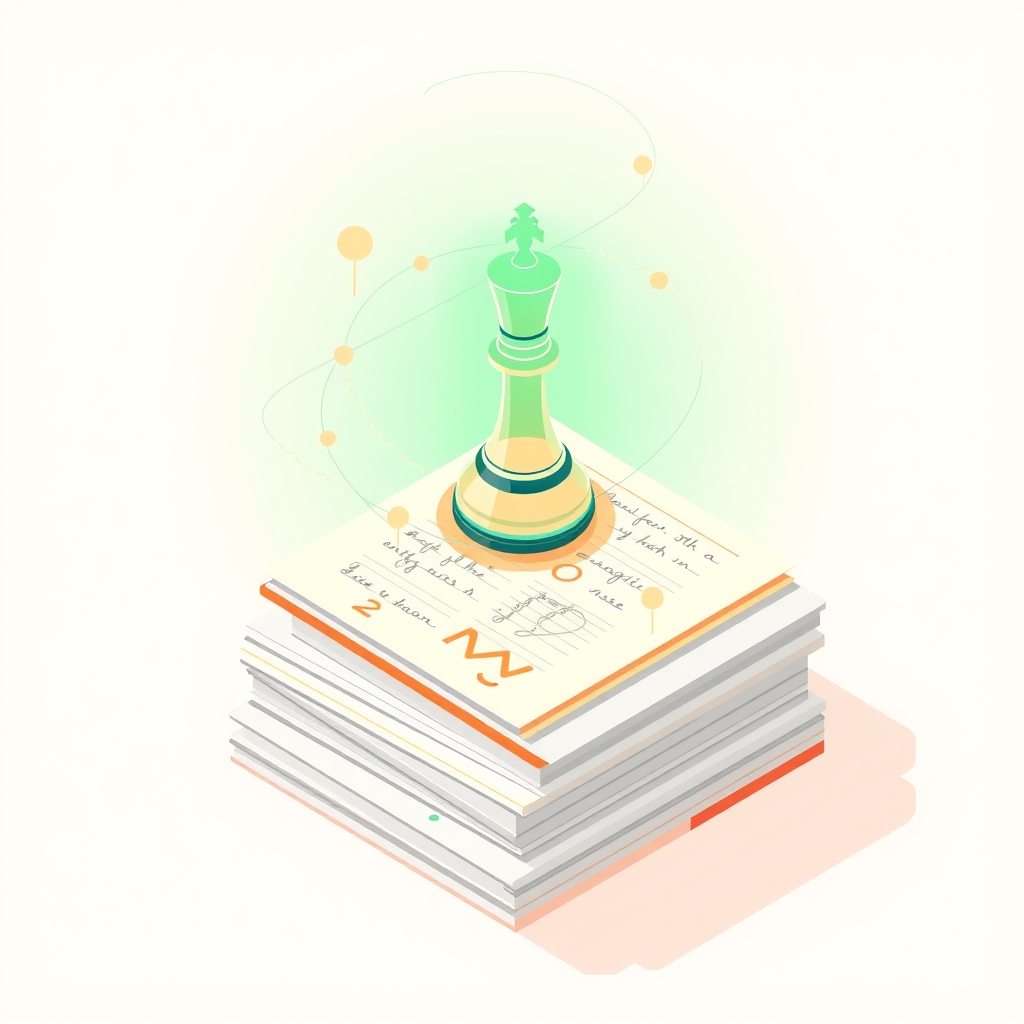
The system is not a consumer product and is not intended for classroom deployment or teacher replacement. Instead, it serves as a research tool to provide early-stage feedback signals. The team also released StudentSimEval, a benchmark and evaluation protocol covering chess, second-language English writing, and mathematics. This allows other researchers to test how well simulated students match real human behavior and respond to instructional interventions.
The study emphasizes that while simulators can accelerate development, they do not eliminate the need for final validation with human learners. The goal is to refine tutor strategies and compare models more efficiently before committing resources to large-scale human trials. All data used in the research was de-identified and sourced from public datasets intended for academic use.
How it works
Building a useful student simulator requires more than just prompting a large language model to act like a student. Simple role-playing often fails to capture a specific learner’s knowledge boundaries, leading to misleading feedback where the simulator appears more capable than the actual student. StudentSim addresses this by focusing on two key dimensions: behavioral fidelity and guidance responsiveness. Behavioral fidelity measures how closely the simulator matches a specific student’s past answers, while guidance responsiveness tracks whether the simulator updates its answer after receiving tutor advice.
To achieve this, StudentSim uses a two-stage training pipeline. First, the model trains on pooled records from many students within a specific domain, such as chess or math. This stage helps the model learn common error patterns, response formats, and general ways students revise their work. In the second stage, the model specializes on the sparse records of a single student. This personalization ensures the simulator reflects that individual’s unique strengths, weaknesses, and learning habits without overfitting to noise.
The system was tested across three distinct domains. In chess, it predicts moves and revisions after coaching. In English writing, it generates essays with realistic error patterns and predicts corrections after feedback. In mathematics, it forecasts multiple-choice answers and updates them based on explanations. By holding the simulator parameters fixed during tutor training, the system provides a consistent reward signal based on the improvement in the simulated student’s performance.
Key details
- StudentSim creates one personalized simulator per student using de-identified public records.
- The evaluation framework, StudentSimEval, covers chess, English writing, and mathematics.
- Two core metrics are used: behavioral fidelity (matching past behavior) and guidance responsiveness (updating after help).
- In chess tests, StudentSim achieved a behavioral fidelity of 0.5150 and guidance responsiveness of 0.9067.
- Tutors trained using StudentSim feedback reached 90.5% accuracy, outperforming baselines using GPT-5.4 or no reinforcement learning.
- The code and evaluation protocol are publicly available for further research.
Why it matters
For engineers building educational AI, the primary challenge is often the lack of scalable feedback loops. Human evaluation is the gold standard but is too slow for iterative development cycles. StudentSim offers a way to approximate student reactions at scale, allowing teams to test different tutoring strategies, hint styles, and explanation depths without waiting for human study results. This can significantly reduce the cost and time required to reach a viable prototype.
Furthermore, the distinction between behavioral fidelity and guidance responsiveness highlights a critical gap in current AI evaluation methods. Many models may sound helpful but fail to account for a student’s actual zone of proximal development. By forcing simulators to demonstrate both accurate baseline behavior and meaningful improvement after guidance, developers can ensure their tutors are not just generating plausible text, but actually facilitating learning progress. This approach moves beyond static correctness labels to dynamic interaction modeling.
What you can do
- Review the publicly available StudentSim code and StudentSimEval protocol to understand the implementation details.
- Evaluate your current AI tutor’s feedback loop to see if it accounts for student-specific knowledge boundaries.
- Consider incorporating simulated user personas in your testing pipeline to identify edge cases before human trials.
- Explore the two-stage training approach (general domain pre-training followed by personalization) for other adaptive systems.
- Use the behavioral fidelity and guidance responsiveness metrics as benchmarks for your own student modeling efforts.
- Plan for final validation with real learners, using simulators only for early-stage refinement and strategy comparison.