Sirius extension brings GPU acceleration to DuckDB analytics
NVIDIA and DuckLabs released Sirius, a core extension that accelerates DuckDB analytical queries on NVIDIA GPUs without requiring SQL rewrites.
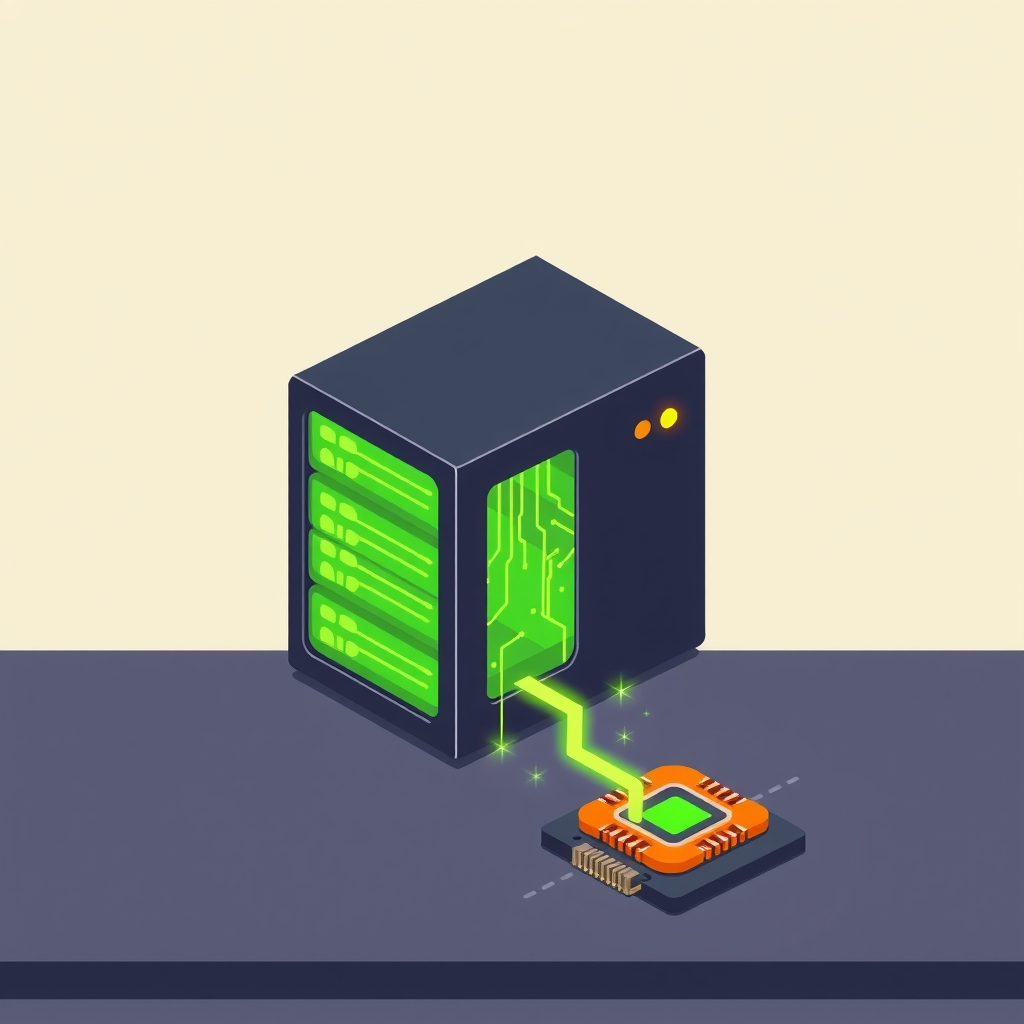
NVIDIA and DuckLabs have collaborated to release Sirius, a new core extension for DuckDB that enables GPU-accelerated analytics. Announced on November 23, 2026, this open-source tool allows developers to execute supported analytical queries on NVIDIA GPUs using standard SQL, aiming to reduce query latency and compute costs for large datasets.
What happened
Sirius is a GPU-native SQL engine developed through a partnership between NVIDIA, DuckLabs, and the University of Wisconsin–Madison. It integrates directly into the DuckDB ecosystem as a core extension, meaning users can install and activate it within their existing DuckDB environment. The primary goal is to leverage the parallel processing power of NVIDIA GPUs for analytical workloads without forcing developers to learn new programming models or rewrite their existing SQL queries.
The extension works by intercepting query execution after DuckDB has parsed and optimized the SQL. If the query plan is supported by Sirius, it is offloaded to the GPU for execution. If the query contains features not yet supported by the GPU engine, it automatically falls back to DuckDB’s standard CPU engine. This hybrid approach ensures compatibility while providing performance boosts for compatible operations. Users can enable this functionality with two simple SQL commands: INSTALL sirius; and LOAD sirius;.
To demonstrate the capability, the release includes a walkthrough using DuckDB 2.0. Users generate a sample dataset using the TPC-H extension, persist it with a checkpoint, and then run analytical queries such as grouping and aggregation. The system handles the backend complexity, selecting the appropriate CUDA driver and managing data movement between the CPU and GPU transparently.
How it works
DuckDB remains the interface for SQL parsing and query optimization, preserving the familiar workflow for data engineers. Once a query is optimized, Sirius takes over the execution phase for supported plans. It translates the logical query plan into operations that can run efficiently on NVIDIA GPU hardware. This separation of concerns allows DuckDB to maintain its role as the SQL frontend while Sirius acts as a high-performance execution backend.
The integration is designed to be non-invasive. Applications continue to interact with DuckDB as usual, receiving results through the same connection objects. The extension automatically detects the available GPU hardware and configures the CUDA backend accordingly. For queries that cannot be fully accelerated, the system seamlessly reverts to CPU execution, ensuring that workflows do not break due to unsupported syntax or operations.
Key details
- Sirius is an open-source GPU-native SQL engine released as a DuckDB core extension.
- Installation requires DuckDB 2.0 and an NVIDIA GPU with a compatible driver.
- Users enable acceleration using
INSTALL sirius;andLOAD sirius;without changing schemas. - Unsupported query features automatically fall back to DuckDB’s CPU engine.
- The extension is approximately 700 MB in size and selects the CUDA backend automatically.
- Development was a collaboration between NVIDIA, DuckLabs, and the University of Wisconsin–Madison.
Why it matters
For software engineers and data practitioners, the ability to accelerate analytical queries without code refactoring is significant. As datasets grow into the terabyte range, CPU-bound analytics can become a bottleneck, slowing down data exploration and pipeline throughput. Sirius offers a path to speed up these operations by leveraging GPU parallelism, which is particularly effective for operations like aggregations, joins, and scans on large tables.
Beyond raw speed, the economic impact of faster queries is substantial. By reducing the time required to process large datasets, organizations can lower their compute costs, especially in cloud environments where billing is often time-based. The benchmarks suggest that for very large datasets, the cost savings can be dramatic, making GPU acceleration a viable option not just for performance but for budget optimization. This lowers the barrier to entry for GPU-accelerated analytics, as it removes the need for specialized CUDA programming skills.
What you can do
- Install DuckDB 2.0 and ensure you have an NVIDIA GPU with updated drivers.
- Run
INSTALL sirius;andLOAD sirius;in your DuckDB session to activate the extension. - Generate a test dataset using the TPC-H extension to verify the setup with small-scale data.
- Execute standard analytical SQL queries to observe GPU acceleration on supported operations.
- Review the Sirius GitHub repository for benchmark runners and configuration examples.
- Join the Sirius Slack community to share feedback and discuss performance results with other users.