Kimi K3 on Bedrock adds India-only inference for strict data residency
Amazon Bedrock now routes Kimi K3 inference exclusively to Mumbai and Hyderabad regions, enabling compliant processing for Indian health and financial data.
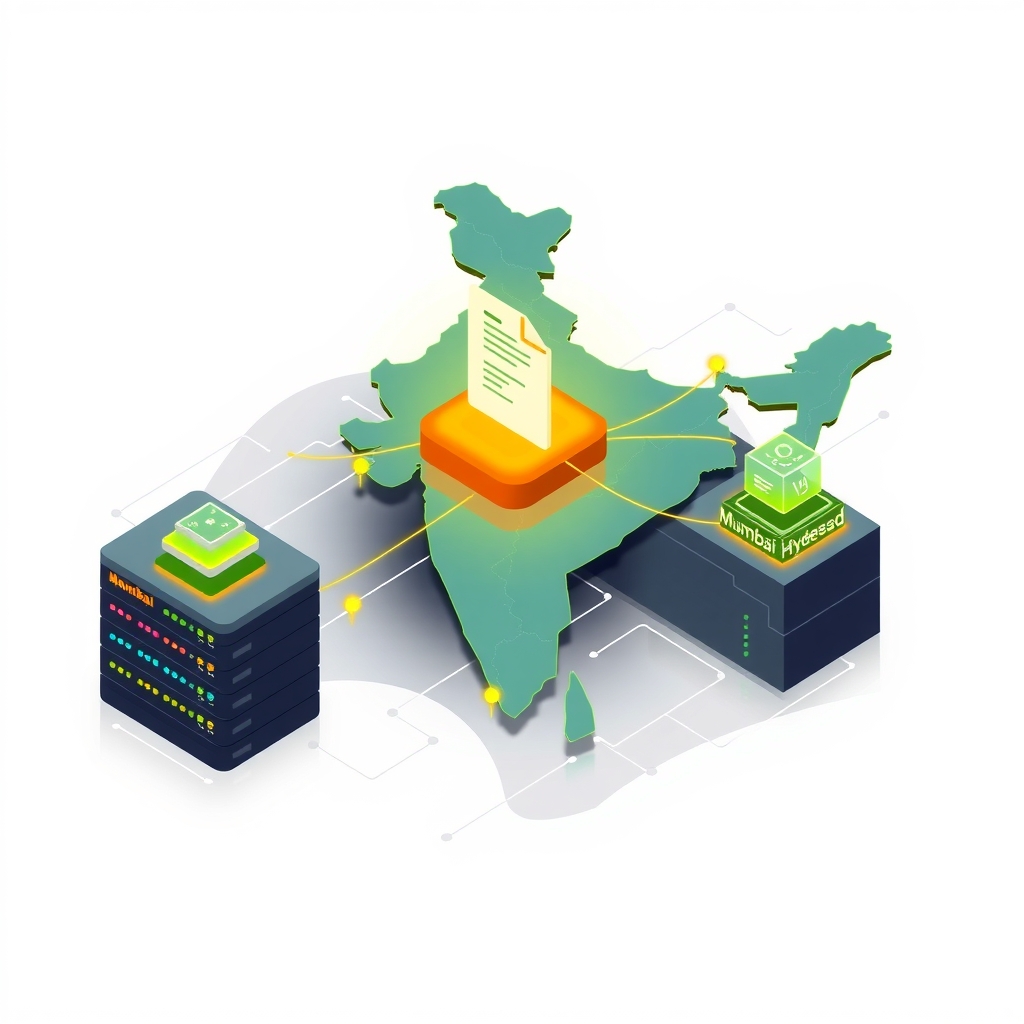
Amazon Web Services has expanded its Amazon Bedrock service to support in-country inference for the Kimi K3 foundation model within India. Announced on November 3, 2026, this update allows developers to process data using Moonshot AI’s open-weight model while ensuring that all computation remains strictly within AWS regions located in Mumbai and Hyderabad. This move addresses critical data residency requirements for organizations handling sensitive local information.
The new capability utilizes cross-Region inference profiles, a managed feature that securely routes requests from a source region to specific destination regions without exposing data to the public internet. By selecting the India geographic profile, engineers can guarantee that their workloads comply with local regulations while still leveraging the advanced coding and agentic intelligence capabilities of Kimi K3.
What happened
Moonshot AI’s Kimi K3 is a multi-modal, open-weight foundation model known for its strong performance in coding and general agentic tasks. Previously, inference for this model on Amazon Bedrock was available through global or US-based profiles. The latest update introduces a dedicated India geographic inference profile, identified as in.moonshotai.kimi-k3. This profile ensures that any request invoked through it is processed exclusively in the AWS Asia Pacific (Mumbai) or Asia Pacific (Hyderabad) regions.
This development is particularly significant for industries with strict data sovereignty laws, such as healthcare and financial services. Aditya Patawari, VP Engineering at Ultrahuman, highlighted the practical impact of this integration. He noted that their AI health assistant, Jade, processes over 14,000 conversations daily using personal health data from Ring devices and glucose monitors. By using Kimi K3 on Amazon Bedrock with the India profile, Ultrahuman keeps this sensitive health data within AWS infrastructure in Mumbai, satisfying compliance needs while maintaining low latency.
Patawari also reported substantial efficiency gains. By implementing prompt caching alongside the new inference setup, Ultrahuman reduced their large language model costs by 80 percent and accelerated multi-turn chat responses by 85 percent. This demonstrates that data residency constraints do not necessarily compromise performance or cost-effectiveness when using optimized cloud infrastructure.
How it works
Amazon Bedrock manages cross-Region inference through secure, encrypted channels that remain entirely within the AWS network. When a developer sends a request from any supported source region, they specify an inference profile ID. If the in.moonshotai.kimi-k3 profile is used, Bedrock automatically routes the request to either the Mumbai or Hyderabad region for processing. No additional virtual private cloud (VPC) peering or complex networking setup is required from the user, as AWS handles the transit security internally.
The model supports multiple API formats, including OpenAI-compatible Chat Completions and Responses APIs, as well as Bedrock’s native Converse and InvokeModel APIs. For Python developers, this means they can use standard libraries like openai by simply adjusting the base URL to point to the Bedrock runtime endpoint in the source region and providing a short-lived token derived from AWS credentials. The inference profile ID is passed as the model identifier, ensuring the backend routing logic applies the correct geographic constraints.
Kimi K3 is natively multi-modal, meaning it can process images, PDFs, and text directly without requiring separate optical character recognition (OCR) services. In a demonstrated workflow, the model analyzed a scanned Hindi electricity bill, extracted structured data such as consumer names and billing amounts, and answered follow-up questions in Hinglish (a mix of Hindi and English). The system can normalize Devanagari digits to Western numerals and transliterate names, providing a unified pipeline for document understanding and data extraction.
Key details
- Inference Profile ID: Use
in.moonshotai.kimi-k3to restrict processing to Mumbai and Hyderabad regions. - Data Security: Data remains encrypted in transit within the AWS network and never traverses the public internet.
- Cost Optimization: Prompt caching can reduce LLM costs by up to 80 percent and improve response speed by 85 percent, as seen in production use cases.
- Multi-Modal Support: The model accepts images and PDFs directly, enabling OCR and document understanding without external tools.
- API Compatibility: Supports OpenAI-compatible APIs, allowing easy integration with existing Python clients and frameworks.
- Service Tiers: Developers can choose between "flex" tier for a 50 percent discount on non-urgent tasks or "priority" tier for lower latency.
Why it matters
For software architects and technical leads building products in regulated markets, this update removes a major barrier to adopting advanced open-weight models. Previously, teams often had to choose between using powerful global models that might violate data residency laws or settling for less capable local models. With the India-specific inference profile, engineers can leverage frontier-level intelligence for tasks like complex document analysis and agentic workflows while maintaining strict compliance with local data protection regulations.
The ability to handle multi-lingual and multi-modal inputs natively also simplifies application architecture. Instead of chaining together separate services for OCR, translation, and language modeling, developers can use a single API call to extract structured data from scanned documents in Indic languages. This reduction in complexity lowers maintenance overhead and potential points of failure, making it easier to build robust applications for sectors like banking, insurance, and public services where paper-based records are still common.
What you can do
- Update your AWS Identity and Access Management (IAM) policies to allow
bedrock:InvokeModelfor thein.moonshotai.kimi-k3resource ARN. - Configure your application’s API client to use the
ap-south-1(Mumbai) region as the source endpoint for Bedrock Runtime. - Implement explicit prompt caching by marking static system prompts with breakpoints to maximize cost savings and latency improvements.
- Test multi-modal inputs by sending base64-encoded images of local documents to verify structured extraction accuracy for your specific use case.
- Monitor usage metrics via Amazon CloudWatch under the
AWS/Bedrocknamespace to track token consumption and cache hit rates. - Evaluate the "flex" service tier for background processing tasks to reduce costs by 50 percent where real-time response is not critical.