Inkling 2 Small: A new MoE model with agentic coding and vision capabilities
Thinking Machines Lab releases Inkling 2 Small, a 594B parameter Mixture-of-Experts model that excels in agentic coding, vision, and autonomous research tasks.

Thinking Machines Lab has launched Inkling 2 Small, the second generation of its AI models. Released on November 6, 2026, this Mixture-of-Experts system supports image inputs and variable effort levels, marking a significant step forward in autonomous agent performance.
What happened
The new model features 594 billion total parameters, with 17 billion active during inference. It achieves a score of 31 on the Artificial Analysis Intelligence Index, surpassing previous iterations by demonstrating stronger capabilities in agentic coding, computer vision, knowledge work, and logical reasoning. These improvements stem from a refined training pipeline that includes more efficient pre-training and a large, unified reinforcement learning run.
Initially, Inkling 2 Small is available through the Tinker platform with closed weights. This approach aligns with the lab’s stated strategy for a safe path to open weights. The organization plans to release the full model weights under an Apache 2.0 license the following week, pending the completion of external safety testing and red-teaming exercises. Developers can currently access the model for fine-tuning and sampling on Tinker, with checkpoints becoming downloadable alongside the public weight release.
How it works
Inkling 2 Small is built as a Mixture-of-Experts (MoE) architecture, which allows it to activate only a subset of its parameters for any given task. This design enables high total capacity while maintaining lower computational costs during inference. For visual processing, the model uses a 292 million-parameter vision encoder based on Perception Encoder. It processes images by breaking them into 20x20 pixel patches, applying 2x2 spatial pooling, and interleaving these patches with text tokens to create a unified understanding of visual and textual data.
The model’s training process heavily emphasizes long-horizon autonomous work. It was trained using reinforcement learning on hundreds of thousands of coding tasks across multiple agent harnesses. Unlike previous methods that relied solely on unit-test rewards, this pipeline used an agentic RL grader to evaluate how the model approached problems. This method encourages the model to verify its own work and consider changes carefully, making it more reliable in real-world agent loops.
Key details
- Architecture: Mixture-of-Experts with 594B total parameters and 17B active parameters.
- Performance: Scores 31 on the Artificial Analysis Intelligence Index, with strong results in agentic coding and vision benchmarks.
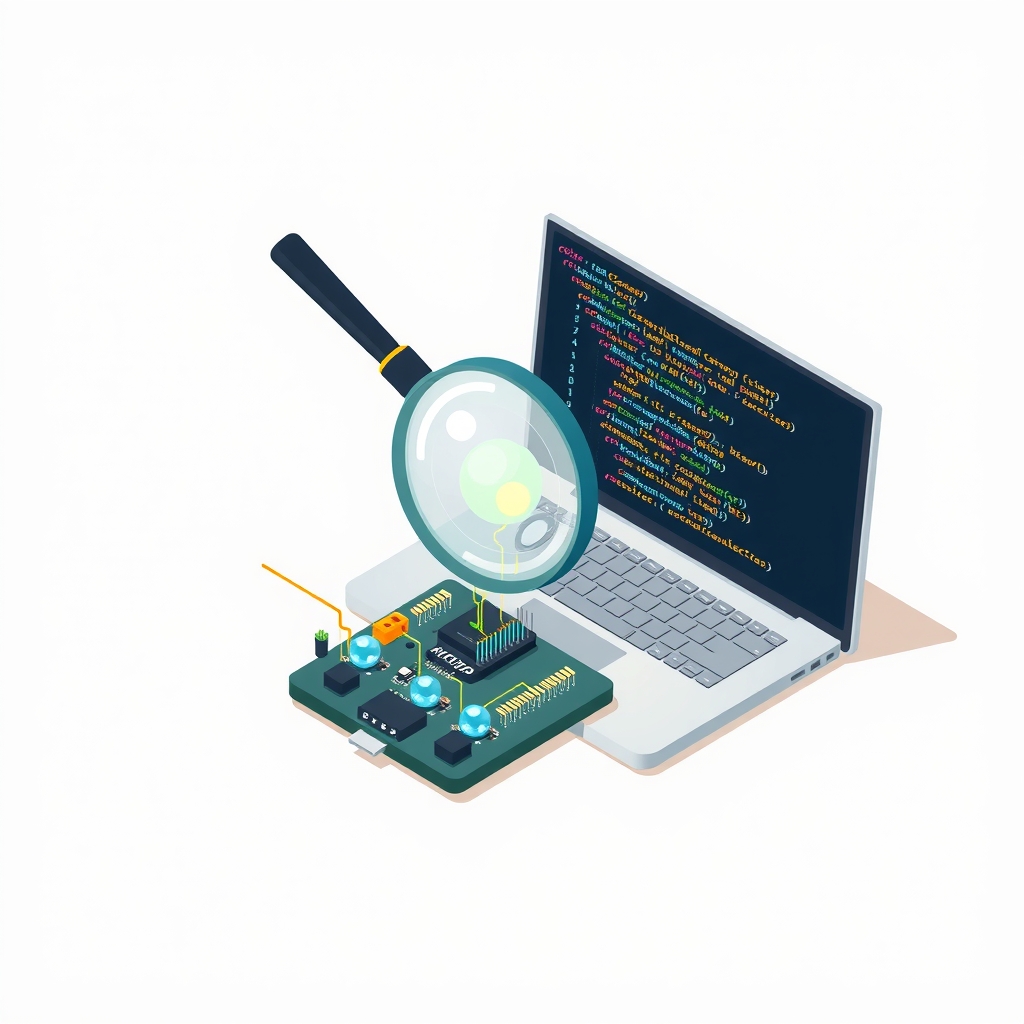
- Vision Capabilities: Uses a 292M-parameter encoder with patch-based processing for OCR, grounding, and visual reasoning.
- Availability: Initially available on Tinker with closed weights; full Apache 2.0 licensed weights expected after safety testing.
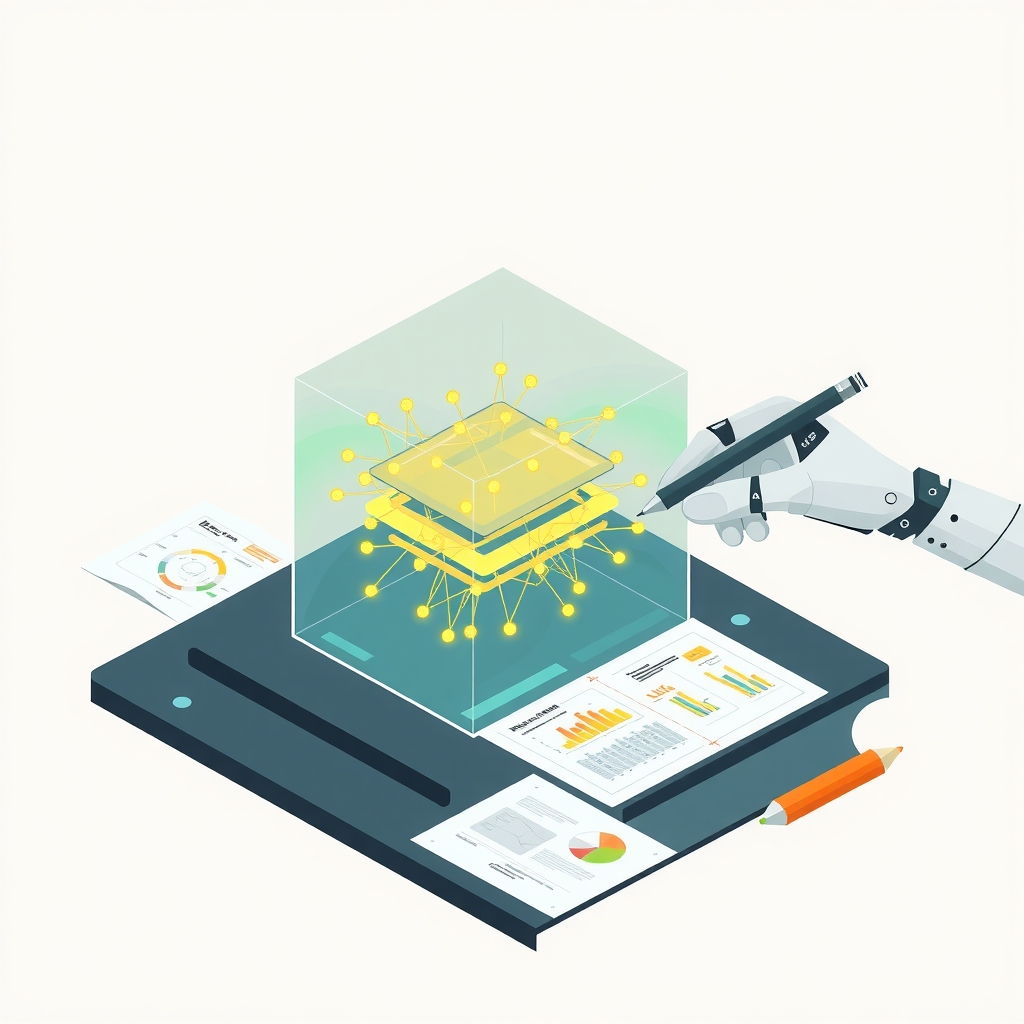
- Autonomous Research: Demonstrated ability to autonomously train other models, such as improving Qwen3.5-4B’s forecasting score by over 15% within a $500 budget.
- Coding Benchmarks: Achieves 86.3% on SWEBench Pro v2 (Hard) and 81.6% on Vibe Code Bench v1.1.
Why it matters
For software engineers and technical founders, the shift toward models that can handle long-horizon autonomous tasks is significant. Inkling 2 Small’s ability to iteratively build and refine complex projects, such as generating a city simulator from scratch or creating a PC emulator, suggests a future where AI agents can manage entire development cycles rather than just completing isolated snippets of code. This reduces the friction in integrating AI into existing workflows, as the model is designed to verify its own output and follow instructions with greater precision.
The model’s performance in autoresearch tasks also highlights a growing capability for AI to conduct independent scientific and engineering experiments. By autonomously optimizing GPU kernels and training other models, Inkling 2 Small demonstrates potential for accelerating research and development processes. This could allow teams to offload complex optimization tasks to AI agents, freeing up human engineers to focus on higher-level architectural decisions and product strategy.
What you can do
- Test the model’s agentic coding capabilities by assigning it long-horizon tasks that require iterative refinement and self-verification.
- Experiment with its vision features by providing image inputs for tasks involving OCR, infographic interpretation, or visual reasoning.
- Explore its autonomous research potential by setting up small-scale optimization or training tasks with defined budgets and goals.
- Prepare for the upcoming open-weight release by reviewing the Apache 2.0 license terms and planning for local deployment or fine-tuning.
- Compare its performance on specific coding benchmarks like SWEBench Pro or Vibe Code Bench against your current tooling to assess potential integration benefits.
- Monitor the Tinker platform for updates on safety testing progress and the official release date for the downloadable checkpoints.