Grok bot adopts multi-model routing as industry shifts to cost-aware AI
SpaceX’s Grok Bot now selects the best backend model for each task, reflecting a broader industry trend where companies use cheap models for volume and expensive ones for complex work.
Elon Musk announced that SpaceX’s Grok Bot will no longer rely on a single proprietary model. Instead, the agent will dynamically select the most suitable backend for every specific task, including third-party options like Claude Opus 5.5. This shift marks a decisive move away from one-model loyalty toward a pragmatic, cost-optimized approach to artificial intelligence.
What happened
Musk posted an update regarding Grok Bot, which launched in beta in August as a joint product of SpaceXAI and Cursor. He stated that the system will now use whatever backend is most likely to deliver the best outcome, explicitly naming Anthropic’s Claude Opus 5.5, MidJourney, and Suno among the available APIs. This decision aligns with the recent acquisition of Cursor by SpaceX for $60 billion in stock, a deal that closed in August after being agreed upon in June.
This change mirrors a wider pattern observed across the technology sector. During a recent AI conference in New York City, leaders from 22 portfolio companies described similar strategies. They reported moving away from unlimited AI budgets toward strict model triage. The common approach involves using small, inexpensive models for high-volume tasks and reserving powerful, costly models for complex reasoning or creative work. One executive noted that employees previously defaulted to the most advanced model regardless of necessity, prompting the company to implement training on selecting the right tool for each job.
The drive for efficiency is not without risk. An engineering leader shared that his team switched to a newer, cheaper model just days before a major demo because benchmarks suggested it was comparable. The workflow failed, forcing a weekend rollback. This incident highlights the importance of rigorous evaluation pipelines, or evals, to catch compatibility issues before they reach production. Vendor updates can also introduce instability, as seen when Anthropic’s price cut for Opus 5.5 broke several agent dependencies.
How it works
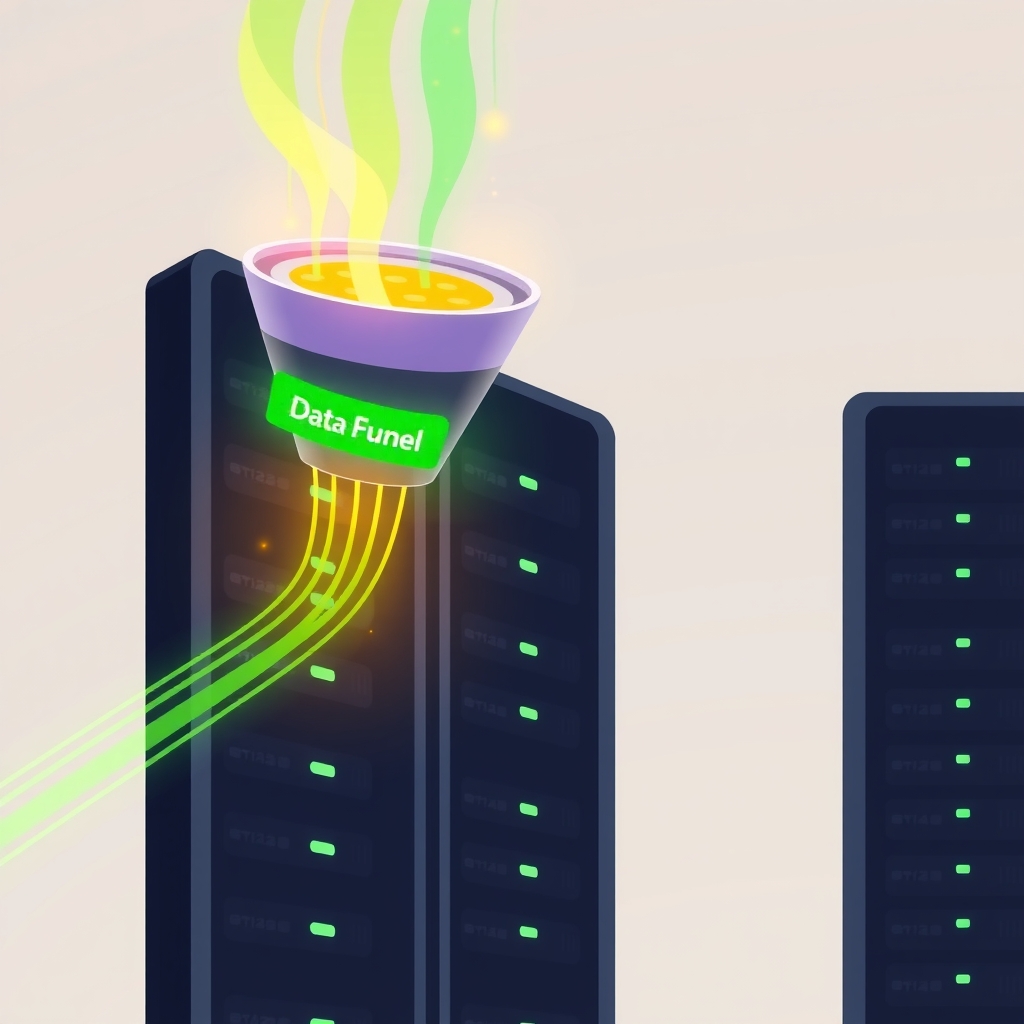
Model triage typically functions as a funnel. A rules engine or a lightweight model processes incoming requests first to determine intent or classify data. Only the queries that require deeper analysis or complex generation are passed to larger, more expensive models. This architecture prevents the high costs associated with running petabytes of data through frontier models. For example, one security company uses this method to filter data, ensuring that only a fraction of inputs reach the costly tier.
Developers often use routing services like OpenRouter to manage these connections. These platforms allow applications to access hundreds of models through a single interface, enabling dynamic switching based on performance metrics or cost. The strategy relies on the observation that cheap, fast models can handle the majority of routine tasks, such as classification and basic routing, while frontier models handle the remaining complex cases. This separation allows organizations to scale usage without proportional increases in spending.
Key details
- Grok Bot now integrates multiple backends, including Claude Opus 5.5, MidJourney, and Suno, rather than relying solely on Grok.
- SpaceX acquired Cursor for $60 billion in stock, with the deal closing in August 2026.
- At a recent industry event, 10 out of 22 company leaders reported using model triage to control AI costs.
- OpenRouter data shows that four of the top ten most-used models in early October 2026 were low-cost Flash variants.
- DeepSeek V4.1 Flash became the top model by token volume on OpenRouter, processing 33.6 trillion tokens in one week.
- Claude Opus 5.5 saw a 74% weekly increase in usage on OpenRouter, despite being significantly more expensive than flash models.
Why it matters
For software teams, the era of defaulting to the largest available model is ending. Cost optimization now requires architectural changes that route requests intelligently. Developers must build systems that can evaluate task complexity and assign it to the appropriate model tier. This shift demands a deeper understanding of model capabilities and limitations, as well as robust testing frameworks to ensure stability when swapping components.
The rapid turnover of models also introduces operational challenges. As new versions launch with different pricing and performance characteristics, teams must continuously update their routing logic. Relying on static integrations can lead to broken workflows or missed cost savings. The industry is moving toward a dynamic environment where the best model for a task today may be replaced by a cheaper, faster alternative tomorrow. Maintaining competitive efficiency requires constant monitoring and adaptation.
What you can do
- Implement a routing layer that directs simple queries to cheap, fast models and complex tasks to frontier models.
- Establish a suite of automated evals to test model performance and compatibility before deploying changes to production.
- Monitor token usage and costs per task to identify opportunities for downgrading models where quality remains acceptable.
- Train engineering teams on the specific strengths and weaknesses of different model tiers to prevent over-provisioning.
- Use aggregation services like OpenRouter to simplify access to multiple models and facilitate easy switching.
- Review vendor release notes carefully for breaking changes, especially when adopting new versions with significant price cuts.