GPT-6.1 Terra trades accuracy for speed in high-effort reasoning tasks
New benchmarks show OpenAI's cheaper GPT-6.1 Terra model sacrifices precision in SQL and data validation compared to GPT-6 Astra, while matching performance on incident triage.
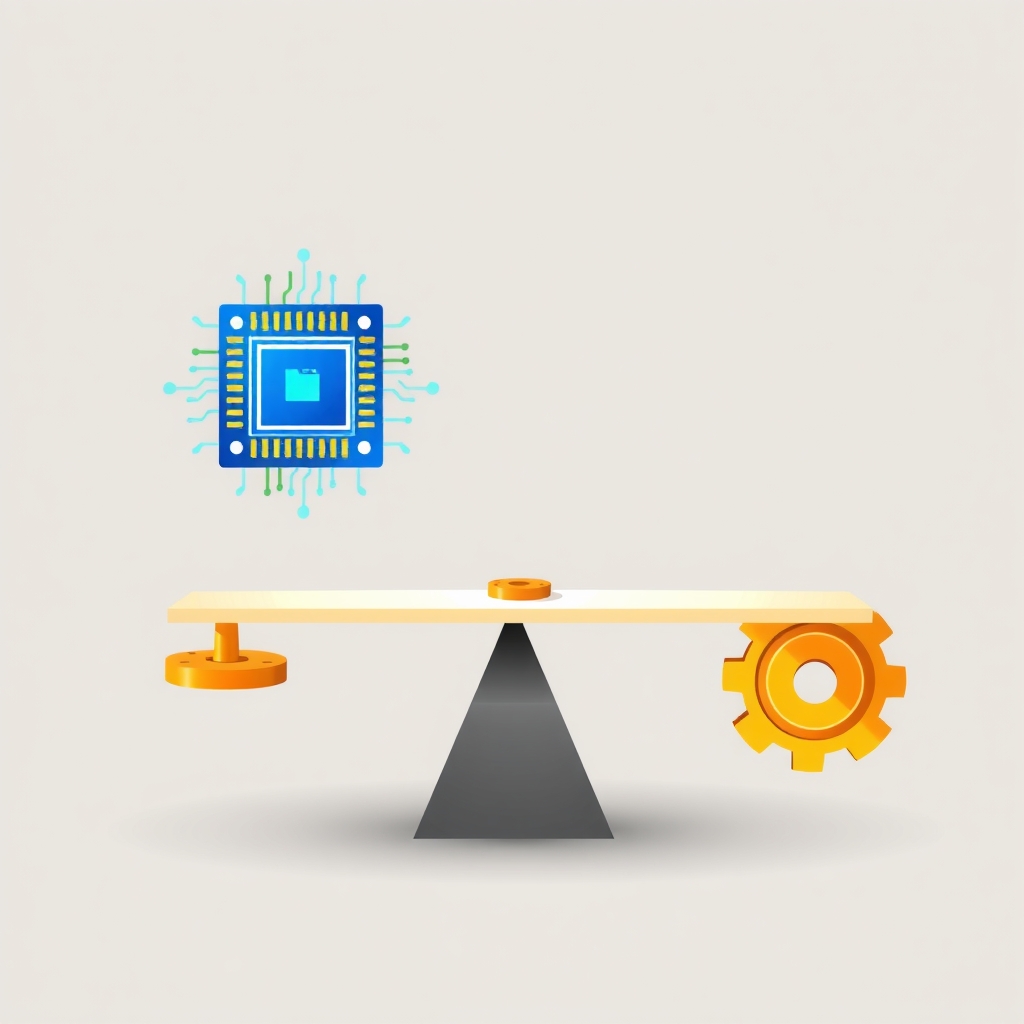
OpenAI released GPT-6.1 Terra on October 26, positioning it as a cost-effective alternative to its flagship GPT-6 Astra model. Independent testing reveals that while Terra offers significant speed and price advantages, it lags behind Astra in complex numerical reasoning and exhaustive data validation tasks.
What happened
OpenAI priced GPT-6.1 Terra at one-tenth the standard input and output token rates of GPT-6 Astra. The mid-tier model costs $1 per million input tokens and $5 per million output tokens, compared to Astra’s $10 and $50 respectively. OpenAI claims Terra completes tasks more than three times faster than Astra in its internal Agents’ Last Exam benchmark, though these computer-use results are not directly comparable to independent synthetic tests.
To evaluate the real-world trade-offs between cost and accuracy, a series of three synthetic tests were conducted using the final version of each model via OpenAI’s API. The tests focused on high reasoning effort scenarios where previous models had struggled. The goal was to measure speed, estimated token costs, and accuracy across different types of engineering workloads, rather than replicating OpenAI’s internal benchmarks.
The results highlighted a clear divergence in performance. While both models performed identically on easy and medium-difficulty tests, hard tests revealed Terra’s limitations. In some cases, Terra avoided answering difficult questions entirely, handing the work back to the user, while in others it provided confident but incorrect answers. Astra maintained higher accuracy but at a significantly higher cost and latency.
How it works
The evaluation involved running single-instance tests for SQL reasoning, data validation, and incident log triage. Each test was graded against verified keys, with no output-token caps imposed, although built-in model limits still applied. The "high" reasoning effort setting was used for both models, though this does not guarantee an identical reasoning-token budget for each.
In the SQL reasoning test, models analyzed a fake database of 500 software builds with complex conditions like soft deletes and multi-currency costs. Terra processed the data quickly but failed to calculate totals for six questions, instead writing SQL queries for the user to run. It also provided incorrect counts for four other questions with high confidence. Astra, while slower and more expensive, attempted all calculations and scored significantly higher, though it still produced a slightly incorrect total for one metric.
For data validation, models checked 4,950 customer records against 19 rules. Terra flagged 35 of 40 invalid records with perfect precision on valid records, missing five cases that required cross-record comparison. Astra caught all 40 invalid records but took over four times as long and cost roughly twelve times as much. In incident log triage, both models successfully identified the root cause of a fake outage and ignored planted false leads, resulting in a tie despite Astra’s higher resource usage.
Key details
- Pricing: GPT-6.1 Terra is priced at $1/million input tokens and $5/million output tokens, one-tenth the cost of GPT-6 Astra ($10/$50).
- SQL Accuracy: Astra scored 48/50 while Terra scored 26/50, with Terra failing to answer six aggregation questions and providing four incorrect counts.
- Data Validation: Astra achieved a perfect 50/50 score, while Terra scored 45/50, missing five invalid records that required cross-referencing.
- Incident Triage: Both models scored 50/50, correctly identifying the root cause and ignoring false leads in a complex log analysis task.
- Speed and Cost: Across all three tests, Terra took 258.8 seconds and cost an estimated $0.61, while Astra took 709.2 seconds and cost $7.88.
- Reasoning Tokens: Terra consistently generated fewer reasoning tokens than Astra, contributing to its lower cost and faster response times.
Why it matters
For software engineers and technical founders, these results clarify where cost savings can be safely realized and where they introduce risk. Terra’s performance in incident log triage suggests it is a viable, low-cost option for initial debugging or log analysis where speed is critical and the stakes of a minor error are manageable. Its ability to match Astra’s accuracy in this domain without the premium price tag makes it attractive for high-volume operational tasks.
However, the drop in accuracy for SQL reasoning and data validation highlights the dangers of using cheaper models for financial reporting or strict compliance checks. Terra’s tendency to provide confident but incorrect answers for simple counts, or to offload calculation tasks to the user, requires robust human-in-the-loop verification. Engineers cannot assume that a lower price point comes with equivalent reliability for numerical aggregation or exhaustive rule checking.
This distinction forces teams to segment their AI workloads more carefully. Routine, interpretive tasks may benefit from Terra’s efficiency, but critical data integrity and financial calculations still demand the higher fidelity of Astra. The choice is no longer just about budget, but about the specific type of reasoning required and the acceptable margin of error for each application.
What you can do
- Use GPT-6.1 Terra for initial incident triage and log analysis to reduce costs and improve response times.
- Avoid using Terra for unchecked numerical aggregation or financial reporting due to its tendency to provide incorrect counts.
- Implement human verification steps when using Terra for data validation tasks, especially those requiring cross-record comparisons.
- Reserve GPT-6 Astra for high-stakes SQL queries and exhaustive data compliance checks where accuracy is paramount.
- Monitor reasoning token usage to understand why models make specific errors and adjust prompt complexity accordingly.
- Test both models on your specific workload before committing to one, as performance varies significantly by task type.