DeepSeek V4.1-Flash outperforms Claude Haiku 5.5 in cost and accuracy tests
New benchmarks show DeepSeek’s updated open-weight model beating Anthropic’s Haiku 5.5 on accuracy for two of three tasks while costing significantly less.
DeepSeek released its V4.1-Flash-1017 model update on October 17, 2026, prompting a direct comparison with Anthropic’s recently launched Claude Haiku 5.5. In controlled tests conducted by The New Stack, the open-weight DeepSeek model demonstrated higher accuracy on complex debugging and data triage tasks while operating at a fraction of the cost of its closed-source competitor.
What happened
The comparison focused on three specific engineering workflows: fixing agentic bugs in Python code, generating SQL queries from a complex database schema, and triaging hundreds of developer error reports. DeepSeek V4.1-Flash-1017 achieved perfect scores in the bug fix and triage categories, whereas Claude Haiku 5.5 missed one hidden test case in the debugging scenario and made four classification errors during triage. Both models tied with perfect scores on the database query task, correctly handling edge cases like soft deletes and currency conversions without hallucinating answers for unavailable data.
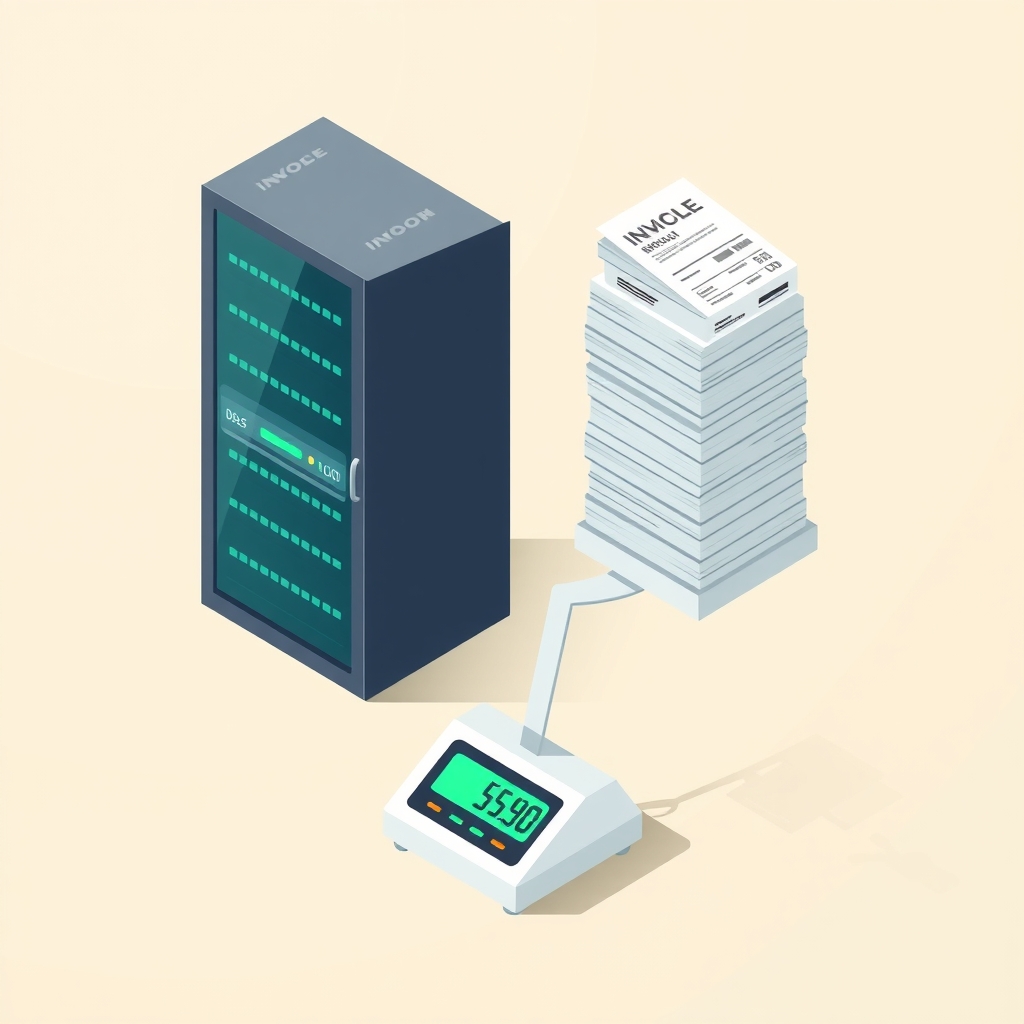
Cost emerged as the most significant differentiator. Across all three tests, DeepSeek incurred a total cost of $0.07, compared to $0.30 for Claude Haiku 5.5. This disparity was driven largely by the triage test, which involved a prompt exceeding 100,000 tokens. Because Haiku’s pricing structure increases significantly for prompts above this threshold, and because its tokenizer produced more tokens for the same text, its costs spiked. DeepSeek’s automatic caching of repeated inputs further reduced expenses during the multi-turn debugging task, even though Haiku completed that specific task faster in wall-clock time.
The tests were run through OpenRouter, pinning each model to its respective provider’s servers to ensure consistent infrastructure conditions. DeepSeek ran at off-peak rates, utilizing its default caching behavior, while Haiku ran without its optional prompt caching enabled. The results suggest that for high-volume or long-context workloads, the architectural differences in tokenization and pricing tiers can have a larger impact on total spend than the base per-token rate alone.
How it works
DeepSeek V4.1-Flash-1017 is an open-weight model, meaning developers can download it from Hugging Face and host it on their own infrastructure, or access it via API providers like OpenRouter. The October 17 update specifically targeted reductions in task runtime and output length. In the agentic bug fix test, the model interacted with a Python job-queue library containing three interacting bugs and one incorrect test case. It used tools to read, edit, and run tests within a 25-turn limit, successfully identifying and fixing issues that misled the error pointers.
Claude Haiku 5.5, launched by Anthropic on October 7, is designed for high-volume tasks such as classification and summarization. It operates on a tiered pricing model where costs jump for prompts exceeding 100,000 tokens. In the triage test, the same input text resulted in 153,082 tokens for DeepSeek but 216,811 tokens for Haiku due to differences in their tokenizers. This inefficiency pushed Haiku into the higher pricing tier, demonstrating how tokenizer efficiency directly affects cost for long-context applications.
Key details
- DeepSeek V4.1-Flash-1017 scored 6/6 on agentic bug fixes, while Claude Haiku 5.5 scored 5/6.
- Both models achieved 20/20 on complex database query generation, avoiding hallucinations on unanswerable questions.
- DeepSeek achieved 1,600/1,600 correct fields in error report triage; Haiku missed four, including severity and routing errors.
- Total cost for the test suite was $0.07 for DeepSeek versus $0.30 for Haiku.
- Haiku was faster in tool-use scenarios (21.6s vs 49.6s for debugging), but DeepSeek was faster on the large triage prompt (188.3s vs 228.9s).
- DeepSeek’s tokenizer processed the triage prompt with approximately 30% fewer tokens than Haiku’s tokenizer.
Why it matters
For engineering teams building AI-assisted development tools or automated support systems, these results highlight that raw speed is not the only metric for efficiency. While Haiku offered faster response times in interactive debugging scenarios, DeepSeek’s ability to handle long contexts more cheaply and accurately makes it a strong candidate for batch processing tasks like log analysis or codebase refactoring. The cost difference of over 70% in this small-scale test would scale significantly in production environments processing millions of tokens daily.
The performance gap in the triage task also underscores the importance of testing models against specific business logic. Haiku’s errors in severity rating and team routing were subtle but critical failures in a real-world support workflow. Developers cannot assume that newer or faster models will inherently handle nuanced conditional logic better than competitors. Rigorous benchmarking against domain-specific datasets remains essential before committing to a provider for production workloads.
What you can do
- Benchmark both models on your specific long-context workloads to compare tokenizer efficiency and actual token counts.
- Test agentic workflows with hidden edge cases to verify if models follow instructions precisely or skip steps for speed.
- Calculate total cost of ownership including caching benefits, not just base per-token rates, especially for repetitive tasks.
- Verify model behavior on dates and conditional routing logic, as these are common failure points for large language models.
- Consider running open-weight models like DeepSeek on your own infrastructure if data privacy or consistent pricing is a priority.
- Monitor off-peak pricing opportunities if your workload allows for non-real-time processing to reduce API costs further.