Anthropic mathematician claims AI-assisted proof of Riemann hypothesis
Levent Alpöge released a Lean-verified solution to the 1859 Riemann hypothesis using Claude, while Stanford postdoc Alessandro Masullo published a human-only proof of the General Riemann hypothesis.
In a significant week for both corporate milestones and mathematical history, Levent Alpöge, a mathematician at Anthropic, announced a potential solution to the Riemann hypothesis. This 167-year-old problem, one of the Millennium Prize challenges, concerns the hidden structure of prime numbers. The announcement coincided with Anthropic becoming the first publicly traded frontier AI lab, creating a complex backdrop for the disclosure.
Alpöge described the timing as difficult but felt compelled to share his findings immediately. He messaged Anthropic CEO Dario Amodei to discuss how to announce a Lean-compilable solution he had discovered. The urgency stemmed from a lifelong obsession with the problem, leading him to release the work before fully translating it into a human-intelligible explanation.
What happened
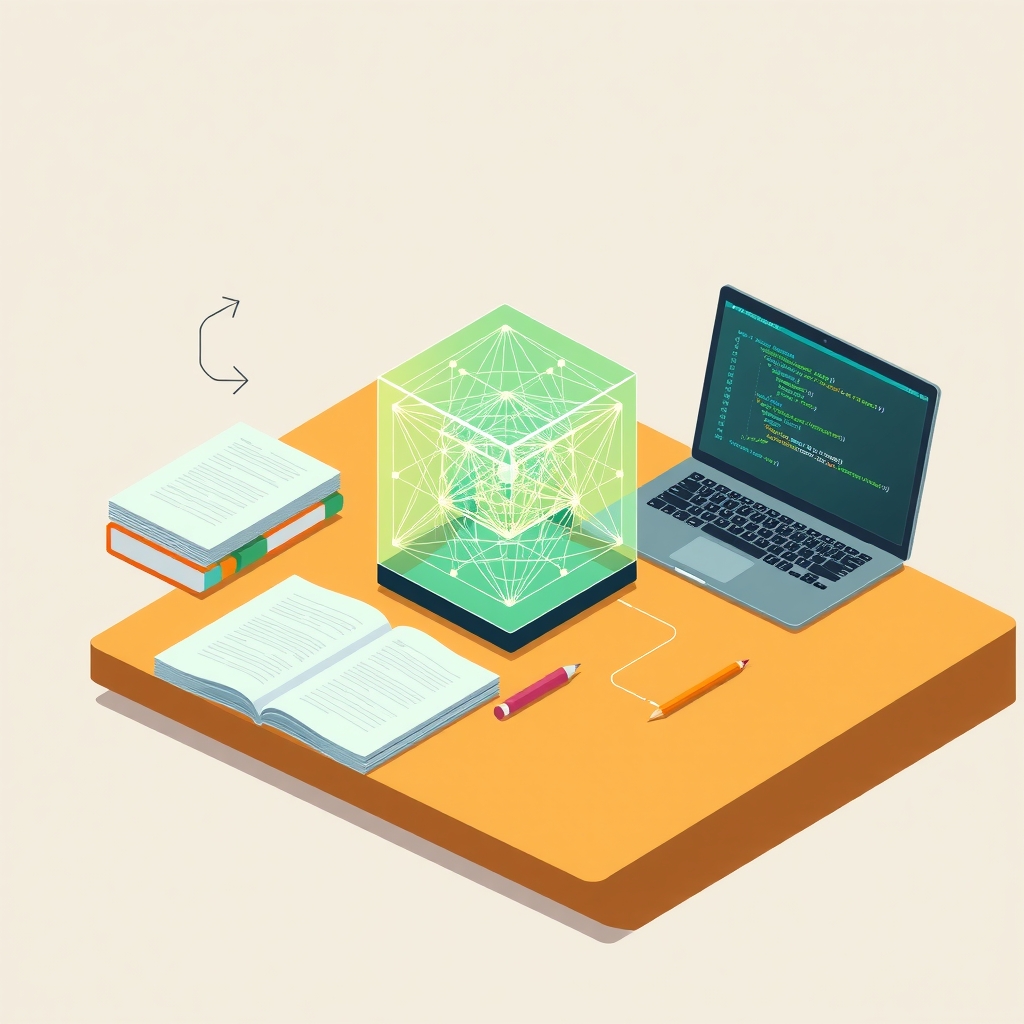
The core of Alpöge’s announcement is a formal proof written in Lean, an open-source programming language designed for expressing mathematical ideas as code. This approach allows for formal verification, meaning the logic can be checked by a computer rather than relying solely on peer review of natural language arguments. Several experts, including MIT mathematician Andrew Sutherland, have confirmed that Alpöge’s solution compiles successfully in Lean.
The mathematics community has reacted with intense interest and some bewilderment. On the Zulip chat platform, number theorists like Chris Birkbeck from the University of East Anglia analyzed the proof’s components. Birkbeck noted the use of advanced concepts such as automorphy-lifting arguments and Galois representations. While the technical details remain dense, the successful compilation has generated confidence that the formal result is valid, even if the human understanding lags behind.
Simultaneously, a separate development emerged from Stanford University. Ravi Vakil, president of the American Mathematics Association, shared a draft proof of the General Riemann hypothesis by postdoc Alessandro Masullo. Unlike Alpöge’s work, Masullo’s proof is entirely human-derived and does not use AI assistance. Vakil explained that the draft was released earlier than planned to respond to the current climate, emphasizing that human mathematicians remain vital and active in the field.
How it works
Lean serves as the critical infrastructure for Alpöge’s claim. It is a proof assistant that requires mathematicians to translate logical steps into rigorous code. If the code compiles, the proof is logically sound by definition, removing ambiguity often found in traditional papers. Alpöge utilized Claude, Anthropic’s AI model, to navigate the complex search space of potential arguments. He described the process as a "stream-of-consciousness jaunt" where the AI helped piece together the argument amidst confusion.
This method contrasts sharply with Masullo’s approach, which represents twelve years of traditional mathematical work. Masullo’s proof relies on standard peer review and human verification processes. Without a Lean formalization, its validity remains uncertain until the broader community can digest and verify the logic manually. The juxtaposition highlights two diverging paths in modern mathematics: AI-accelerated formal verification versus traditional human insight.
Key details
- Levent Alpöge, an Anthropic employee, claims a solution to the Riemann hypothesis dating back to 1859.
- The proof is written in Lean, an open-source language for formal verification, and has been compiled by independent experts.
- Alpöge used Claude, Anthropic’s AI model, to assist in discovering the pieces of the argument.
- Stanford postdoc Alessandro Masullo released a separate, human-only proof of the General Riemann hypothesis.
- Masullo’s work represents 12 years of effort and was released early to affirm the role of human mathematicians.
- Alpöge and collaborator Tristan Buckmaster also released a proof related to the Navier-Stokes equations.
Why it matters
For software engineers and technical leaders, this event underscores the growing capability of AI to handle high-complexity logical tasks. The use of Lean demonstrates that formal methods are no longer just academic curiosities but practical tools for verifying critical systems. As AI models become better at navigating formal logic spaces, the boundary between coding and mathematical proof blurs, offering new ways to ensure correctness in software and algorithms.
The dual announcements also highlight a cultural shift in research. Alpöge’s reliance on AI suggests a future where discovery is accelerated by machine intuition, even if human explanation trails behind. Conversely, Masullo’s work serves as a reminder that deep, sustained human inquiry remains essential. For teams building AI products, this signals a need to balance automation with interpretability, ensuring that results are not just correct but also understandable to human stakeholders.
What you can do
- Explore Lean and other proof assistants to understand how formal verification works in practice.
- Study the integration of AI models in logical reasoning tasks to identify potential use cases in your domain.
- Follow the ongoing peer review process for both proofs to see how the community validates these claims.
- Consider how formal methods could improve the reliability of your own critical software systems.
- Encourage team discussions on the balance between AI-assisted discovery and human interpretability.
- Keep abreast of developments in AI-driven mathematics to anticipate shifts in problem-solving methodologies.