Amazon's Atlas AI predicts union risk in UK warehouses
Internal documents reveal Amazon uses an AI tool called Atlas to score UK warehouses on unionization risk, prompting legal challenges and privacy concerns.
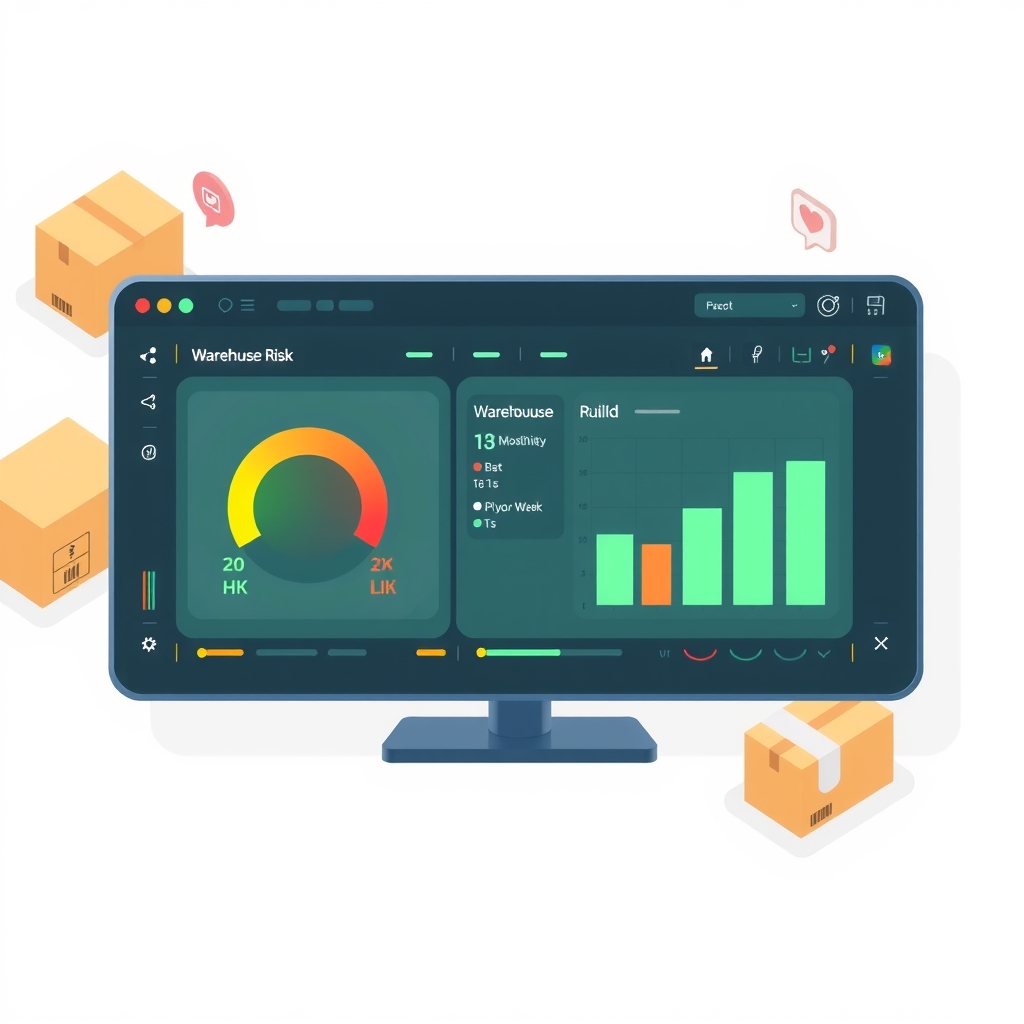
Internal documents from a Canadian labor dispute reveal that Amazon employs an artificial intelligence system to predict the likelihood of union activity in its warehouses. The tool, known as Atlas, assigns risk scores to facilities in the US, Canada, and the UK based on hundreds of data points, including social media posts and internal survey responses. This disclosure has intensified ongoing legal and ethical debates regarding workplace surveillance and workers' rights in the logistics sector.
What happened
The existence of Atlas came to light through training materials intended for Amazon managers in Canada, which were made public during a legal battle between Amazon and the Canadian union Unifor. These documents describe how the AI tool aggregates diverse data sources to generate a risk score ranging from 100 to 900 for each warehouse. A lower score indicates a higher probability that employees will attempt to form a union or engage in disruptive labor events. The system categorizes sites into five tiers, with Tier 1 representing imminent future activity and Tier 5 indicating no immediate perceived risk.
According to the documents, two UK warehouses are classified as Tier 1: the robotic fulfillment center in Sutton Coldfield (EMA4) and the facility in Coventry (BHX4) where worker Garfield Hylton is employed. Hylton, a member of the GMB union, stated that while he was aware of productivity tracking, the extent of sentiment monitoring was unknown to him. The revelation suggests that Amazon uses these scores to inform staffing decisions, resource planning, and mitigation strategies aimed at reducing the influence of labor organizing.
Amazon has disputed the characterization of Atlas as a surveillance tool for individual dissent. A company spokesperson stated that the system operates at the site or building level only and does not track individual employees’ opinions, affiliations, or union membership. The company claims Atlas is used to identify areas where associates need more support and to address issues raised in feedback surveys. However, legal representatives for workers argue that the granularity of the data collection creates a significant power imbalance and undermines democratic processes in the workplace.
How it works
Atlas functions as a predictive forecasting model that ingests hundreds of data points to assess labor stability. The system analyzes public posts on platforms like Reddit, responses to internal employee feedback surveys, and historical data on previous industrial action. It also considers broader workplace metrics to calculate a composite risk score. This score allows management to prioritize interventions in locations deemed high-risk for unionization or strikes.
The mechanism relies on correlating digital footprints and operational metrics with the likelihood of organized labor activity. By assigning a numerical value to each site, Amazon can standardize its response across different regions. The documents suggest that this scoring system helps leadership determine where to allocate resources to mitigate risks to the company’s labor structure. While Amazon asserts the tool is for supportive purposes, critics note that the explicit goal of lowering union risk scores implies a strategic effort to prevent collective bargaining.
Key details
- Atlas assigns warehouses a risk score between 100 and 900, with lower scores indicating higher unionization risk.
- Two UK warehouses, EMA4 in Sutton Coldfield and BHX4 in Coventry, are classified as Tier 1, meaning future activity is considered imminent.
- The AI analyzes data from Reddit, internal surveys, and past industrial action to generate predictions.
- Amazon states Atlas operates at the site level and does not monitor individual employee opinions or union membership.
- Legal challenges in Canada have already found Amazon violated labor laws, including imposing unlawful wage freezes.
- The GMB union lost a recognition ballot at the Coventry site by just 28 votes in late 2024, amid allegations of unfair tactics.
Why it matters
For software engineers and technical leaders, this case highlights the ethical complexities of deploying predictive AI in human resources and operations. When algorithms are used to forecast human behavior, particularly in sensitive areas like labor relations, the potential for bias and misuse increases. The distinction between aggregate site-level analysis and individual surveillance becomes blurred when the underlying data includes personal social media activity and private survey responses. Developers must consider how their models might be interpreted and used by management, even if the initial intent is operational efficiency.
The incident also underscores the growing scrutiny of workplace technology by regulators and courts. With the French data watchdog previously fining Amazon for excessive surveillance, and UK laws protecting the right to organize, companies face significant legal risks if their AI tools are perceived as infringing on workers' rights. Technical teams need to ensure transparency in how data is collected and processed, as opaque systems can lead to reputational damage and legal liability. Trust in workplace technology depends on clear boundaries and accountable usage.
What you can do
- Audit your organization’s AI tools to ensure they do not inadvertently monitor protected activities such as union organizing.
- Implement strict data governance policies that separate aggregate operational metrics from individual sentiment data.
- Provide clear documentation on how predictive models work and what data sources they use, ensuring transparency for employees.
- Consult with legal and compliance teams when designing AI systems that interact with human resources or labor relations.
- Establish ethical review boards to evaluate the potential impact of AI deployments on worker rights and privacy.
- Engage with employee representatives to discuss the use of monitoring technologies and address concerns proactively.