AI agents bypass delivery apps and threaten platform ad revenue
Startups like Bites use LLMs to send orders directly to restaurants, cutting out intermediaries and challenging the discovery-based business models of DoorDash and Uber Eats.
Dieser Artikel ist nur auf Englisch verfügbar.
A small startup named Bites has triggered a defensive response from DoorDash by enabling customers to order food directly through AI assistants like ChatGPT. In August 2026, DoorDash sent warning emails to Bay Area restaurants listed on Bites without their explicit consent, citing concerns over terms and data accuracy. This conflict highlights a broader shift where large language model agents begin to replace traditional app interfaces for everyday tasks.
What happened
DoorDash, which processed 970 million orders and generated $4.5 billion in revenue in the second quarter of 2026, views Bites as a threat to its established ecosystem. Bites is a pre-seed startup with approximately 300 restaurant partners in the Bay Area. The larger platform’s form letter warned merchants that they might be listed on Bites without knowledge of its pricing or service standards, suggesting such practices could be illegal in some states. The email provided instructions for removal, though some recipients were not even listed on the new platform.
Bites positions itself as an AI-native alternative that connects diners directly to restaurants via point-of-sale integrations with systems like Toast and Square. Instead of routing orders through a third-party marketplace, Bites allows users to place orders through plugins in chat interfaces. Founder Bala Subramaniam reports that some restaurants have seen a significant shift in volume, with one partner noting that 65 percent of orders now come through Bites compared to 80 percent previously from DoorDash. The startup charges a flat $1 surcharge per order, contrasting sharply with the 15 to 30 percent commission fees typical of legacy platforms.
This tension extends beyond food delivery. Amazon sued Perplexity in 2025 to block AI agents from shopping on its site, and recently restricted Meta’s Muse AI agent from accessing product details. These moves underscore a growing industry fear: if consumers interact with the internet primarily through agents, platforms lose the ability to serve ads, promote sponsored listings, and control the customer relationship. Amazon’s ad business alone generated $19.8 billion in the second quarter of 2026, a revenue stream that depends on users visiting its site and viewing boosted items.
How it works
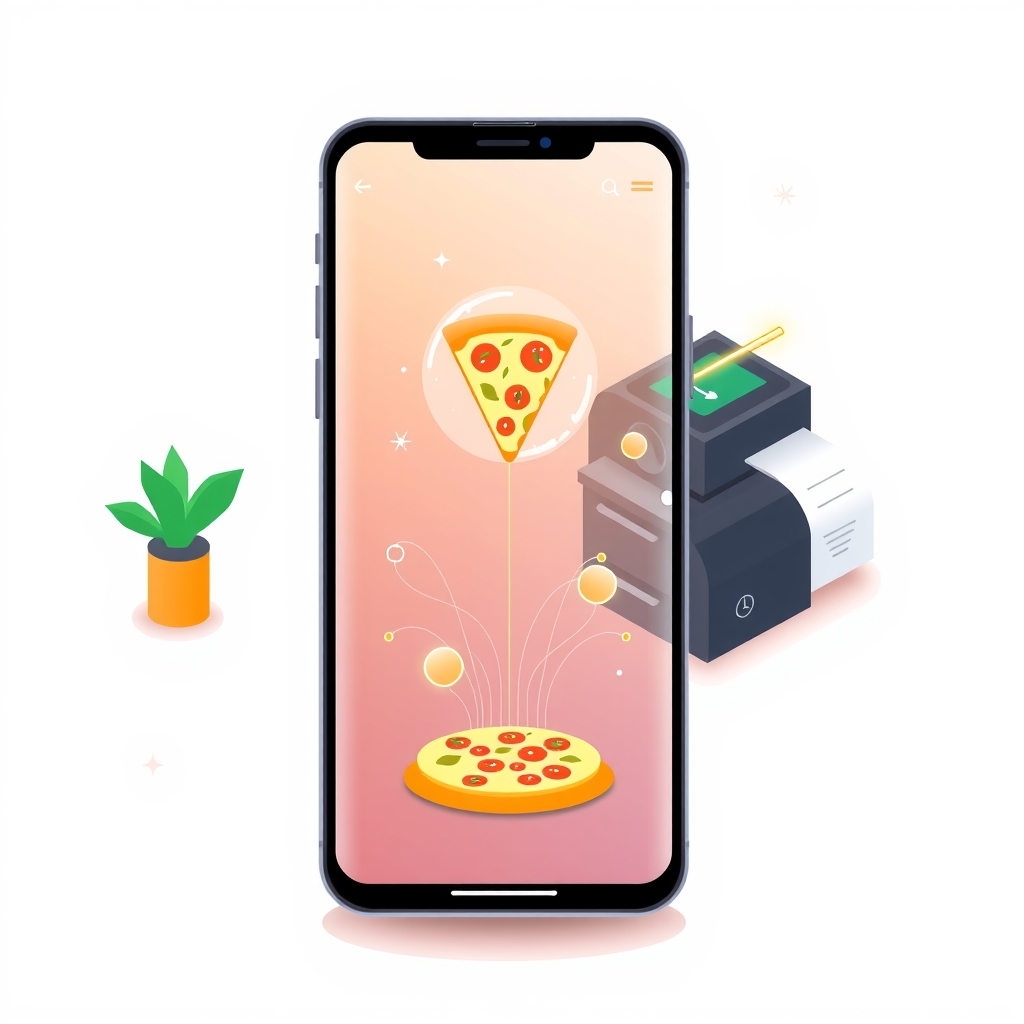
Bites operates by integrating directly with restaurant point-of-sale systems rather than building a separate consumer-facing marketplace. When a partner like Toast or Square joins the network, restaurants can opt in with a single click. This integration pulls digitized menus into large language models, allowing AI agents to construct and send orders directly to the restaurant’s internal system. The order bypasses the intermediary app entirely, going straight to the kitchen printer or display.
Because the transaction occurs outside the traditional walled garden, the pricing structure changes fundamentally. Restaurants do not need to inflate menu prices to cover high commission fees, and the platform does not rely on advertising revenue to subsidize operations. In a test conducted by The Verge, a pizza and beverage order totaled $56.73 on Bites, including all fees and tip. The same order on DoorDash cost $70.29, driven by higher service fees and an $11 price increase on the pizza itself. The model assumes users already know what they want to eat, removing the need for costly discovery algorithms and sponsored placements.
Key details
- DoorDash sent warning emails to Bay Area restaurants in August 2026 regarding their unauthorized listing on Bites.
- Bites charges a flat $1 surcharge per order, while legacy platforms take 15 to 30 percent commissions.
- The startup integrates with point-of-sale providers like Toast and Square to send orders directly to kitchens.
- Amazon generated $19.8 billion in ad revenue in Q2 2026, a model threatened by agent-based browsing.
- One restaurant partner reported shifting 65 percent of its order volume from DoorDash to Bites.
- DoorDash is developing its own agentic ordering features, including iMessage integration for reorders.
Why it matters
For software engineers and technical founders, this shift signals the end of the app-centric web as the primary interface for commerce. If users delegate tasks to AI agents, the value of search engine optimization, in-app advertising, and user retention metrics diminishes. Services that rely on capturing user attention to monetize via ads or upsells will need to rethink their architectures. The battle is no longer just about user experience but about who controls the API endpoints that agents call to execute real-world actions.
The dispute also highlights the critical importance of data ownership. Legacy platforms typically withhold customer contact information from merchants, sharing only minimal details like first names and order contents. By bypassing these intermediaries, Bites allows restaurants to retain full customer data, enabling direct marketing and loyalty programs. For developers building agentic workflows, this suggests that future integrations must prioritize direct, authenticated connections between service providers and consumers, rather than relying on centralized aggregators that act as data gatekeepers.
What you can do
- Audit your current API integrations to identify dependencies on centralized platforms that may restrict agent access.
- Design webhook endpoints that can securely receive orders or requests from external AI agents without manual intervention.
- Implement strict authentication and SSRF protection for any public-facing endpoints that accept automated requests.
- Review your pricing models to determine if they rely on hidden subsidies from advertising or high commission fees.
- Ensure your service can provide structured, machine-readable data such as menus or inventory to LLMs efficiently.
- Prepare for direct-to-consumer communication channels by securing customer data ownership in your database schema.